Sourcing a Star Anise Whole Wholesale Export Supply line provides international spice distributors, commercial extractors, pharmaceutical manufacturers, and FMCG trading partners with a high-margin, visually striking revenue engine in the global agricultural sector. Cultivated almost exclusively in the mountainous border regions of Northern Vietnam (specifically Lang Son province) and Southern China (Guangxi), Star Anise (Illicium verum) is globally renowned for its beautiful 8-pointed star shape, high anethole essential oil content, and intense licorice flavor profile, distinguishing it as a premium staple in the retail spice, culinary, and medicinal markets.
For B2B procurement managers and supply chain directors working with global manufacturing partners, managing full container load (FCL) consignments of wholesale whole star anise requires carefully evaluating grading standards (Spring vs. Autumn crops, stemless vs. with stems), specific packaging configurations (pressed cartons vs. loose bags), ocean container volumetric limits, and international phytosanitary clearance protocols. This technical guide evaluates the operational, financial, and logistical frameworks necessary to establish a highly profitable import and distribution model for this globally demanded spice.
Table of Contents
-
Global Market Demand for Premium Star Anise
-
Product Portfolio and Harvesting Seasons Breakdown
-
Agricultural Chemistry and Shikimic Acid
-
Packaging Configurations and Freight Density
-
B2B Sourcing Pathways for Star Anise Whole Wholesale Export Supply
-
Landed Cost and Gross Margin Calculation Framework
-
Import Compliance, Harmonized System Codes, and Customs Documentation
-
Conclusion

Global Market Demand for Premium Star Anise
The global spice and pharmaceutical markets rely heavily on intact whole star anise. This format commands a significant price premium globally compared to broken grades and offers unmatched export potential due to the meticulous hand-harvesting and sun-drying sectors in producing countries like Vietnam.
Growth Drivers in the Market
The continuous growth in the premium spice sector is driven by consumer demand for whole, unadulterated ingredients. Culinary professionals consistently pivot toward whole spices for visual presentation (e.g., in pho broths, mulled wine, and marinades) and to ensure maximum freshness. Additionally, the pharmaceutical industry heavily relies on star anise for the extraction of shikimic acid, the primary precursor in the production of antiviral medications (such as Tamiflu).
Commercial Advantages
Adding bulk whole star anise to a B2B distribution catalog delivers distinct commercial advantages:
-
Premium Retail Positioning: Whole, unbroken 8-pointed stars command a significantly higher retail price point per gram than ground or broken star anise, driving excellent revenue margins for distributors packing into consumer jars.
-
Shelf Stability: When properly sun-dried to a moisture content below 13.5%, intact star anise locks in its essential oil profile and physical integrity for up to 24 months.
-
Aesthetic Value: The visual perfection of an unbroken star acts as a direct marketing tool for authenticity and premium quality in high-end culinary markets.
Product Portfolio and Harvesting Seasons Breakdown
Curating an optimal inventory mix requires selecting the right combination of spice grades tailored to target retail jars or culinary requirements.
Core Grading SKUs
When structuring a container load, the star anise specification is governed by strict harvesting guidelines:
-
Autumn Crop (Premium): Harvested between August and October, these stars are larger, heavier, perfectly shaped, and contain the highest essential oil content. This is the absolute premium export grade.
-
Spring Crop (Standard): Harvested between February and April, these stars are generally smaller, slightly lighter in color, and have a slightly lower oil content, heavily targeting mass-market commercial supply.
-
Stemless vs. With Stems: Premium grades require the stems to be manually clipped off, ensuring the buyer is paying purely for the spice and not unusable woody weight.
Agricultural Chemistry and Shikimic Acid
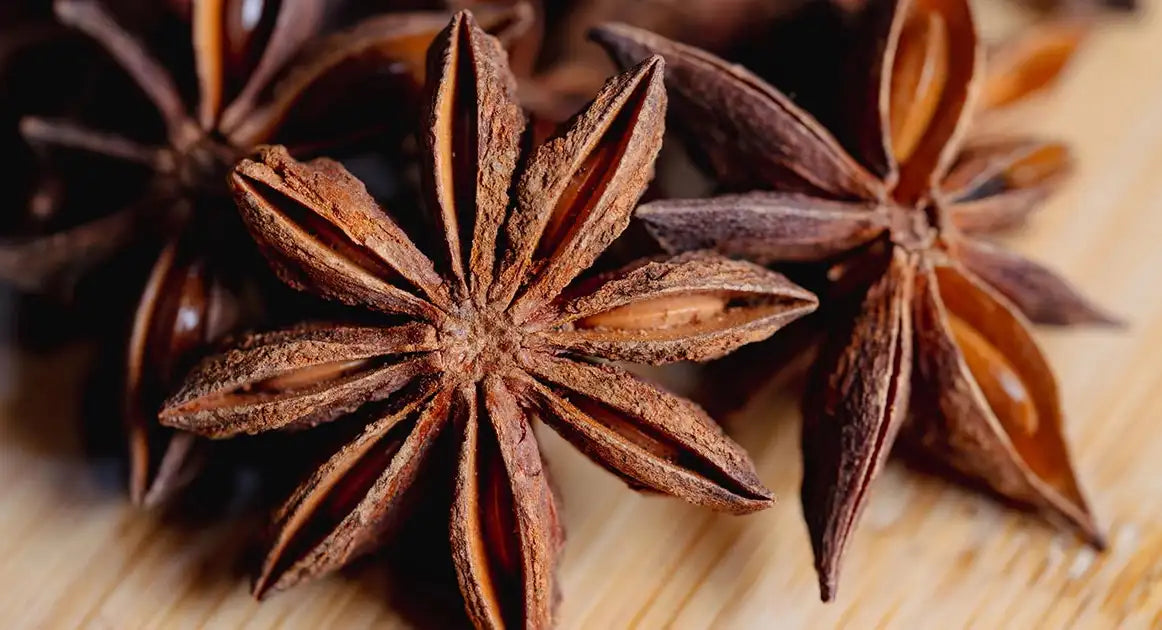
The formulation found in this spice achieves its signature spicy-sweet bite through unique botanical chemistry. Star anise’s intense licorice aroma is primarily derived from anethole, the active volatile compound within the spice’s essential oil. Furthermore, the pods contain high levels of shikimic acid. The thick, woody pods naturally protect the inner seeds, locking in these highly volatile oils. This natural design ensures the spice remains highly aromatic during long global ocean transits and extended retail display.
Packaging Configurations and Freight Density
When managing ocean shipments, physical logistics heavily dictate profitability. Because whole stars are fragile and contain hollow space, they cannot be bagged loosely without massive breakage. Products are meticulously packed into rigid corrugated cartons, consolidated, and palletized to withstand maritime transit.
Ocean Payload Yields
Understanding the exact packing specifications is critical for calculating freight costs:
| Packaging SKU Format | Standard Fill Volume | Freight Density Strategy | Container Payload (40ft HC) | Primary Distribution Channel |
| Pressed Carton (10kg) | 10kg | Mild Compression | ~14 – 15 Metric Tons | Premium Retail Brands |
| Standard Carton (20kg) | 20kg | Stacked Carton | ~15 – 16 Metric Tons | Commercial Spice Supply |
| Woven PP Bag | 20kg – 30kg | Loose Fill (High Breakage Risk) | ~13 Metric Tons | Wholesale Wet Markets |
B2B Sourcing Pathways for Star Anise Whole Wholesale Export Supply
Commercial buyers access wholesale inventory through two primary procurement channels, depending on their capital flexibility and volume requirements.
Export Consolidator Options
Independent spice brands and agile import firms typically source via master agricultural consolidators operating out of major ports like Hai Phong. Consolidators offer highly flexible volumes, handling all complex export logistics, precise sorting, fumigation applications, and port-of-loading transfers on behalf of the buyer, ensuring the fragile stars arrive unbroken.
Landed Cost and Gross Margin Calculation Framework
Procurement teams must accurately forecast their financials before executing a purchase order. Calculating net landed unit costs involves applying a structured, multi-step financial calculation process.
Step-by-Step Financial Breakdown
-
Step 1: Calculate Ocean Freight Charges (based strictly on volumetric weight, as cartons of whole stars cube out a container rapidly) + Origin Port Fees + Import Customs Duties + Marine Cargo Insurance + Local Destination Drayage.
-
Step 2: Add the Total Shipping Overhead to the Free On Board (FOB) Purchase Price per Carton.
-
Step 3: Divide the Total Landed Cost by the number of retail spice jars yielded to find the true cost of goods sold (COGS).
Import Compliance, Harmonized System Codes, and Customs Documentation
Clearing agricultural imports through international customs is a highly regulated process to prevent pest contamination. Securing your shipments requires flawless documentation verified by accredited origin testing laboratories.
Essential Export Documentation Suite
-
Commercial Shipping Documents: Master Bill of Lading (B/L), Commercial Invoice, Detailed Packing List, and a Certificate of Origin (COO).
-
Phytosanitary & Fumigation Certificates: Mandatory for all raw spice imports, proving the shipment has been treated and is free from agricultural pests and fungi.
-
Harmonized System Classification: For customs declaration, whole uncrushed star anise is universally classified under HS Code 0909.61 (Seeds of anise, badian, fennel, coriander, cumin or caraway; juniper berries: Neither crushed nor ground).
Conclusion
Mastering the procurement of premium whole spices is the definitive key to unlocking massive retail margins in the culinary sector. From the careful hand-harvesting and sun-drying to the precision engineering of stem removal and sorting, every single element of this commodity is designed to deliver a visually stunning, highly profitable retail product. For international distributors and premium spice brands, stocking this authentic agricultural product guarantees access to a highly lucrative consumer base. Contact your preferred procurement partner today to secure your wholesale allocation and optimize your retail spice supply chain.
Wholesale Star Anise FAQ
Disclaimer: Unless otherwise stated, the images used in this article are the property of their respective owners. We do not claim ownership of any third-party images featured, and they are used here strictly for informational and educational purposes. If you are the copyright holder and wish to have an image removed, please contact us.