When analyzing global B2B agricultural sourcing trends, understanding the key Low Fat Desiccated Coconut Facts is crucial for food manufacturers, industrial bakeries, and confectionery brands seeking to optimize their product formulations. As global consumers increasingly demand functional ingredients that align with health-conscious diets, low fat desiccated coconut has emerged as a powerhouse ingredient. Unlike its high-fat counterpart, it offers a unique combination of dietary fiber, protein, and subtle coconut flavor with a significantly reduced fat profile. This guide provides a deep, technical exploration of low fat desiccated coconut, empowering procurement officers and import partners with the insights needed to make informed sourcing decisions.
Table of Contents
- 1. Global Market Overview and Sourcing Dynamics
- 2. Essential Low Fat Desiccated Coconut Facts for B2B Importers
- 3. Cultivation Regions: The Vietnamese Agricultural Advantage
- 4. Processing Methods: How Fat Content is Controlled
- 5. Technical Specifications and International Quality Standards
- 6. Bulk Packaging, Storage, and Global Logistics
- 7. Frequently Asked Questions
- 8. Conclusion: Partner with VIHABA for Premium Agricultural Exports
Global Market Overview and Sourcing Dynamics
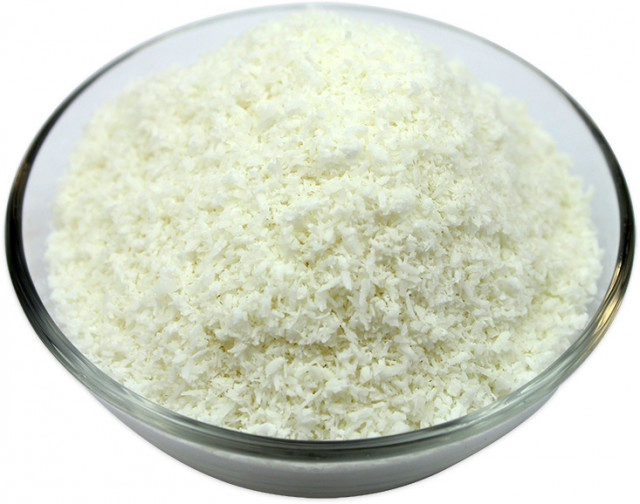
The global demand for coconut ingredients has experienced a paradigm shift over the last decade. Historically utilized primarily for its rich oils and fats, the modern food matrix now highly values the structural and nutritional properties of defatted coconut solids. Industrial food processors utilize low fat desiccated coconut as a bulking agent, texture enhancer, and dietary fiber supplement. This shift is driven by the explosive growth of the keto, gluten-free, vegan, and low-calorie food sectors across North America, Europe, and the Asia-Pacific region.
Sourcing patterns have concentrated around major tropical agricultural hubs, with Southeast Asia dominating the export market. While traditional markets have faced supply chain bottlenecks and climate-induced yield fluctuations, Vietnam has consolidated its position as a reliable, high-yield exporter. By integrating modern food processing facilities with sustainable farming initiatives, Vietnamese agricultural producers offer international buyers consistent access to top-grade coconut products with robust traceability protocols.
Essential Low Fat Desiccated Coconut Facts for B2B Importers
Understanding the fundamental physical and chemical attributes of this ingredient is the first step toward successful product development. When evaluating Low Fat Desiccated Coconut Facts, the most critical parameter for B2B buyers to consider is the fat ratio. While standard high-fat desiccated coconut contains between 60% and 65% fat, the low-fat variant generally ranges from 10% to 25% fat content. This reduction is achieved through the mechanical extraction of coconut oil from the fresh white meat before dehydration.
By reviewing the core low-fat desiccated coconut facts, product developers can better exploit its high moisture-binding capacity. Because the fat has been partially removed, the remaining cellular matrix of the coconut is highly hydrophilic, absorbing water and liquid binders efficiently. This makes it an exceptional ingredient for maintaining freshness and extending the shelf life of baked goods, nutrition bars, and extruded meat-alternative products. Additionally, it contains up to 40% dietary fiber by weight, presenting a massive clean-label marketing advantage for B2B food brands.
Cultivation Regions: The Vietnamese Agricultural Advantage
The quality of the final processed coconut is fundamentally determined by the soil, climate, and agricultural practices of the cultivation region. In Vietnam, the Ben Tre province in the Mekong Delta stands as the undisputed heart of coconut cultivation. Blessed with rich alluvial soil deposited by the Mekong River tributaries and a stable tropical monsoon climate, Ben Tre produces coconuts with exceptionally thick, sweet, and nutrient-dense kernels.
At VIHABA, we prioritize agricultural sustainability and close partnership with local farming cooperatives. Vietnamese farmers utilize natural organic fertilizing techniques and biological pest control methods, minimizing the dependence on synthetic chemicals. The harvest cycle operates year-round, ensuring that processing plants receive a continuous stream of fresh, mature coconuts. This consistent raw material flow translates directly into a stable, non-fluctuating supply of low fat desiccated coconut for our global import partners, protecting their manufacturing lines from seasonal disruptions.
Processing Methods: How Fat Content is Controlled
The processing of low fat desiccated coconut requires high precision to preserve nutritional value and prevent microbial contamination. The raw coconuts are first de-husked, and the hard inner shell is removed. Skilled operators then pare away the brown testa (the thin seed coat), leaving only the pure white kernel. This kernel undergoes a rigorous sanitization process, typically involving blanching with high-pressure steam to guarantee pasteurization and eliminate pathogens like Salmonella.
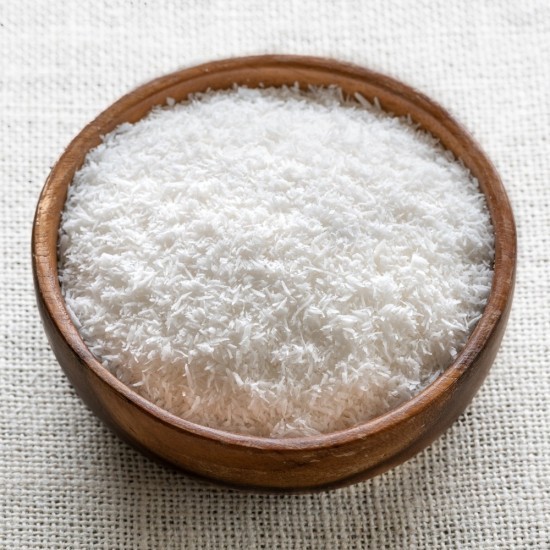
Once sanitized, the white meat is shredded or grated into specific cut sizes (Fine, Medium, or Super Fine). To control the fat content, the grated coconut is subjected to cold-press or expeller-press extraction. This physical pressing mechanism squeezes out the virgin coconut oil under controlled temperatures, leaving behind a partially defatted press cake. This cake is then carefully milled, dried in fluid-bed dryers until the moisture level drops below 3%, cooled, and sieved to ensure uniform particle size distribution. No chemical solvents or bleaching agents are used during Vihaba’s processing stages, guaranteeing a 100% natural and clean-label product.
Technical Specifications and International Quality Standards
For B2B procurement managers, purchasing decisions must be backed by rigorous technical specifications and international food safety certifications. Ensuring compliance with global standards protects your brand and guarantees smooth customs clearance at major destinations including the US FDA, European Food Safety Authority (EFSA), and Japan’s Ministry of Health.
The table below outlines the typical technical specification profile of premium-grade low fat desiccated coconut exported by VIHABA:
| Technical Parameter | Standard Specification Limit | Testing Methodology / Reference |
|---|---|---|
| Fat Content | 10% – 22% (Customizable to buyer spec) | AOAC 948.22 / Soxhlet Extraction |
| Moisture Content | Max 3.0% – 3.5% | Halogen Moisture Analyzer / Oven Drying |
| Free Fatty Acid (FFA) | Max 0.1% (calculated as Lauric Acid) | Titrimetric Analysis |
| Sulfur Dioxide (SO2) | Free from SO2 (Unsulfured) or Max 50ppm (Sulfured) | Monier-Williams Method |
| Physical Appearance | Natural creamy white, free from yellow specks | Visual / Colorimeter |
| Yeast and Mold | Max 100 cfu/g | ISO 21527 |
| Salmonella | Absent in 25g | ISO 6579 / PCR Test |
| E. coli | Absent in 1g | ISO 16649 |
In addition to these strict physical and microbiological parameters, VIHABA ensures our processing lines conform to major global certification schemes. Our facilities hold HACCP, ISO 22000, Halal, and Kosher certifications. This multi-layered compliance framework ensures that every batch of low fat desiccated coconut leaving our docks is ready for seamless integration into your premium food manufacturing systems.
Bulk Packaging, Storage, and Global Logistics
Because desiccated coconut is sensitive to ambient moisture, odors, and temperature variations, packaging and logistics must be treated with the highest level of care. If exposed to oxygen or humidity, the remaining fats can undergo hydrolytic or oxidative rancidity, destroying the flavor profile of the product. Therefore, premium packaging is non-negotiable for overseas transit.
We pack our low fat desiccated coconut in heavy-duty, multi-wall kraft paper bags with an inner heat-sealed polyethylene (PE) liner. Standard export sizes are 25 kg or 50 lbs net weight per bag, although we can accommodate customized bulk bags (Super Sacks) up to 500 kg for high-capacity industrial clients. During shipping, we utilize fully inspected, dry, and ventilated containers. Desiccated coconut must be stored in a cool, dry warehouse environment with temperatures maintained below 25 degrees Celsius and a relative humidity under 60%, away from direct sunlight and strong-smelling goods. Under these optimal storage conditions, the product has a stable shelf life of up to 12 to 18 months.
Conclusion: Partner with VIHABA for Premium Agricultural Exports
Selecting the right agricultural supply partner is essential to protecting your manufacturing workflow and ensuring product consistency. Armed with these critical Low Fat Desiccated Coconut Facts, B2B procurement professionals can clearly see that managing moisture, fat percentages, microbiological safety, and origin-level supply security are the cornerstones of successful product formulation. Vietnam’s premier agricultural infrastructure, combined with our advanced manufacturing capabilities, positions our low-fat desiccated coconut at the forefront of the global market.
As a leading exporter of Vietnamese agricultural commodities, VIHABA is committed to delivering unparalleled transparency, tailored specifications, and end-to-end logistics solutions. Our experienced export team handles all customs documentation, quality controls, and shipping procedures to ensure your shipment arrives on time, fully certified, and in immaculate condition. Contact our B2B sales team today to request samples, discuss customized specifications, or obtain a competitive quotation for your next bulk order.
Low Fat Desiccated Coconut FAQ
Disclaimer: Unless otherwise stated, the images used in this article are the property of their respective owners. We do not claim ownership of any third-party images featured, and they are used here strictly for informational and educational purposes. If you are the copyright holder and wish to have an image removed, please contact us.