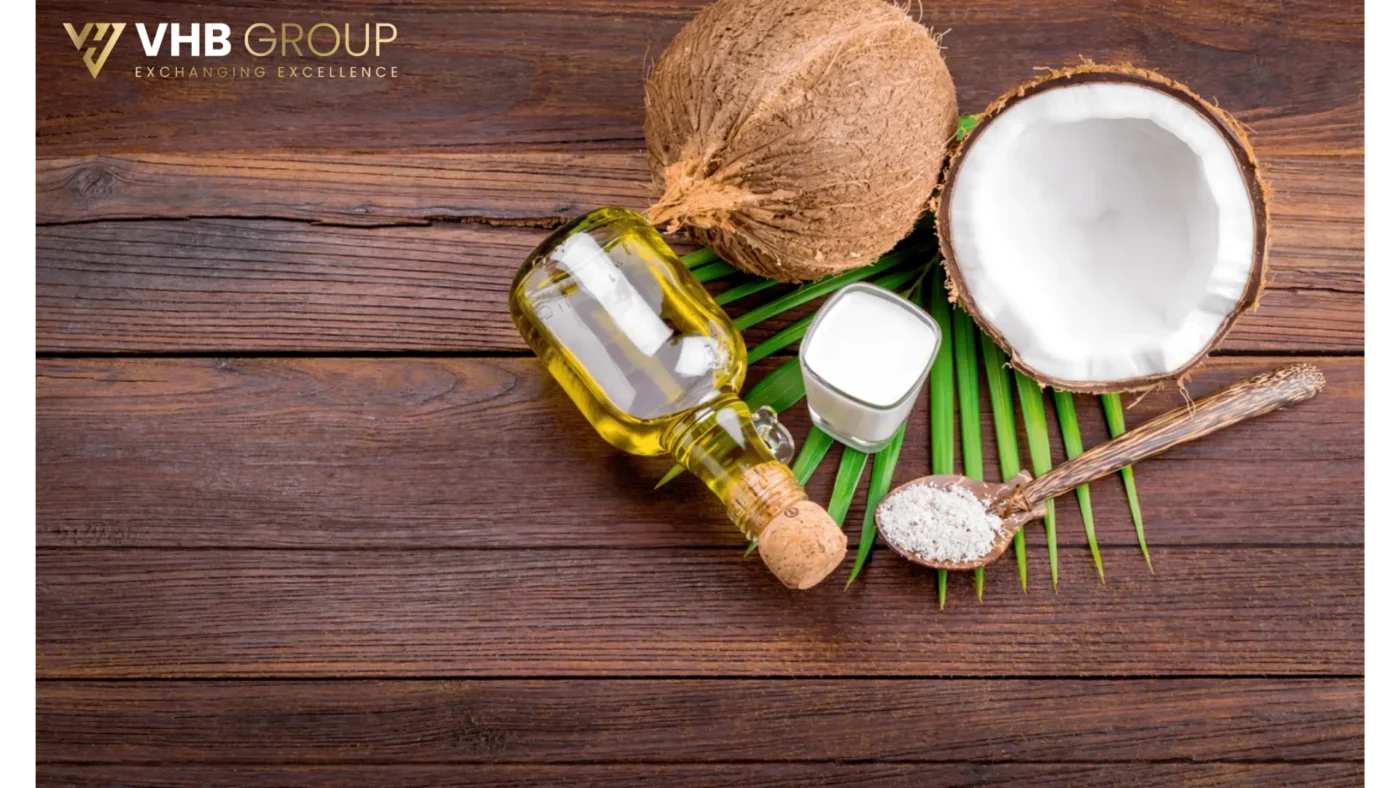
Evaluating Crude Coconut Oil Facts provides essential chemical data for technical directors, refinery managers, and industrial buyers analyzing unrefined coconut fat. Understanding the extraction mechanics, fatty acid composition, free fatty acid behavior, and thermal state transitions of Crude Coconut Oil (CNO) is critical when evaluating raw material yield for oleochemical splitting or RBD refining.
Crude coconut oil represents a major natural source of medium-chain saturated fatty acids. Its high lauric acid density, saponification profile, and oxidative stability distinguish it from other unrefined vegetable fats like crude palm oil or crude degummed soybean oil. This guide analyzes the physical, chemical, and functional facts governing crude coconut oil in industrial manufacturing.
Table of Contents
-
Extraction Chemistry and Raw Fat Characteristics
-
Comprehensive Fatty Acid Profile and Lauric Density
-
Industrial Quality Control Parameters: FFA, M&I, and Iodine Value
-
Phase Transition Physics and Solidification Dynamics
-
Comparative Quality Specifications Matrix
-
Frequently Asked Questions (FAQ)

1. Extraction Chemistry and Raw Fat Characteristics
Crude coconut oil is extracted mechanically from copra—the dried kernel meat of mature coconuts (Cocos nucifera). The unrefined fat retains natural copra phosphatides, trace moisture, carotenoid pigments, and free fatty acids generated during copra drying.
-
Unrefined Visual Profile: Liquid CNO displays a dark amber to yellowish color above 25°C (77°F) due to residual natural pigments and trace copra meal particulates.
-
Unrefined Aroma: Exhibits a rich, distinct roasted copra aroma resulting from the thermal drying of raw coconut meat prior to expeller pressing.
2. Comprehensive Fatty Acid Profile and Lauric Density
Over 90% of the fatty acid matrix of crude coconut oil consists of saturated fatty acids. It features a concentrated level of lauric acid (C12:0), making it a valuable commercial source for lauric oleochemicals.
Detailed Fatty Acid Breakdown
-
Lauric Acid (C12:0): Comprises 45.0% to 52.0% of the total lipid structure. Lauric acid provides exceptional cleaning and lathering properties when saponified into soaps and surfactants.
-
Myristic Acid (C14:0): Accounts for 16.0% to 20.0% of the fat profile.
-
Palmitic Acid (C16:0): Represents 7.0% to 10.0% of the total structure.
-
Caprylic Acid (C8:0) and Capric Acid (C10:0): Combined 10.0% to 14.0% medium-chain content.
-
Oleic Acid (C18:1): Monounsaturated fatty acid comprising 5.0% to 9.0%.
-
Linoleic Acid (C18:2): Polyunsaturated fatty acid comprising only 1.0% to 2.5%, explaining CNO’s low susceptibility to rapid oxidation compared to seed oils.
3. Industrial Quality Control Parameters: FFA, M&I, and Iodine Value
Industrial refiners evaluate crude coconut oil based on three primary technical benchmarks:
Free Fatty Acid (FFA as Lauric)
Free Fatty Acids measure the extent of hydrolytic breakdown in copra before pressing. Standard technical CNO contains 1.0% to 4.0% FFA. Higher FFA levels increase neutralization loss during industrial RBD refining, reducing finished oil yield.
Moisture and Insoluble Impurities (M&I)
Moisture and copra meal particulates accelerate acid hydrolysis during transit. Standard specifications enforce a maximum M&I threshold of 0.50% to 1.00% to ensure stability during ocean transport.
Iodine Value (IV 7.5 – 11.0)
The Iodine Value measures total double bonds. CNO’s low Iodine Value confirms high saturation, ensuring the raw fat resists rapid oxidation during storage in bulk refinery tanks.
4. Phase Transition Physics and Solidification Dynamics
Crude Coconut Oil Facts undergoes physical state changes based on ambient temperature:
-
Solid State (< 24°C / 75°F): Crystallizes into a firm, brown-white solid fat mass with a contracted volume density.
-
Liquid State (> 25°C / 77°F): Melts into a dark amber liquid fluid with high flowability and 1% to 2% volumetric expansion.
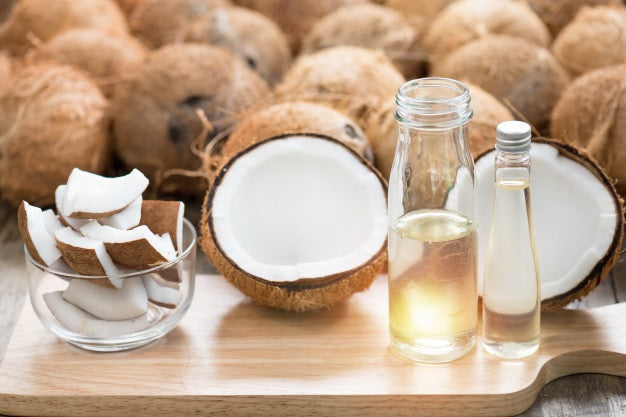
5. Comparative Quality Specifications Matrix
The following table outlines core technical metrics evaluated during quality control testing at VHB Group laboratories:
| Technical Parameter | Standard Technical Range | Test Method | Industrial Significance |
| Free Fatty Acid (FFA) | 1.0% to 4.0% Maximum | AOCS Ca 5a-40 | Determines refining loss yield in RBD plants. |
| Moisture & Impurities | Maximum 0.50% to 1.00% | AOCS Ca 2e-84 | Prevents acid hydrolysis during ocean shipping. |
| Iodine Value (IV) | 7.5 to 11.0 g I2 / 100g | AOCS Cd 1-25 | Confirms high saturation and oxidation resistance. |
| Saponification Value | 250 to 264 mg KOH/g | AOCS Cd 3-25 | High value indicates short/medium carbon chains. |
| Color (Unrefined) | Dark Amber / Yellowish | Visual / Lovibond | Raw state requiring bleaching clay treatment. |
Crude Coconut Oil Facts FAQ
Disclaimer: Unless otherwise stated, the images used in this article are the property of their respective owners. We do not claim ownership of any third-party images featured, and they are used here strictly for informational and educational purposes. If you are the copyright holder and wish to have an image removed, please contact us.