
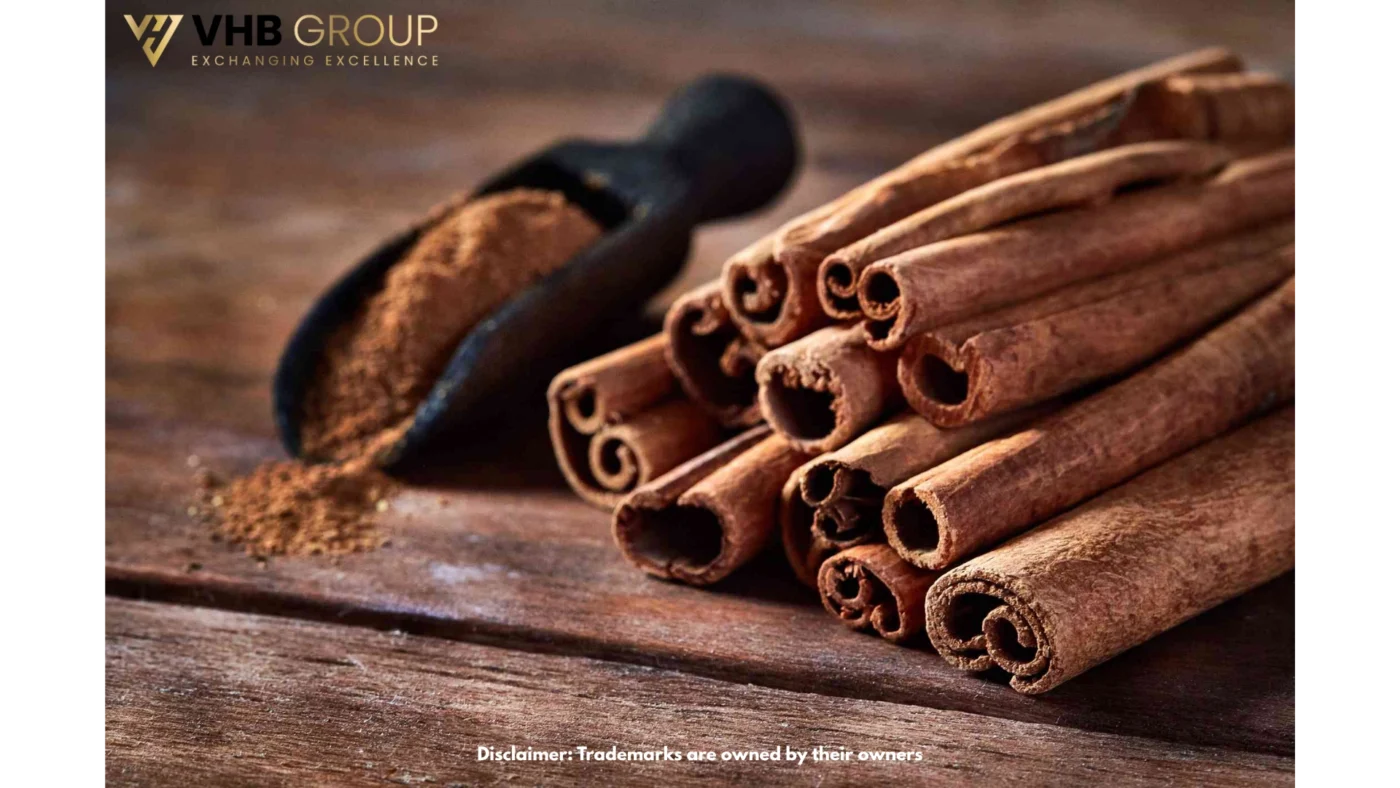
Sourcing Korintje Cinnamon Powder Bulk inventory provides commercial bakeries, breakfast cereal manufacturers, spice blenders, flavor houses, and retail food packagers with the world’s most widely consumed commercial ground cinnamon. Derived from the inner bark of Cinnamomum burmannii harvested in the fertile volcanic soils surrounding Mount Kerinci on the island of Sumatra, Indonesia, Korintje cinnamon is globally celebrated for its smooth, mild, sweet flavor profile, warm golden-brown color, and balanced volatile essential oil content (1.5% to 3.5% v/w).
For procurement directors, commercial buyers, and supply chain managers at VHB Group, procuring full container load (FCL) consignments of wholesale ground Korintje cinnamon requires evaluating key technical parameters. Procurement teams must manage Korintje grading tiers (KA, KB, KC), particle mesh size calibration, cryogenic milling controls, steam sterilization pathogen elimination, and international food safety compliance. This technical guide evaluates the operational, chemical, and logistical frameworks necessary to build a highly profitable distribution pipeline.
Table of Contents
-
Global Industrial Demand and Commercial Applications
-
Korintje Quality Grading Architecture: KA, KB, and KC Standards
-
Cryogenic Milling Technology and Volatile Oil Retention
-
Chemical Composition and Technical Quality Specifications Matrix
-
Bulk Packaging Logistics and Container Freight Yields
-
Import Compliance, Food Safety Standards, and Customs Documentation
-
Frequently Asked Questions (FAQ)
1. Global Industrial Demand and Commercial Applications
Korintje cinnamon powder represents the primary commercial grinding spice specified across North American and European food processing sectors:
Mass Commercial Bakeries and Breakfast Cereals
In commercial baking, Korintje cinnamon is the industry benchmark for cinnamon toast, breakfast cereals, graham crackers, sweet breads, and cookies. Its smooth, balanced sweetness provides a classic cinnamon aroma without the sharp pungency of Saigon cinnamon.
Spice Blends and Seasoning Formulations
Spice blenders utilize Korintje powder as a base for pumpkin spice blends, apple pie seasonings, curry powders, and sweet dessert toppings.
Dairy, Ice Cream, and Confectionery
Dairy processors incorporate fine Korintje powder into cinnamon ice creams, eggnogs, yogurts, and sweet dessert glazes.
2. Korintje Quality Grading Architecture: KA, KB, and KC Standards
Indonesian Korintje cinnamon bark is categorized at origin into standardized grading tiers before milling:
-
Korintje A (KA Grade): Harvested from the lower main trunk of mature trees (10+ years old). Features thin, scraped inner bark with high volatile oil content (2.5% to 3.5% VHO) and rich golden color.
-
Korintje B (KB Grade): Harvested from middle tree branches. Features medium bark thickness with moderate volatile oil content (1.5% to 2.5% VHO) and smooth sweet flavor.
-
Korintje C (KC Grade): Harvested from upper branches and twigs. Used primarily for low-cost commercial grinding and industrial extraction.
3. Cryogenic Milling Technology and Volatile Oil Retention
Converting raw Korintje Cinnamon Powder Bulk cinnamon bark into free-flowing, clean powder requires advanced industrial milling technology.
Cryogenic Liquid Nitrogen Grinding (VHB Standard)
Conventional high-speed hammer mills generate friction heat (50°C to 60°C) that evaporates delicate volatile oils. VHB Group utilizes cryogenic milling, injecting liquid nitrogen (-100°C) into the milling chamber. Liquid nitrogen freezes essential oils inside the bark matrix, preventing oil loss, preserving warm golden-brown color, and ensuring a free-flowing powder fine-tuned from 60 mesh down to 120 mesh.
4. Chemical Composition and Technical Quality Specifications Matrix
To meet ASTA and ESA standards, wholesale consignments of Korintje cinnamon powder supplied by VHB Group adhere to strict analytical metrics:
| Quality Parameter | Technical Standard Benchmark | Test Method | Functional Industrial Significance |
| Volatile Oil (VHO) | 1.5% to 3.5% v/w Minimum | ASTA Method 5.0 | Measures natural flavor strength and baking heat survival. |
| Particle Mesh Size | 60, 80, 100, or 120 Mesh | Sieve Shaker Analysis | Governs dissolution speed, visual appearance, and mouthfeel. |
| Moisture Content | Maximum 10.0% to 12.0% | ASTA Method 2.0 | Prevents powder caking, clumping, and microbial growth. |
| Coumarin Content | 1,000 to 3,500 mg/kg (ppm) | HPLC Analysis | Lower coumarin profile than Saigon Cassia. |
| Total Ash Content | Maximum 5.0% | ASTA Method 3.0 | Verifies mineral purity and freedom from soil dirt. |
| Acid-Insoluble Ash | Maximum 1.0% | ASTA Method 4.0 | Measures residual sand and silica levels. |
5. Bulk Packaging Logistics and Container Freight Yields
Ground Korintje cinnamon is packaged in multi-layer craft paper bags or FIBC super sacks for global ocean transit.
Multi-Layer Craft Paper Bags with Poly Liners (25kg Net)
Heavy-duty 3-ply craft paper bags fitted with 50-micron food-grade inner polyethylene barrier liners.
-
Payload Yield: 560 to 640 bags per 20ft FCL container (14.0 to 16.0 Metric Tons) or 880 to 960 bags per 40ft High Cube container (22.0 to 24.5 Metric Tons).

6. Import Compliance, Food Safety Standards, and Customs Documentation
Clearing ground spice imports through international customs requires complete compliance documentation verified by accredited testing laboratories:
-
Commercial Shipping Documents: Master Bill of Lading (B/L), Commercial Invoice, Detailed Packing List, and Certificate of Origin (COO).
-
Quality & Safety Certificates: Batch Certificate of Analysis (CoA) detailing moisture, mesh size, VHO, ash, and HPLC coumarin testing.
-
Steam Sterilization / Micro Certificate: Microbiological report certifying negative results for Salmonella, E. coli, and low total plate counts (TPC < 100,000 cfu/g).
-
Customs Tariff Classification: Classified under HS Code 0906.20.00 (Cinnamon and cinnamon-tree flowers, crushed or ground).
Korintje Cinnamon Powder Bulk FAQ
Disclaimer: Unless otherwise stated, the images used in this article are the property of their respective owners. We do not claim ownership of any third-party images featured, and they are used here strictly for informational and educational purposes. If you are the copyright holder and wish to have an image removed, please contact us.