
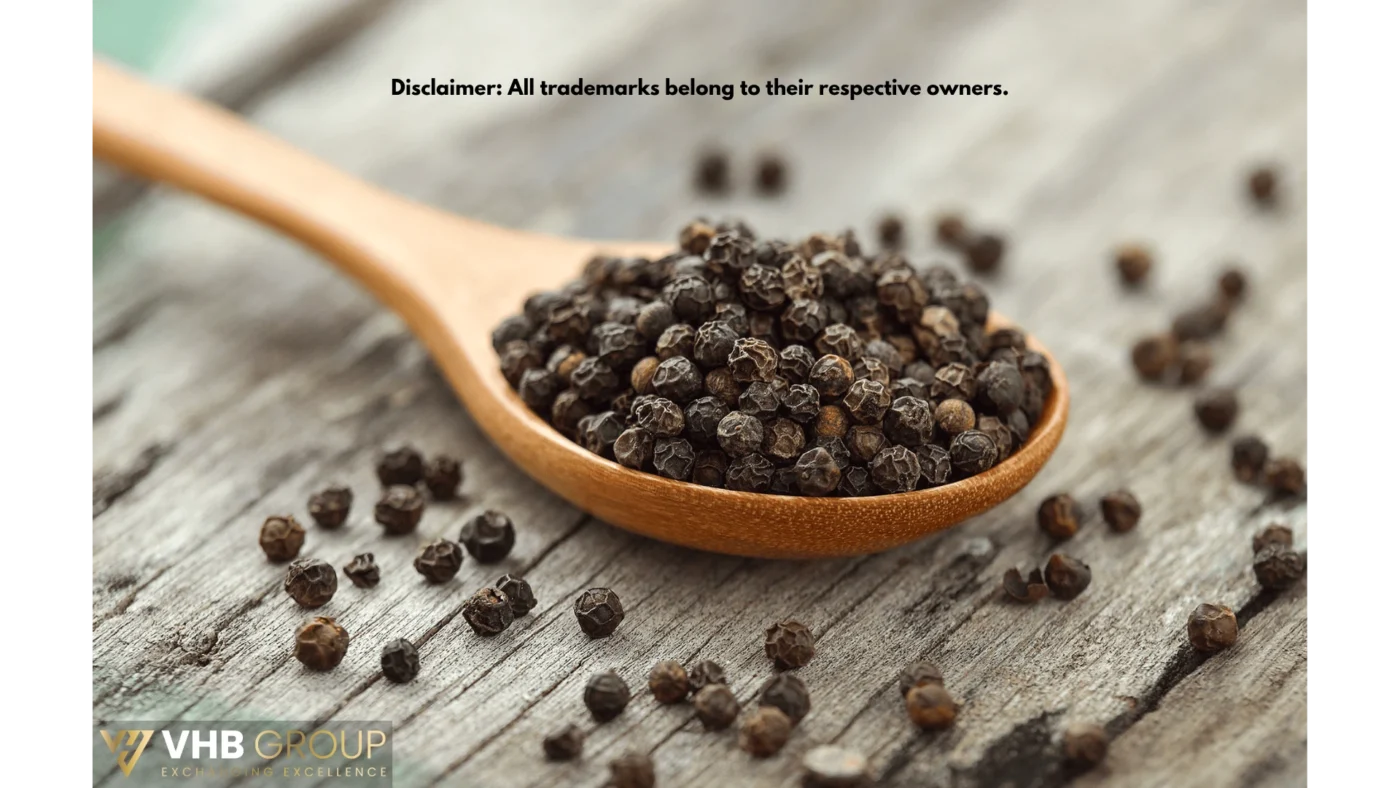
Understanding Black Pepper 530g/l Density Grading Facts is critical for industrial spice millers, oleoresin extractors, and food safety compliance officers. As detailed in our master guide on Black Pepper 530g/l Density Wholesale, 530 grams per liter (g/l) is the global benchmark for Fair Average Quality (FAQ) grinding pepper. However, transforming raw, farm-level pepper into export-ready 530g/l inventory requires sophisticated mechanical separation, destoning, and volumetric testing to ensure consistent density and purity.
In this deep dive, VHB Group explores the mechanics of volumetric density grading, the importance of machine cleaning (MC) processes, piperine retention, and ash content reduction.
Table of Contents
The Science of Volumetric Density in Black Pepper
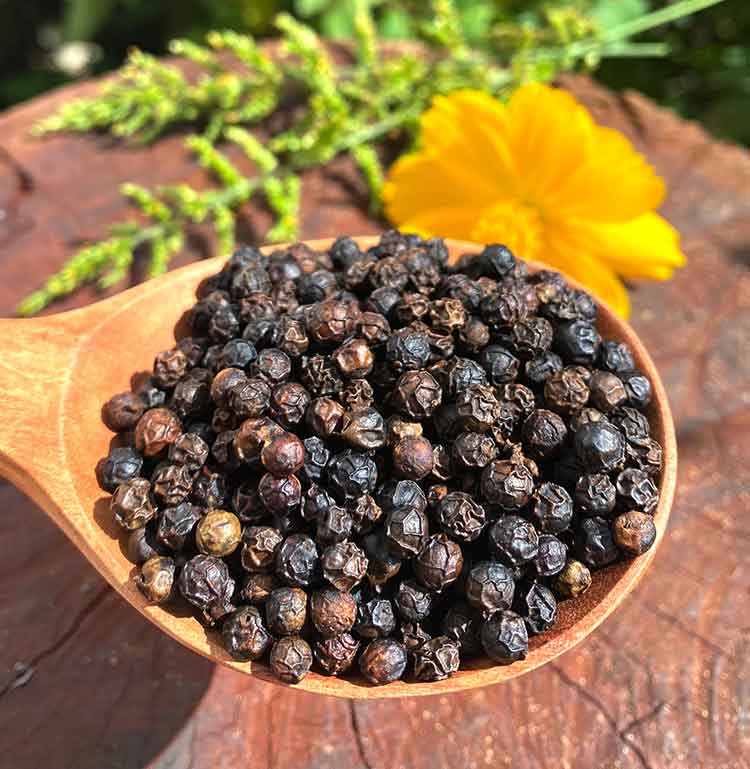
The fundamental metric of Black Pepper 530g/l Density Grading Facts is the mass-to-volume ratio. Density directly correlates to the physiological maturity of the pepper berry on the vine.
Source: Image courtesy of Wikimedia Commons
-
The Starch & Oil Core: A heavier density (530g/l) indicates that the inner core of the berry has fully developed its starch matrix and volatile oil glands. Lighter grades (e.g., 500g/l) often contain “pinheads” or partially hollow berries that dried prematurely.
-
Testing Protocol: Density is verified in processing facilities using a standardized 1-liter cylindrical brass measure. The cylinder is filled, leveled, and weighed to ensure the batch strictly meets or exceeds the 530g minimum requirement.
Machine Cleaning (MC): Aspirators and Destoning Mechanics
Raw pepper from the farm contains up to 3% to 5% foreign matter (twigs, soil, leaves, stones). To achieve export-grade 530g/l specifications, VHB Group employs advanced Machine Cleaning (MC) systems.
-
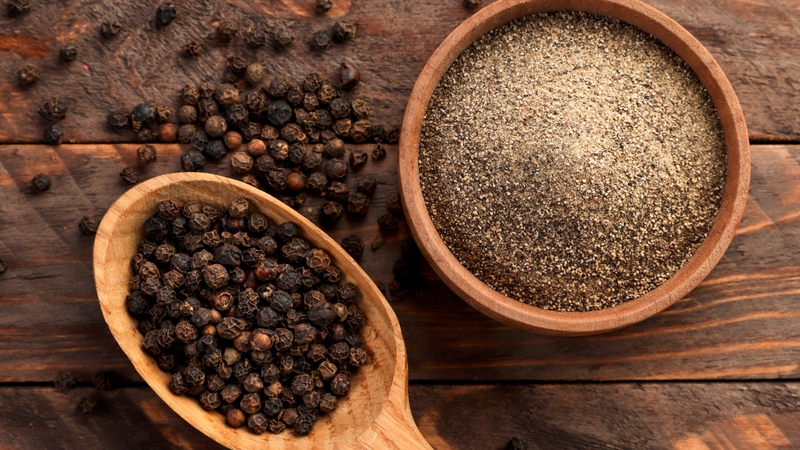
Air Aspiration: Powerful blowers push air through the falling peppercorns. Light debris, dust, and hollow “pinhead” berries are blown away, leaving only the heavier, solid berries required to hit the 530g/l target.
-
Vibratory Screens: Multi-deck screens sift out oversized stems and undersized immature berries.
-
Gravity Destoning: The pepper passes over a vibrating, tilted deck with upward airflow. Heavier stones and sand travel up the deck, while the lighter peppercorns float downward, effectively separating mineral contaminants.
For technical guidelines regarding allowable foreign matter in international spice trade, consult the U.S. Food and Drug Administration (FDA). Further botanical information is available on Wikipedia’s Black Pepper page.
Piperine and Essential Oil Preservation in 530g/l Grade
The pungency (heat) of black pepper comes from the alkaloid piperine, while its aroma comes from volatile essential oils (such as pinene and limonene).
Because 530g/l pepper consists of fully developed berries, it offers a highly robust chemical profile:
-
Piperine Content: Typically ranges from 4.5% to 5.5%.
-
Volatile Essential Oil: Typically ranges from 2.0% to 3.0%.
These metrics make 530g/l the most cost-effective grade for commercial spice grinders seeking maximum flavor yield per metric ton.
Moisture Control and Total Ash Reduction Protocols
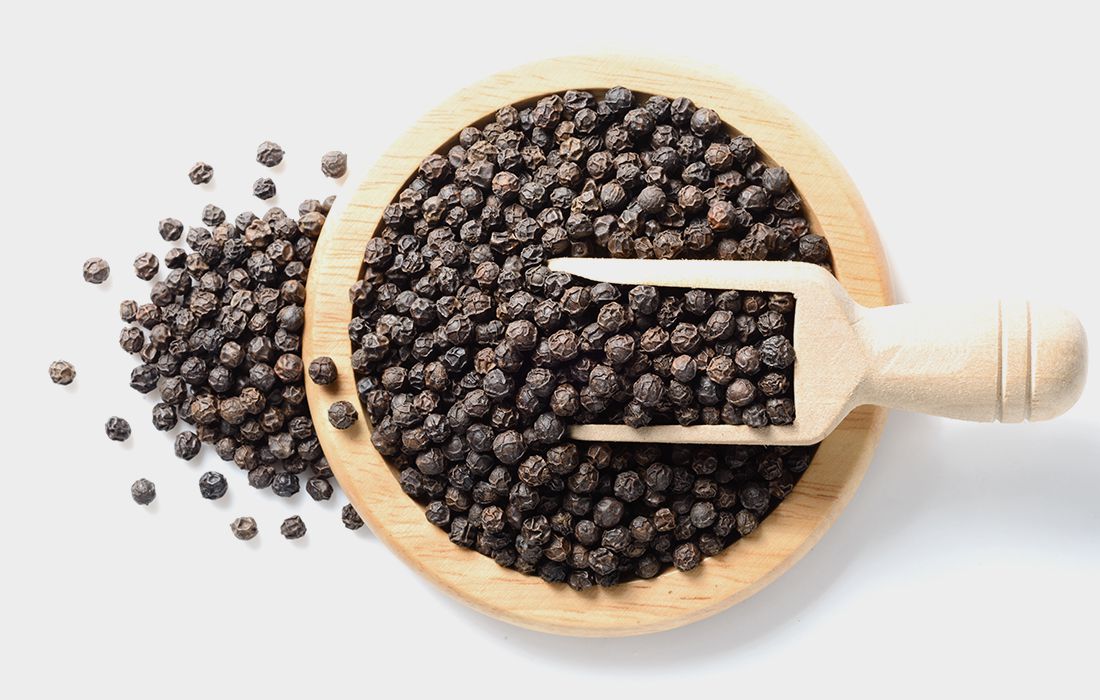
Evaluating Black Pepper 530g/l Density Grading Facts requires strict attention to moisture and ash limits to prevent rapid equipment wear and transit spoilage.
| Grading Parameter | Machine Cleaned 530g/l Specification | Impact on Industrial Use |
| Moisture Content | 13.5% Maximum | Prevents mold/aflatoxin during ocean freight. |
| Foreign Matter | 1.0% Maximum | Ensures purity for retail packing or grinding. |
| Total Ash | Below 7.0% | Indicates clean processing, free of heavy soil. |
| Acid Insoluble Ash | Below 1.5% | Low sand/silica content protects hammer mills from abrasive wear. |
Black Pepper 530g/l Grading FAQ
Disclaimer: Unless otherwise stated, the images used in this article are the property of their respective owners. We do not claim ownership of any third-party images featured, and they are used here strictly for informational and educational purposes. If you are the copyright holder and wish to have an image removed, please contact us.