
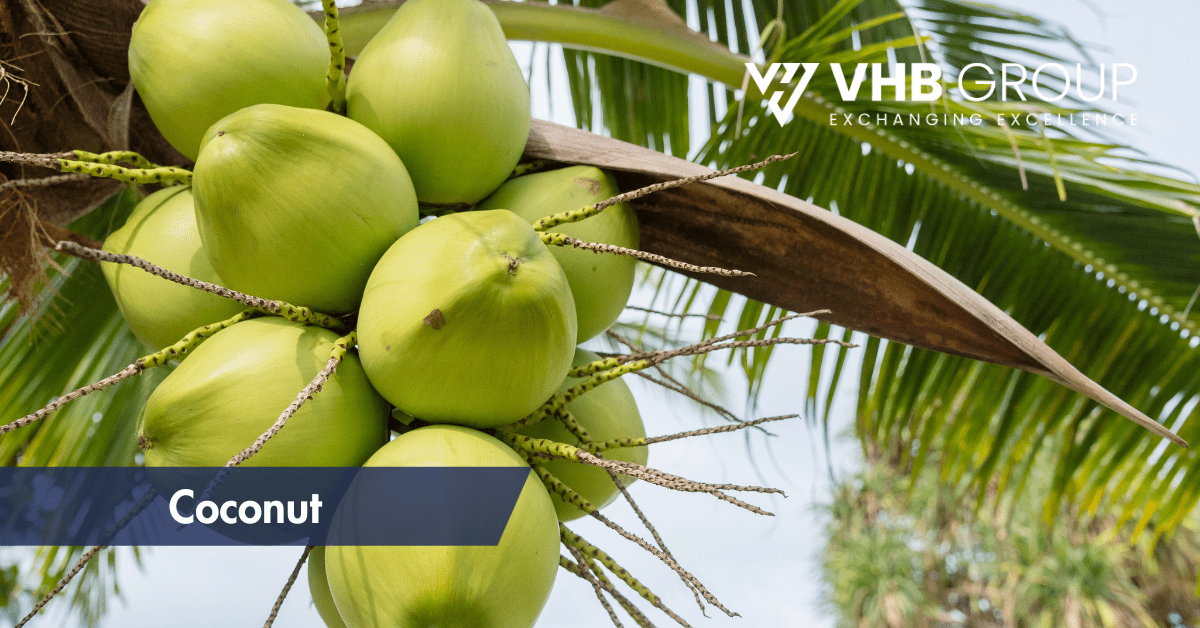
The global appetite for Vietnam coconut products is surging, positioning the nation as a key international supplier. Recent data from the Vietnam Fruit and Vegetable Association (VINAFRUIT) highlights a dramatic increase in export value, fueled by intense demand from major markets like the U.S. and China. For B2B partners, distributors, and food processors, understanding the unique characteristics and market dynamics of Vietnam coconut is critical for securing a reliable, high-quality supply.
Exponential Growth and Market Dominance of Vietnam Coconut
The export performance of the Vietnam coconut sector in early 2024 showcases its growing influence in the global market.
Impressive Export Figures
Official statistics strongly confirm the appeal of Vietnamese coconut products:
-
Fresh Fruit: Exports of fresh coconuts reached $13.4 million in February, a 45% increase year-on-year. Cumulative exports for the first two months totaled $33.3 million, marking an 18% rise from the previous year.
-
Processed Goods: Exports of processed items derived from the fruit saw an even more dramatic spike, hitting $23 million in February (up 112% year-on-year). The total for the first two months reached $43.8 million, an 86% increase over the previous year.
This robust growth is sustained by high production volume and specialized processing capabilities. Supported by over 600 active production and processing enterprises, Vietnam currently ranks fourth among coconut product exporters in the Asia-Pacific region and fifth globally.

High Preference in Key International Markets
Vietnamese coconut products enjoy exceptional popularity in major consumer markets:
-
United States: Exports to the U.S. surpassed $17 million in the first two months of the year, demonstrating a strong $46\%$ increase.
-
China: Vietnam has established itself as the third-largest coconut supplier to China, capturing over $20\%$ of that country’s market share.
Mr. Đặng Phúc Nguyên, General Secretary of $\text{VINAFRUIT}$, notes that American and Chinese consumers particularly favor this fruit due to its distinctive aroma and natural sweetness. Vietnamese products also offer practical export advantages, including ease of transport and extended shelf life, especially for processed goods like dried coconut, coconut milk, and canned coconut water.
Furthermore, traditional reliance on Vietnamese raw material is evident as major exporters like Thailand shift focus from dried to fresh consumption, increasing their import demand for the product. The coconuts are also highly regarded in discerning markets such as the European Union, Canada, and South Korea.
Addressing Supply Chain and Value Challenges
While demand for Vietnam coconut is surging, creating record high prices for farmers, the industry faces material and logistical challenges that require strategic B2B engagement.
Raw Material Scarcity and Price Volatility
Due to seasonal factors and high export demand, the current Vietnam coconut harvest is smaller than usual. This scarcity, combined with high domestic and international consumption, has driven fresh coconut prices to unprecedented levels, reaching 21,000 – 22,000 VND per fruit at retail, a record high.
- Impact on Processors: This price surge presents difficulties for many processing companies struggling to fulfill existing contracts based on previous, lower pricing. Some processors must now import raw coconut from countries like Indonesia or expand their purchasing areas into neighboring provinces to maintain production and meet orders.
Quality and Preservation Advantages
The success of Vietnam coconut in high-standard markets, such as the 40 countries currently importing fresh fruit, is underpinned by quality and technological advances.
- Sweet Siêm Coconut: The naturally sweet and refreshing Siêm variety of Vietnam coconut is highly favored in demanding markets.
- Advanced Preservation: Crucially, improved preservation technology allows fresh Vietnam coconut to maintain its quality for up to 70 days in transit, ensuring consumers receive a premium product.
Strategic Outlook and Government Support
The Vietnamese government recognizes the strategic importance of the coconut sector. The country currently boasts $200,000 \text{ hectares}$ of cultivation, yielding $2 \text{ million tons}$ annually. This crop is one of six key industrial crops approved for dedicated development through 2030, emphasizing its economic value across provinces like Bến Tre, Hậu Giang, and Trà Vinh.
The market for premium, naturally sweet Vietnamese coconut and its value-added products is experiencing historic growth. Secure your supply chain advantage by partnering with established Vietnamese exporters to navigate current raw material challenges.
Contact us to discuss forward contracts for high-quality fresh and processed Vietnam coconut products.