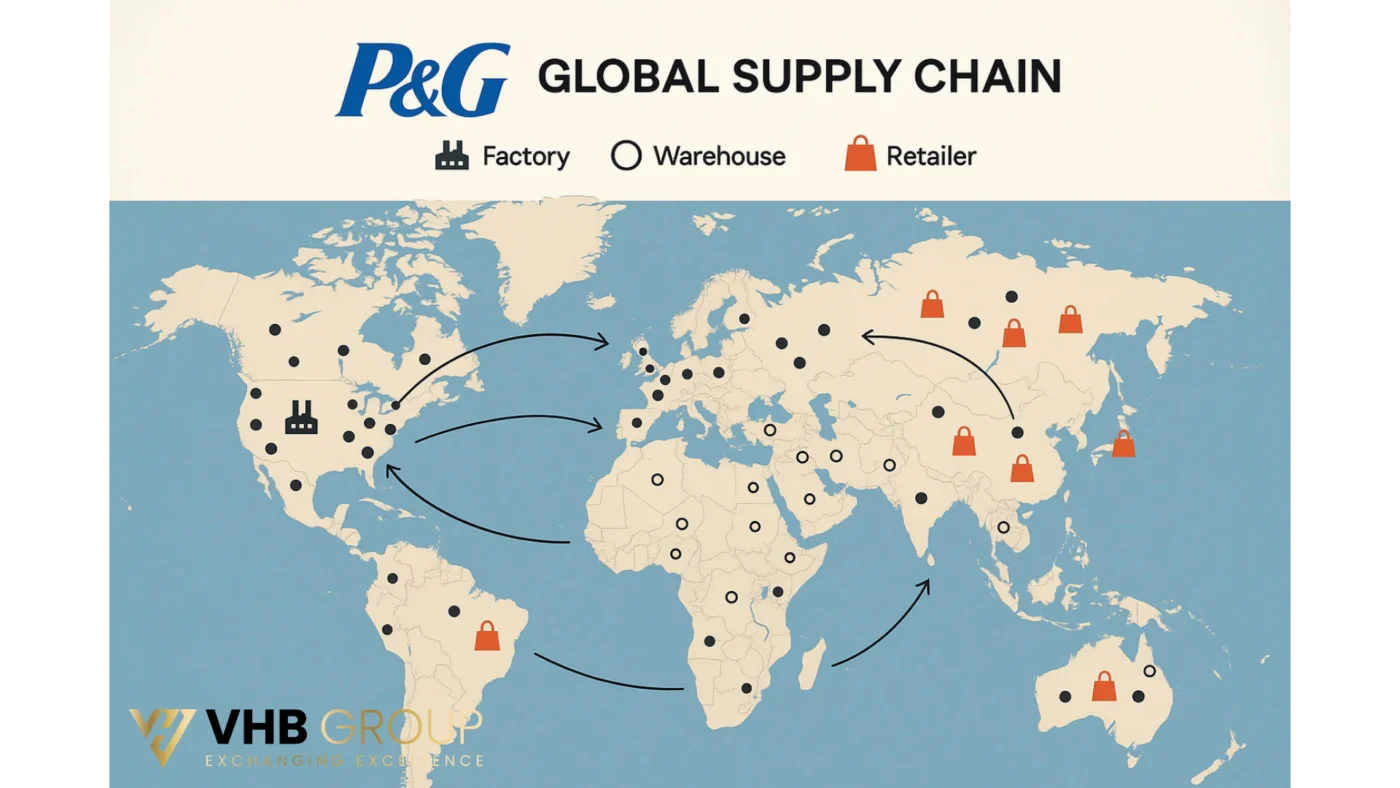
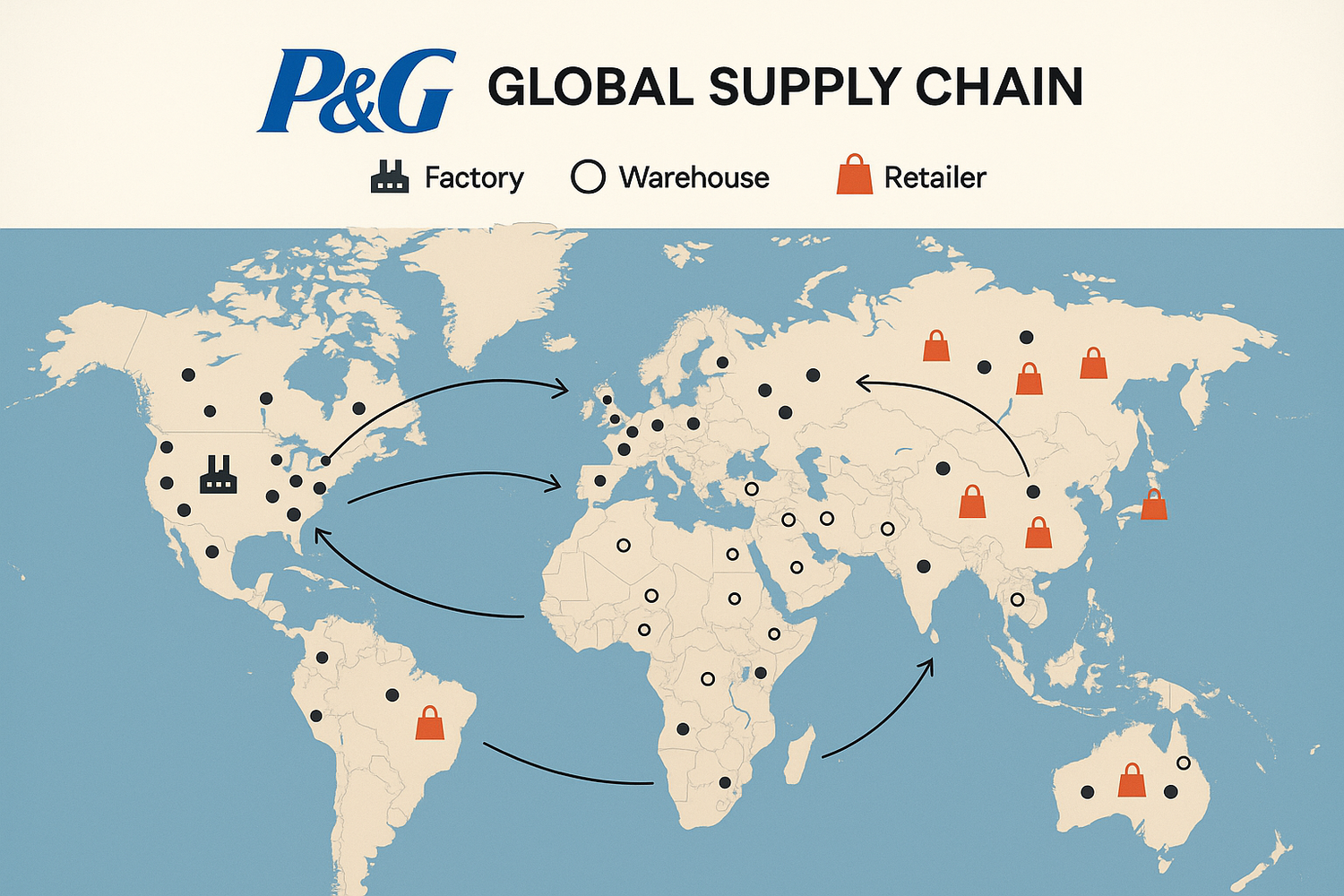
In today’s hyper-connected, relentlessly fast-paced global retail landscape, the operational reality of distributing imported P&G products is an incredibly delicate and complex balancing act. As local and international markets continue to evolve at breakneck speed in 2026, the demands placed on domestic distribution networks have reached unprecedented levels. Achieving market dominance now requires far more than simply moving massive volumes of cargo from an international port to a major regional supermarket. It requires flawlessly navigating fluctuating global shipping lanes, managing stringent customs regulations, reaching deeply into fragmented local retail networks, and responding instantaneously to hyper-local consumer purchasing behaviors. In this high-stakes environment, the traditional, linear logistics model is entirely obsolete.
At VHB Group, we serve as the critical bridge between global manufacturing and local consumption. We have fundamentally redesigned the entire domestic distribution framework through a core operational philosophy that we proudly call the Integrated Alliance Model. This innovative, future-facing approach completely transforms the traditional vendor-client dynamic into a deeply integrated, highly transparent, and environmentally unified ecosystem.
Today, VHB Group is immensely proud to serve as the premier sustainable logistics engine for the world’s leading consumer goods manufacturer. Successfully securing and distributing imported P&G products demands elite operational intelligence and robust digital integration to manage the vast, highly complex daily movement of their health, hygiene, and home care essentials. To truly understand how VHB Group executes this modern supply chain strategy, we must dive deeply into the monumental legacy of the brand we are moving and how historical supply chain innovations paved the way for modern logistics.
A Legacy of Supply Chain Resilience: The Historical Foundation
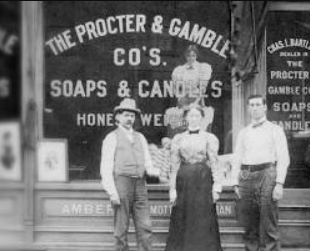
The modern dominance of this corporate powerhouse is not an accident of history; it is the result of over a century and a half of logistical mastery. Long before the invention of digital forecasting or automated warehouses, this enterprise was laying the groundwork for global trade.
The 1837 Ohio River Convergence
The origins of this consumer goods empire trace back to a brilliant geographic and strategic maneuver in Cincinnati, Ohio. In 1837, William Procter, an established candlemaker, and James Gamble, a soap artisan, recognized that competing for raw materials like animal fats was limiting their growth. Urged by their mutual father-in-law, the two merged their operations. Crucially, they positioned their unified company along the Ohio River. This waterway served as the ultimate 19th-century supply chain artery, allowing them to procure bulk raw materials efficiently and transport their finished household goods to emerging markets across the expanding United States.
Scaling Production During the Civil War
The true test of their operational resilience came during the American Civil War in the 1860s. The company won massive government contracts to provide the Union Army with essential hygiene and lighting products. Supplying a massive, constantly moving military force required the company to essentially invent high-volume continuous manufacturing and rigorous quality control. They learned how to package and transport goods so they could survive grueling conditions and arrive intact. This period forged an unshakeable corporate DNA focused on mass scalability and unwavering reliability under extreme pressure.
The Shift to Global Sourcing and Procurement
As the 19th century drew to a close, domestic resources alone could no longer satisfy the company’s explosive growth. They began looking across the oceans, establishing pioneering international supply lines to source exotic raw materials like palm and coconut oil for innovative items like Ivory Soap. This era marked their transformation from an American regional business into a truly international procurement powerhouse, navigating early tariffs, maritime shipping complexities, and cross-border trade.
A Century of Strategic Alliances
As the 20th century progressed, introducing revolutionary brands in laundry care, baby products, and personal grooming, the corporation realized that dominating the globe required local expertise. Instead of attempting to build proprietary distribution networks in every single country, they cultivated strategic alliances with specialized regional operators. VHB Group is the modern heir to this collaborative legacy. Today, the complex task of distributing imported P&G products relies on this exact foundation of mutual trust, combining the manufacturer’s global production scale with our hyper-local market mastery.
Dissolving Bottlenecks in International Trade
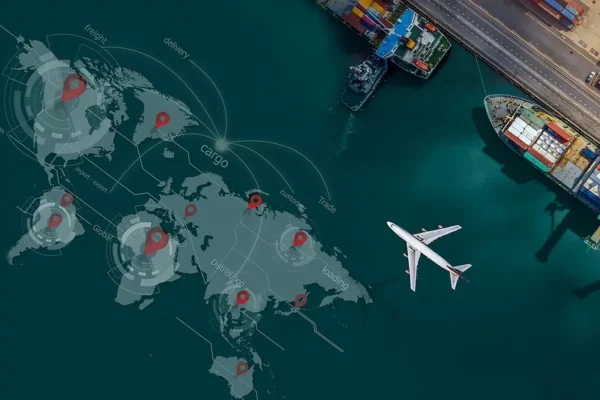
Bringing world-class, scientifically advanced clinical and household innovations across international borders is a monumental task. The finest precision razor or highest-efficiency laundry pod provides zero value to the consumer if it is locked in a shipping container at a port. VHB Group utilizes a proactive operational framework to ensure a frictionless pipeline from the overseas factory to the local shelf.
Predictive Routing and Port Agility
We refuse to be at the mercy of global supply chain disruptions. By leveraging advanced artificial intelligence and predictive data modeling, VHB Group forecasts transit times with incredible accuracy. If our systems detect a looming port strike, a sudden severe weather event in major shipping lanes, or localized political instability, we dynamically reroute incoming cargo. This agility guarantees that our pipeline remains unbroken when distributing imported P&G products, drastically cutting down on lead times and preventing nationwide stock shortages.
Strategic Stock Allocation and Inventory Cadence
Success in the FMCG sector is entirely dependent on having the right product, in the right volume, at the exact right location. VHB Group utilizes sophisticated regional sales data to map out hyper-local consumer demand. We position high-turnover imported SKUs in strategically located urban fulfillment centers to ensure rapid replenishment, while allocating specialized or seasonal items to broader regional hubs. This precise inventory cadence prevents the financial drain of warehouse bloat while maximizing product availability.
Absolute Regulatory Compliance and Customs Clearance
Navigating the legal intricacies of importing chemical-based cleaning agents and clinical personal care items requires absolute precision. VHB Group acts as an impenetrable compliance shield. Our in-house regulatory teams ensure that every single imported unit satisfies all domestic safety regulations, Ministry of Health guidelines, and strict localized labeling laws long before the cargo vessel even arrives. When distributing imported P&G products, this meticulous preparation prevents costly customs holds and legal friction.
Dominating the Modern and Traditional Retail Spectrum
A core pillar of our partner’s global mission is universal accessibility. These daily essentials must be available to every demographic, whether they live in a sprawling metropolis or a remote village. To fulfill this promise, VHB Group has engineered a localized logistics network capable of servicing every conceivable retail tier.
Synchronizing with Big-Box Modern Trade
The Modern Trade environment—comprising massive national supermarket chains, hypermarkets, and corporate convenience stores—operates on strict margins and unforgiving delivery schedules. Supplying this sector requires massive scale and automated precision. VHB Group integrates our warehouse management systems directly with the point-of-sale data of these major retailers. This allows us to automate inventory replenishment, ensuring that high-velocity shelves remain fully stocked during peak consumer shopping windows.
Fueling the Independent General Trade Economy
In many regions, the backbone of the economy is the General Trade sector: the hundreds of thousands of independent, family-owned neighborhood grocers and corner stores. For a logistics provider, distributing imported P&G products to this highly fragmented market is the ultimate test of capillary reach. VHB Group empowers these small business owners by offering highly frequent, small-batch deliveries. This “just-in-time” fulfillment model allows independent shops to offer premium, globally recognized brands without locking up their limited capital in massive bulk inventory.
Powering the E-Commerce and Omnichannel Boom
In 2026, the line between digital browsing and physical purchasing has vanished. Consumers expect to order household goods from their smartphones and have them arrive within hours. VHB Group powers this omnichannel velocity by operating dedicated micro-fulfillment centers. These specialized hubs are optimized specifically for rapid, direct-to-consumer e-commerce fulfillment, ensuring that digital marketing campaigns translate instantly into delivered goods.
Championing the Ambition 2030 Sustainability Mandate
Consumers today vote with their wallets, and they overwhelmingly favor brands that actively protect the environment. The “Ambition 2030” framework represents a massive, scientifically rigorous commitment to global sustainability. However, a brand cannot claim to be truly sustainable if its local distribution network is burning massive amounts of fossil fuels. VHB Group completely aligns our physical operations with these ecological targets, ensuring that the process of distributing imported P&G products is a carbon-conscious endeavor.
Electrifying the Final Mile
The “final mile” of any delivery network is the most environmentally damaging segment of the supply chain. VHB Group is actively dismantling this paradigm. We are aggressively transitioning our localized delivery fleets away from traditional combustion engines. By utilizing electric delivery vans (EVs) and hybrid freight trucks, combined with AI-powered route optimization software to eliminate unnecessary idling and empty return trips, we drastically reduce the greenhouse gas emissions associated with urban distribution.
Engineering Zero-Waste Facilities
Ecological responsibility must extend into the warehouse itself. VHB Group has retrofitted our distribution centers to operate as highly efficient, low-waste environments. We utilize biodegradable shrink wraps, implement automated, low-energy climate control systems, and utilize smart LED lighting. Furthermore, our strict First-In, First-Out (FIFO) and First-Expired, First-Out (FEFO) inventory protocols virtually eliminate the environmental tragedy of product spoilage and expiration waste.
Transparent Carbon Reporting and ESG Data
Corporate sustainability claims must be backed by hard, verifiable data. VHB Group operates with total transparency, actively feeding our localized fuel consumption, electricity usage, and waste reduction metrics directly into our partner’s global Environmental, Social, and Governance (ESG) dashboards. This total transparency allows the brand to accurately track their Scope 3 emissions (downstream distribution footprint), measure their carbon reduction progress in real-time, and confidently prove their environmental claims to an increasingly vigilant public.
The Future of Global-to-Local Synergies
The modern FMCG landscape belongs to organizations that can seamlessly connect global manufacturing power with hyper-local operational finesse. The era of disjointed, uncommunicative supply chains has officially come to an end.
A Forward-Looking Operational Blueprint
As VHB Group continues to scale our physical footprint and upgrade our technological capabilities, the Integrated Alliance Model will remain our guiding philosophy. We are profoundly honored to stand alongside an undisputed industry titan, ensuring that their scientifically backed, purpose-driven innovations successfully reach the local stage.
Securing the Consumer Pipeline
Flawless execution requires unshakeable corporate trust. Our partners rely on VHB Group to represent their commercial interests, protect their brand integrity, and uphold their ecological standards in the local market. By embracing the multifaceted challenges of distributing imported P&G products, we do much more than simply transport cargo. We ensure that the critical, everyday essentials that families depend upon for their health, hygiene, and homes are always within arm’s reach, while simultaneously safeguarding the environment for the generations to come.
Logistics & Distribution FAQ