
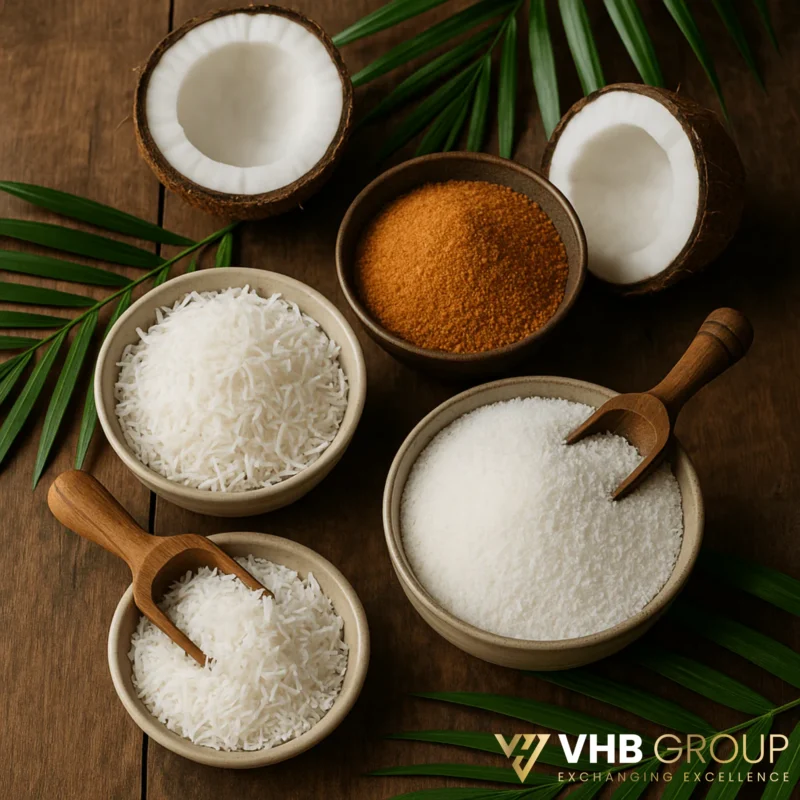
Sourcing high-quality agricultural commodities requires a deep understanding of the Desiccated Coconut Origin, as the geographic and climatic conditions of cultivation directly dictate the final product’s grade, flavor, and oil content. For B2B procurement managers, food manufacturers, and international importers, procuring desiccated coconut is not merely a transactional purchase; it is a critical supply chain decision. The selection of the origin determines not only the culinary and sensory characteristics of the final product but also its physical stability, compliance with international health standards, and shelf-life performance. As global demand for plant-based ingredients, confectionery items, and high-fat dietary components continues to escalate, identifying a reliable, sustainable, and highly standardized supply partner is paramount.
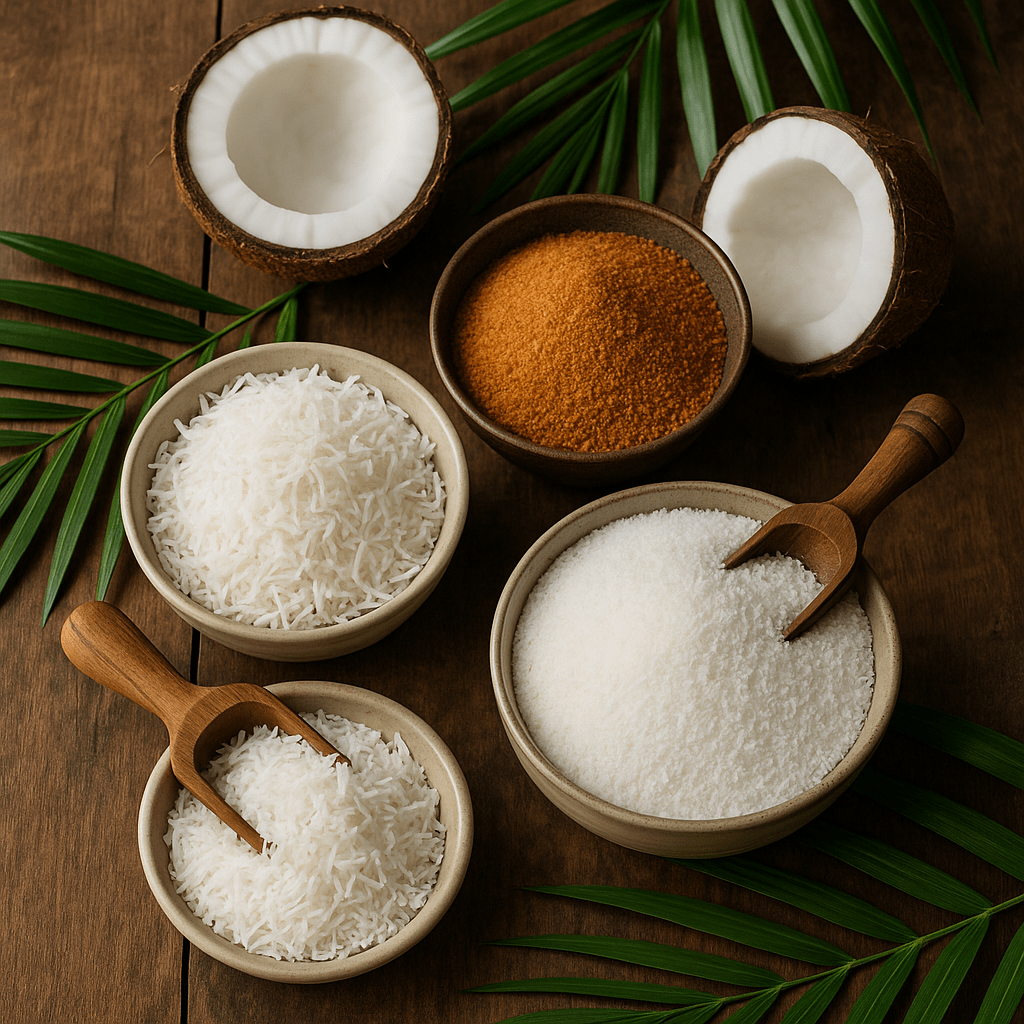
In this comprehensive guide, we will analyze the primary global regions of production, delve into the specific physical and agricultural dynamics of Vietnam as a premium sourcing hub, and outline the strict processing frameworks required to maintain quality from the tree to your warehouse. By evaluating the critical variables of moisture, fat concentration, and agricultural safety, B2B buyers can optimize their procurement strategies and secure reliable, high-volume shipping lines.
Table of Contents
- 1. Global Desiccated Coconut Origin and Market Dynamics
- 2. Key Factors That Define a Premium Desiccated Coconut Origin
- 3. Vietnam as a Leading Desiccated Coconut Origin of Choice
- 4. Rigorous Processing Standards at the Origin
- 5. Technical Specifications and Grading Tables
- 6. International Quality Certifications and B2B Compliance
- 7. Logistics, Packaging, and Supply Chain Integrity
- 8. Frequently Asked Questions (FAQs)
- 9. Conclusion and Partnership with VIHABA
Global Desiccated Coconut Origin and Market Dynamics
The global market for desiccated coconut is heavily concentrated in tropical ecosystems where coconut palms (Cocos nucifera) thrive. Historically, Southeast Asia has been the dominant force in production, with countries like the Philippines, Indonesia, and Vietnam acting as the primary engines of the global supply chain. Each geographic region imparts distinct profiles to the harvested coconut crop, primarily due to variations in soil chemistry, average annual rainfall, and agricultural maturity. Sourcing managers must analyze each Desiccated Coconut Origin to balance price competitiveness, logistical reliability, and chemical consistency.
In recent years, the market has witnessed a significant structural shift. Buyers are moving away from origins plagued by unpredictable weather patterns, aging plantations, and inconsistent governmental export policies. Instead, modern supply chains favor origins that demonstrate robust infrastructure investment, sustainable farming practices, and aggressive modernization of processing facilities. This shift has elevated Vietnam to the forefront of B2B agricultural exports, offering a resilient alternative with state-of-the-art manufacturing plants and direct access to major maritime shipping lanes.
To explore how these geographic and industrial characteristics affect your supply chain, visit our comprehensive breakdown of the Desiccated Coconut Origin options. Understanding these global dynamics is the first step toward building a diversified, disruption-proof inventory pipeline that meets both budget and quality targets.
Key Factors That Define a Premium Desiccated Coconut Origin
Not all coconut plantations yield the same grade of desiccated coconut. The raw material must meet precise agronomic standards to ensure that, once shredded and dried, it retains its organoleptic properties. Here are the fundamental elements that professional sourcing agents evaluate when assessing a Desiccated Coconut Origin:
1. Soil Chemistry and Climatic Harmony
Coconut palms require a specific microclimate to produce nuts with thick, dense kernels. The ideal conditions include an average annual temperature of 27 degrees Celsius, high humidity, and well-distributed rainfall exceeding 1,500mm per year. Furthermore, sandy, saline, and well-drained soils along coastal regions and river deltas are perfect for nutrient absorption. These factors directly influence the concentration of lauric acid and overall fat content within the coconut meat, which are critical indicators of product quality.
2. Harvesting Cycles and Maturity Verification
A premium origin is characterized by meticulous agricultural discipline. Coconuts must be harvested at the peak of maturity, typically between 11 and 12 months. Harvesting too early results in thin kernel meat with insufficient oil content and high moisture levels, leading to a rapid degradation of the dried product. Conversely, over-mature coconuts may begin to germinate, altering the flavor profile and introducing rancidity. Leading agricultural origins enforce strict grading protocols at the farm gate to ensure only fully mature, healthy husks enter the processing line.
3. Agricultural Sustainability and Fair Trade
Modern B2B consumers demand environmental and social accountability. A superior Desiccated Coconut Origin is one where farmers utilize integrated pest management, organic fertilization, and sustainable water management. Certifications like GlobalGAP, Fair Trade, and USDA Organic are no longer luxury labels; they are critical baselines for entry into high-value Western markets. This agricultural sustainability ensures long-term crop viability and protects downstream buyers from supply shocks caused by environmental degradation.
Vietnam as a Leading Desiccated Coconut Origin of Choice
Vietnam has rapidly emerged as a powerhouse in the global coconut sector, with the Mekong Delta—particularly the Ben Tre province—serving as the crown jewel of the country’s coconut industry. Known worldwide as the ‘Land of Coconuts’, Ben Tre boasts over 70,000 hectares of coconut plantations. The unique geological composition of this region, enriched by rich alluvial deposits from the Mekong River branches, provides an unparalleled nutritional foundation for coconut palms. This geological advantage makes Vietnam a highly sought-after Desiccated Coconut Origin.
What sets the Vietnamese origin apart is the combination of natural bounty and deliberate industrial strategy:
- Alluvial Soil Enrichment: The continuous flow of nutrient-dense river water ensures that the soil remains highly fertile without excessive reliance on synthetic chemical fertilizers, resulting in pure, clean, and safe coconut kernels.
- High Lauric Acid Concentration: Coconuts grown in Vietnam typically exhibit a high natural oil content (minimum 65% for high-fat grades), offering a rich, creamy, and authentic coconut flavor highly valued by premium confectioners and bakers.
- State-of-the-Art Processing Plants: Vietnamese manufacturers have invested heavily in automated processing equipment imported from Europe and Japan. These systems minimize human contact, ensure absolute hygiene, and maintain strict temperature control throughout the drying phase.
- Strategic Geographical Location: With proximity to major deep-water ports like Cat Lai in Ho Chi Minh City and Cai Mep in Ba Ria – Vung Tau, Vietnamese exporters can guarantee shorter transit times and lower shipping costs to key markets across North America, Europe, Asia, and the Middle East.
By establishing Vietnam as your primary Desiccated Coconut Origin, your enterprise secures a reliable stream of high-grade raw materials backed by a highly optimized logistics network and competitive trade agreements, such as the EVFTA (EU-Vietnam Free Trade Agreement) and RCEP.
Rigorous Processing Standards at the Origin
The transformation of a freshly harvested mature coconut into a shelf-stable, food-grade desiccated product is a highly technical process. Any deviation in temperature, moisture control, or sanitation can ruin entire batches. Understanding the processing steps at the Desiccated Coconut Origin is essential for verifying safety and quality standards:
1. De-husking, Shelling, and Paring
The outer fibrous husk and hard inner shell are carefully removed. The brown testa (skin) covering the white meat is pared away using specialized, food-grade stainless steel knives. This step must be performed with high precision; any residual testa will manifest as black spots in the final product, lowering its grade and market value.
2. Sterilization and Washing
The raw white kernels are washed extensively in clean, chlorinated, and filtered water to remove dirt and residual coconut water. To eliminate pathogens, particularly Salmonella and E. coli, the kernels undergo a continuous pasteurization or steam sterilization process. This step is a critical control point (CCP) in food safety management systems.
3. Milling and Grating
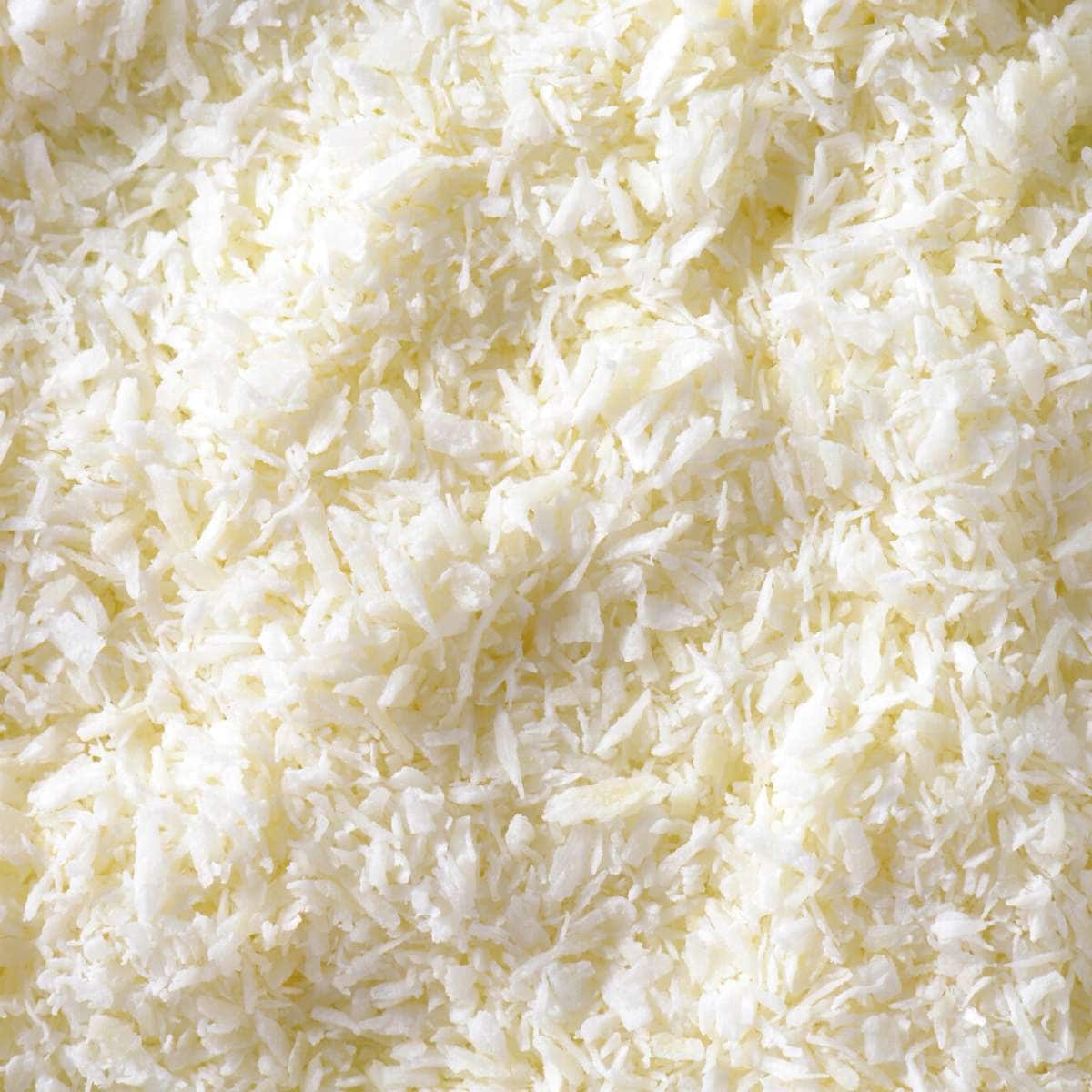
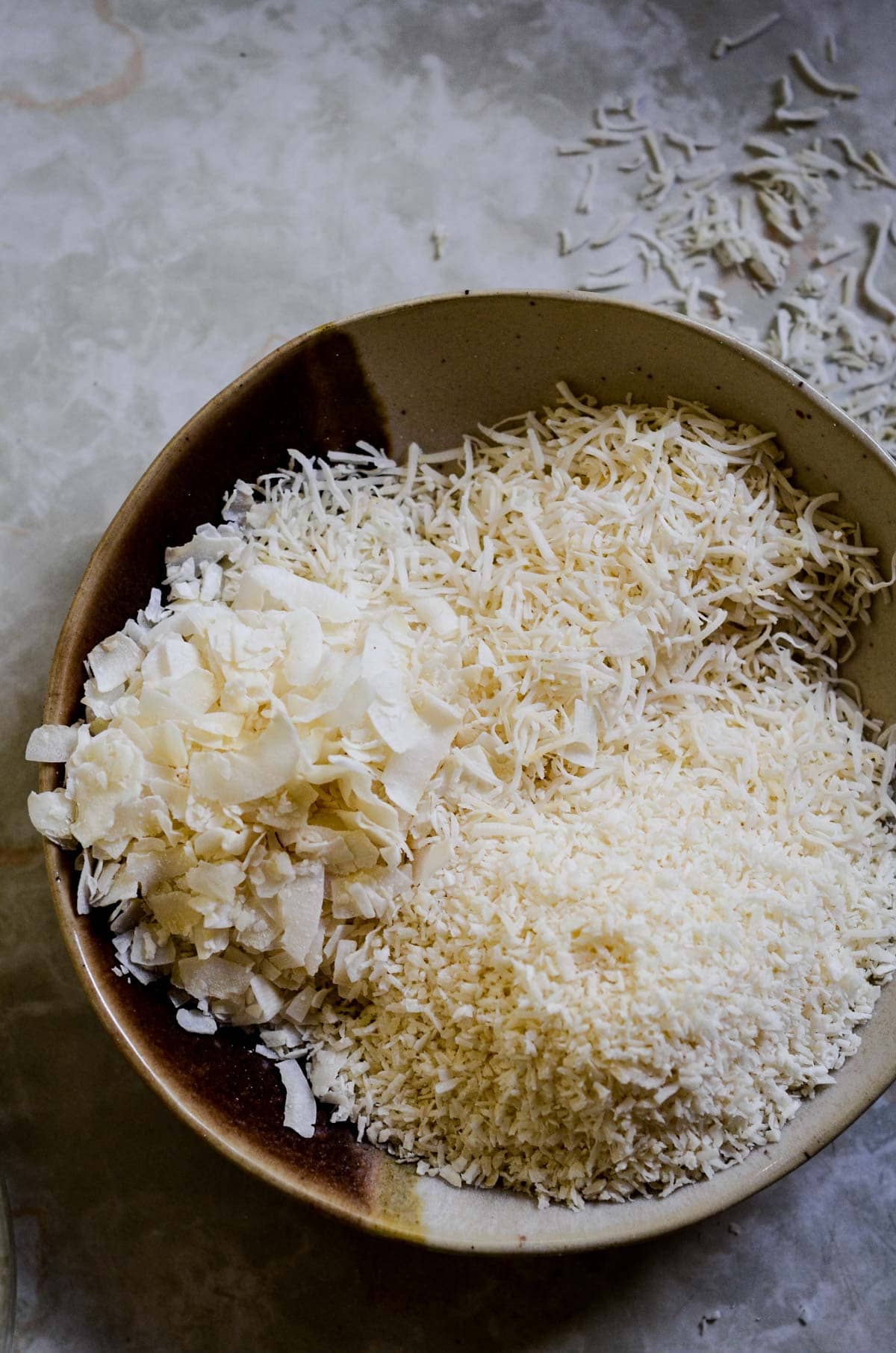
The sterile white meat is routed to mechanical cutters or disintegrators that shred the meat into uniform sizes. Depending on the client’s specifications, the meat is milled into Extra Fine, Fine, Medium, or Coarse flakes.
4. Fluidized Bed Drying
The grated coconut is transferred to a continuous fluidized bed dryer. Here, hot air heated to precise temperatures (usually between 70 to 80 degrees Celsius) is blown through the wet coconut beds. This process gently reduces the moisture content from approximately 50% to less than 3%, ensuring enzymatic inactivation, arresting bacterial growth, and preserving the natural fats without scorching the product.
5. Grading, Sifting, and Metal Detection
The dried product is sifted through standard stainless steel meshes to separate different grade sizes. It then passes through multi-stage magnetic separators and industrial metal detectors to ensure the complete absence of foreign metallic objects before packaging.
Technical Specifications and Grading Tables
B2B procurement requires concrete technical parameters rather than subjective descriptions. Below is the official specification sheet for premium grades exported from our audited Desiccated Coconut Origin facilities in Vietnam:
| Parameter / Standard | High Fat – Fine Grade | High Fat – Medium Grade | Low Fat – Fine Grade |
|---|---|---|---|
| Moisture Content | Max 3.0% | Max 3.0% | Max 3.5% |
| Fat Content (Dry Basis) | Min 65.0% | Min 65.0% | 35.0% – 45.0% |
| Free Fatty Acid (as Lauric) | Max 0.3% | Max 0.3% | Max 0.3% |
| Sulfur Dioxide (SO2) | Free (Natural) or Max 100 ppm | Free (Natural) or Max 100 ppm | Free (Natural) or Max 100 ppm |
| Color | Natural white, free from yellow specks | Natural white, free from yellow specks | Natural white, free from yellow specks |
| Particle Size (Sifting) | 1.40mm – 2.00mm mesh (80% minimum) | 2.00mm – 2.80mm mesh (80% minimum) | 1.40mm – 2.00mm mesh (80% minimum) |
| E. Coli & Salmonella | Absent in 25g | Absent in 25g | Absent in 25g |
This technical rigor guarantees that whether you are sourcing for confectionery coatings, dairy formulations, or bakery goods, the raw material performs predictably under commercial processing conditions.
International Quality Certifications and B2B Compliance
To operate seamlessly in global markets, export facilities at the Desiccated Coconut Origin must comply with strict food safety governance structures. Modern international buyers cannot afford the risk of product recalls or customs rejections due to biological or chemical contamination. VIHABA ensures that all manufacturing facilities under our control operate under world-class validation frameworks:
- ISO 22000 & HACCP: These form the baseline of our hazard analysis, ensuring that biological, physical, and chemical hazards are monitored and mitigated at every stage of production.
- BRCGS & IFS Food: Essential for European and British retail networks, these certifications confirm that our processing facilities operate under world-class safety, quality, and operational criteria.
- Halal & Kosher: Crucial for food manufacturers catering to diverse global populations, ensuring our processing lines are entirely free from cross-contamination and meet strict religious dietary laws.
- Social Audits (SEDEX/SMETA): We verify that our processing plants respect human rights, maintain fair working hours, provide living wages, and maintain safe working environments for all factory laborers.
By enforcing these standards, we insulate our global partners from regulatory hurdles, helping them maintain a transparent and compliant supply chain.
Logistics, Packaging, and Supply Chain Integrity
Because desiccated coconut has a high fat content, it is highly susceptible to oxygen exposure, heat, moisture ingress, and strong foreign odors. Therefore, physical packaging and logistical control are as vital as the processing itself. Standard packaging at the Desiccated Coconut Origin comprises multi-wall kraft paper bags with an inner food-grade polyethylene (PE) liner. For bulk industrial clients, heavy-duty polypropylene (PP) woven jumbo bags (ranging from 500kg to 1,000kg) are deployed.
To prevent rancidity (the oxidation of lipids resulting in off-flavors), containers must be clean, dry, and thoroughly inspected for leaks before loading. Shipping vessels must avoid proximity to heat sources (such as boiler rooms) and high-odor cargoes like spices or chemical compounds. At VIHABA, our dedicated logistics division monitors container sealing, humidity levels, and temperature parameters during inland transit, ensuring that the cargo reaches its final destination in pristine condition.
Frequently Asked Questions (FAQs)
What makes the Vietnamese Desiccated Coconut Origin unique compared to other origins?
Vietnam, specifically the Ben Tre province in the Mekong Delta, benefits from rich alluvial soil deposited by the Mekong River. This unique soil chemistry and balanced tropical climate yield coconuts with an exceptionally high natural fat and lauric acid content. Additionally, Vietnamese processing facilities utilize modern, automated machinery that ensures unparalleled microbiological safety and consistency.
What is the typical shelf life of desiccated coconut sourced from Vietnam?
When stored in cool, dry conditions (temperature below 25 degrees Celsius and relative humidity below 60%) in its original unopened packaging, high-quality desiccated coconut has a shelf life of 12 to 24 months. It is critical to keep the product away from direct sunlight and intense odors to prevent oxidation.
Can I order customized grades and particle sizes?
Yes. As a primary exporter with close ties to direct manufacturing facilities, VIHABA can customize the milling process to produce specific particle sizes (such as fancy flakes, threads, chips, or extra-fine powders) and adjust fat levels to meet your exact formulation requirements.
How do you guarantee the absence of Salmonella in your products?
We implement a multi-stage food safety system that includes high-temperature steam sterilization before the milling stage, followed by continuous microbiological monitoring at our in-house laboratories. Every export batch is accompanied by an official Certificate of Analysis (CoA) verifying the complete absence of Salmonella in 25 grams.
Does VIHABA support private label packaging?
Absolutely. We offer customized packaging options for B2B buyers, including customized private label printing on multi-ply kraft paper bags or custom bulk boxes, complete with full trace codes and export certifications.
Conclusion and Partnership with VIHABA
In conclusion, choosing the right Desiccated Coconut Origin is a critical strategic decision for global B2B buyers who refuse to compromise on quality, safety, and supply chain transparency. From the rich alluvial plains of Vietnam’s Mekong Delta to the highly controlled, automated drying chambers of modern processing plants, every link in the production chain matters. By prioritizing natural agricultural advantages, rigorous microbiological control, and international B2B standards, buyers can elevate their product lines and secure reliable market performance.
As a leading Vietnamese agricultural exporter, VIHABA is dedicated to bridging the gap between premium local farms and international markets. We offer direct sourcing, customized product specifications, exhaustive quality assurance, and seamless logistics management. Partner with VIHABA today to secure your volume requirements from the premier Desiccated Coconut Origin. Contact our expert export team to request samples, technical datasheets, or a competitive quote tailored to your operational needs.