
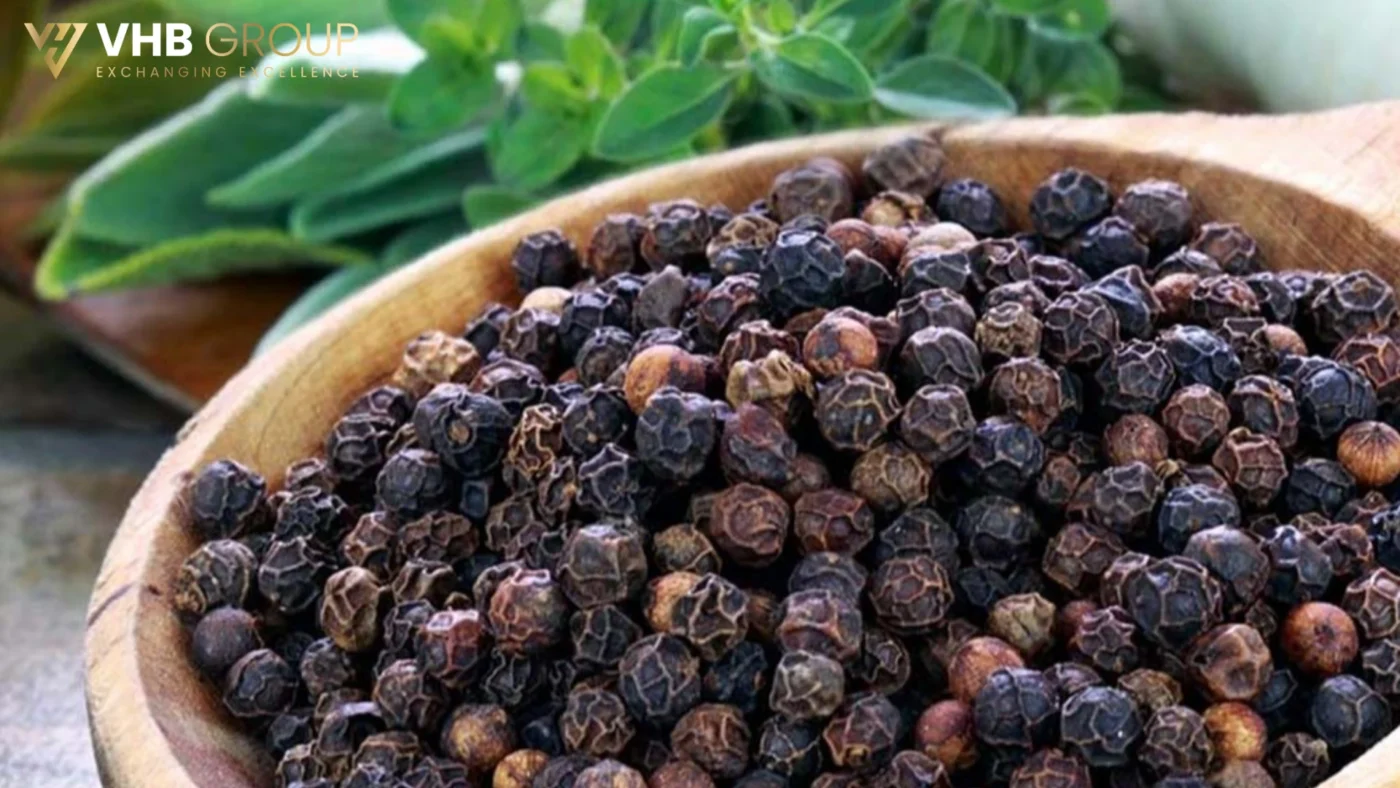
Understanding the core Agricultural Black Pepper Facts is essential for international B2B buyers looking to secure high-quality spice shipments from global leaders like Vietnam. Known historically as “black gold,” black pepper (Piper nigrum) remains the most heavily traded spice in the world, commanding a pivotal position in global food manufacturing, pharmaceuticals, and culinary arts. For commercial importers, sourcing decisions rely heavily on granular agronomic data, quality certifications, and processing transparency. This comprehensive guide provides an in-depth exploration of the primary technical, commercial, and logistical facets of this invaluable spice.
As global supply chains shift toward transparency and sustainability, buyers are demanding deeper insights into the origin, chemical composition, and post-harvest treatments of black pepper. From understanding bulk density standards to identifying the unique terroir of Southeast Asia’s prime growing regions, mastering these agricultural factors ensures a secure, high-yield supply chain. In this cornerstone guide, we compile the essential industry knowledge to optimize your wholesale spice procurement strategy.
Table of Contents
- Global Market Overview and Agricultural Black Pepper Facts
- Key Cultivation Regions in Vietnam
- Processing Methods & Quality Control
- Quality Standards: Essential Agricultural Black Pepper Facts for Importers
- Export Packaging, Storage, and Logistics
- Frequently Asked Questions
- Conclusion: Sourcing Premium Black Pepper with VIHABA
Global Market Overview and Agricultural Black Pepper Facts
When examining global spice trade dynamics, several foundational Agricultural Black Pepper Facts reveal why this commodity dictates market trends. Globally, black pepper production is concentrated in equatorial regions, with Vietnam leading as the undisputed powerhouse. Vietnam consistently produces over 40% of the world’s black pepper supply, exporting hundreds of thousands of metric tons annually to markets across North America, Europe, Asia, and the Middle East. Other significant producers include Brazil, Indonesia, India, and Malaysia, each offering distinct crop cycles and chemical profiles.
In the contemporary B2B landscape, the demand for black pepper is driven not just by volume, but by strict regulatory alignment. Industrial food processors, retail packagers, and extraction facilities require continuous verification of quality standards. Market shifts emphasize traceability, clean label initiatives, and low microbiological counts. Consequently, importers must move beyond transactional buying toward strategic partnerships with exporters who maintain integrated supply chains, from direct farm sourcing to state-of-the-art steam sterilization facilities.
Key Cultivation Regions in Vietnam
Vietnam’s dominance in the global black pepper market is rooted in its unique geography, favorable climate, and highly optimized agricultural practices. The country’s cultivation is primarily concentrated in two main geographic zones: the Central Highlands (Tay Nguyen) and the Southeastern region. These areas provide the perfect environmental conditions for the demanding Piper nigrum vine, which thrives in well-drained, nutrient-rich soils under consistent tropical humidity.
The Central Highlands: Dak Lak, Dak Nong, and Gia Lai
The Central Highlands represent the heart of Vietnam’s black pepper production. Regions like Dak Lak, Dak Nong, and Gia Lai sit on high-altitude basaltic red soil plateaus. This volcanic soil is naturally rich in organic matter, iron, and aluminum, offering superior water retention and aeration properties. Combined with a distinct wet and dry season, this terroir produces pepper berries with a high concentration of piperine and volatile oils, resulting in a bold, pungent flavor profile highly favored by international spice grinders.
The Southeastern Region: Binh Phuoc and Dong Nai
Slightly lower in altitude but highly productive, the Southeastern provinces of Binh Phuoc and Dong Nai are home to historic pepper plantations. The warm, humid climate here allows for rapid vine growth. Cultivation in these provinces benefits from proximity to major logistical hubs and deep-water ports in Ho Chi Minh City and Ba Ria-Vung Tau, reducing transit times from farm gate to processing facility and export vessels.
Sustainable Farming and Agronomic Practices
To meet the stringent requirements of modern international buyers, Vietnamese agricultural cooperatives have widely adopted sustainable farming models. These include Integrated Pest Management (IPM), drip irrigation systems to conserve water, and organic fertilization methods. Increasingly, farms are securing certifications such as GlobalGAP, Rainforest Alliance, and USDA Organic. These certifications guarantee that the black pepper is grown without harmful chemical residues, respects local biodiversity, and supports fair working conditions for local farmers.
Processing Methods & Quality Control
The transition from a raw agricultural harvest to an export-ready spice requires rigorous processing and quality control. At harvest, green pepper berries are hand-picked or gently threshed from the vine. The berries are then subjected to precise post-harvest processes that determine their final grade, moisture content, and cleanliness.
Traditional vs. Modern Drying Techniques
Traditionally, harvested berries are spread on concrete yards or mats to dry naturally under the sun for 3 to 4 days. While sun drying develops the characteristic deep black, wrinkled exterior of the spice, it exposes the product to environmental contaminants such as dust, debris, and animal activity. To counteract these risks, modern export processors utilize mechanical hot-air drying systems. These systems maintain strict temperature controls, accelerating the drying process while preserving volatile oils and ensuring a sterile, uniform product.
Mechanical Cleaning and Grading
Once dried, the raw pepper is transported to advanced processing plants. Here, it undergoes multi-stage mechanical cleaning. Air classifiers and gravity separators remove light berries, pinheads, and dust. Destoners extract heavy impurities like soil clods and stones, while high-intensity spiral separators isolate misshapen or split seeds. Finally, magnetic separators and industrial metal detectors ensure that the bulk product is entirely free of metallic contaminants, satisfying global food safety guidelines.
Steam Sterilization: Pathogen Elimination
For premium European, North American, and Japanese markets, raw black pepper must undergo steam sterilization. Traditional chemical fumigation (using ethylene oxide or methyl bromide) is heavily restricted or banned globally due to health concerns. Steam sterilization is a physical, non-toxic treatment where the pepper is exposed to high-pressure steam for a precise, brief duration (typically 20 to 40 seconds) followed by rapid drying. This validated process achieves a 5-log reduction in pathogens like Salmonella and E. coli while preserving the natural piperine content, volatile oil percentages, and the overall sensory characteristics of the spice.
Quality Standards: Essential Agricultural Black Pepper Facts for Importers
To trade successfully in international markets, exporters must adhere to precise physical and chemical grading specifications. These parameters are regulated by global bodies such as the American Spice Trade Association (ASTA) and the European Spice Association (ESA). Understanding these Agricultural Black Pepper Facts is vital for formulating accurate purchase orders and ensuring compatibility with your manufacturing processes.
For a complete look at product specifications, you can explore our dedicated hub on Agricultural Black Pepper Facts to configure your custom bulk order and view certified analysis sheets. Bulk density, measured in grams per liter (G/L), is the primary pricing and grading benchmark for black pepper. Higher bulk density indicates fully matured berries containing rich inner kernels, yielding superior flavor and grind recovery rates.
Standard Export Specifications Table
The following table outlines the key technical specifications for the primary grades of black pepper exported from Vietnam, ranging from standard Fair Average Quality (FAQ) to highly refined steam-sterilized grades:
| Specification Parameter | FAQ Grade (500 G/L) | FAQ Grade (550 G/L) | ASTA / Cleaned Grade (550 G/L) | Steam Sterilized Grade (570 G/L) |
|---|---|---|---|---|
| Bulk Density (g/l) | Minimum 500 | Minimum 550 | Minimum 550 | Minimum 570 |
| Moisture Content | Maximum 13.5% | Maximum 12.5% | Maximum 12.0% | Maximum 12.0% |
| Extraneous Matter (Admixture) | Maximum 1.0% | Maximum 0.5% | Maximum 0.2% | Maximum 0.1% |
| Light Berries | Maximum 10.0% | Maximum 5.0% | Maximum 2.0% | Maximum 1.0% |
| Piperine Content | 4.0% – 6.0% | 4.5% – 6.5% | 4.5% – 7.0% | 5.0% – 7.5% |
| Volatile Oil Content | Minimum 1.5% | Minimum 1.5% | Minimum 2.0% | Minimum 2.0% |
| Salmonella (per 25g) | Not Tested | Not Tested | Negative | Negative |
In addition to density and moisture, international buyers focus on mycotoxin levels (aflatoxin and ochratoxin A) and pesticide residues. Leading exporters like VIHABA collaborate with third-party testing organizations such as SGS or Eurofins to issue certified Certificates of Analysis (CoA) for every export batch, ensuring total compliance with destination market regulations.
Export Packaging, Storage, and Logistics
Maintaining the premium quality of black pepper during long-distance maritime transport requires robust packaging, moisture management, and meticulous logistics coordination. Because black pepper is hygroscopic—meaning it readily absorbs environmental moisture—improper storage can quickly lead to mold growth, musty odors, and loss of volatile oils.
Industrial Export Packaging Options
Depending on the buyer’s processing infrastructure, three main industrial packaging configurations are standard in the export market:
- Woven PP (Polypropylene) Bags (25 kg / 50 kg): The standard industry workhorse for FAQ grades. These bags are durable, cost-effective, and provide adequate protection for standard dry bulk shipments.
- Multi-wall Kraft Paper Bags with Inner PE (Polyethylene) Liner: Highly recommended for ASTA and Steam Sterilized grades. The paper layer protects against light-induced degradation, while the hermetic PE liner locks in essential volatile oils and blocks external moisture vapor transmission.
- Flexible Intermediate Bulk Containers (FIBC / Jumbo Bags – 500 kg to 1,000 kg): Ideal for high-capacity industrial food processors who utilize automated unloading and conveying systems at their destination plants.
Ocean Freight and Container Management
Black pepper is typically shipped in Dry Van (DV) ocean containers. To prevent “container sweat”—condensation that forms on the inner walls and ceiling of a metal container when crossing varying temperature zones—exporters use specialized liner bags, silica gel desiccants, and moisture absorption blankets. Containers must be thoroughly inspected prior to loading to guarantee they are dry, odorless, and completely free of holes, pests, or residues from previous cargoes.
Conclusion: Sourcing Premium Black Pepper with VIHABA
In conclusion, staying informed about the fundamental Agricultural Black Pepper Facts—ranging from optimal soil terroirs in Vietnam’s Central Highlands to state-of-the-art steam sterilization and grading standards—is crucial for commercial buyers seeking to de-risk their spice procurement. Navigating global logistics, sustainability mandates, and stringent food safety regulations requires an experienced partner on the ground who can bridge the gap between rural cooperatives and high-tech processing standards.
As a leading exporter of premium agricultural commodities in Vietnam, VIHABA is committed to delivering fully traceable, high-purity black pepper tailored to your specific industrial requirements. By managing our supply chain from origin to export vessel, we ensure consistent density, moisture compliance, and impeccable microbiological standards. Contact VIHABA today to consult with our spice sourcing experts, request certified samples, and secure reliable supply chains for your global business.
Agricultural Black Pepper Facts FAQ
Disclaimer: Unless otherwise stated, the images used in this article are the property of their respective owners. We do not claim ownership of any third-party images featured, and they are used here strictly for informational and educational purposes. If you are the copyright holder and wish to have an image removed, please contact us.