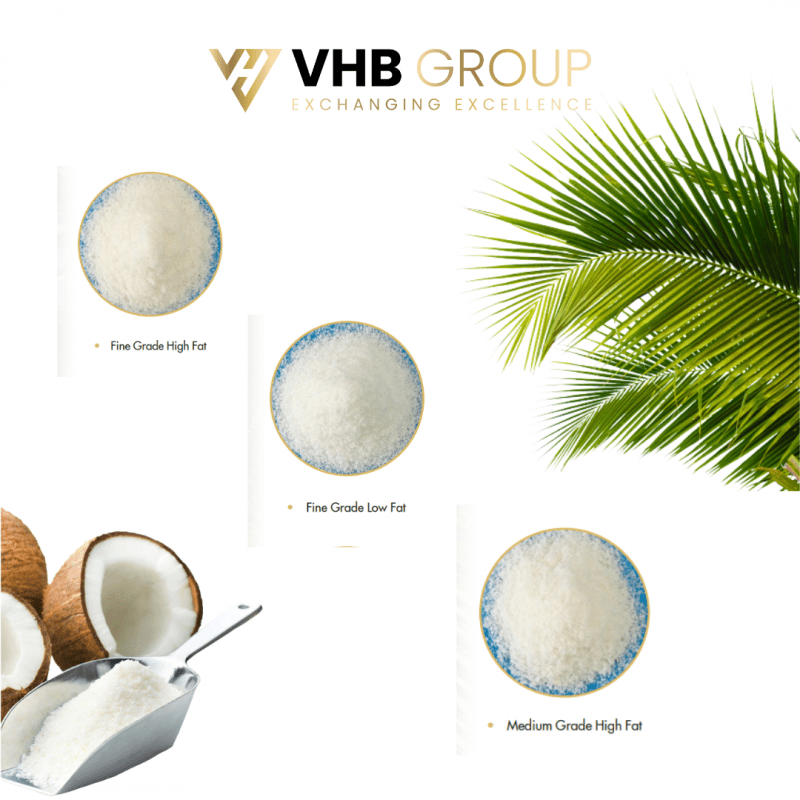
Analyzing Shredded Desiccated Coconut Facts provides essential technical and nutritional intelligence for B2B food manufacturers, quality assurance managers, and FMCG procurement directors. When structuring procurement orders for bulk inventory, understanding the chemical composition, oil fatty acid profiles, microbiological safety standards, and shelf-life stability parameters enables buyers to ensure compliance with destination country food safety laws and industrial production guidelines.
This technical cluster guide analyzes the chemical composition, lauric acid benefits, moisture stability, and food safety standards that define high-grade shredded desiccated coconut.
Table of Contents
-
Fatty Acid Profile: Lauric Acid and Medium-Chain Triglycerides (MCTs)
-
Physical Parameters: Moisture Limits, FFA, and Color Metrics
1. Chemical Composition and Nutritional Profile
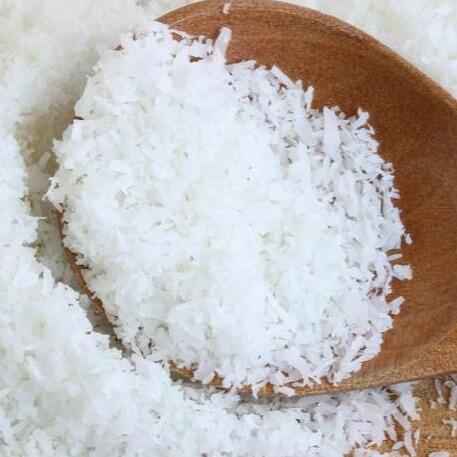
Shredded Desiccated Coconut Facts is the pure, dehydrated endosperm (white meat) of mature coconuts (Cocos nucifera) cut into slender strands. It contains no added sugars, water, or chemical fillers, making it an exceptionally pure agricultural commodity.
Typical Nutritional Analysis (per 100g High Fat Sample)
-
Energy Density: ~660 kcal to 690 kcal (2,760 kJ to 2,880 kJ)
-
Total Natural Fat: 62.0g to 68.0g (primarily healthy saturated medium-chain fats)
-
Dietary Fiber: 14.0g to 18.0g (high insoluble fiber supporting digestive health)
-
Natural Carbohydrates: 7.0g to 10.0g (naturally occurring sugars, less than 3.0g sucrose)
-
Protein: 6.0g to 8.0g
-
Moisture Content: 3.0% maximum
To review physical cut gradations and strand profiles, explore our guide on Shredded Desiccated Coconut Unique SKUs.
2. Fatty Acid Profile: Lauric Acid and Medium-Chain Triglycerides (MCTs)
The fat component of high-fat shredded desiccated coconut consists primarily of medium-chain fatty acids (MCFAs), which are rapidly absorbed and metabolized by the human liver for clean energy:
-
Lauric Acid (C12H24O2): Accounts for 45% to 53% of the total fat profile. Lauric acid exhibits natural antimicrobial, antibacterial, and antiviral properties.
-
Myristic Acid (C14H28O2): ~16% to 21%
-
Palmitic Acid (C16H32O2): ~7.5% to 10.2%
-
Caprylic & Capric Acids (C8 / C10): ~8% to 14% (key functional components of MCT energy oils)
3. Physical Parameters: Moisture Limits, FFA, and Color Metrics
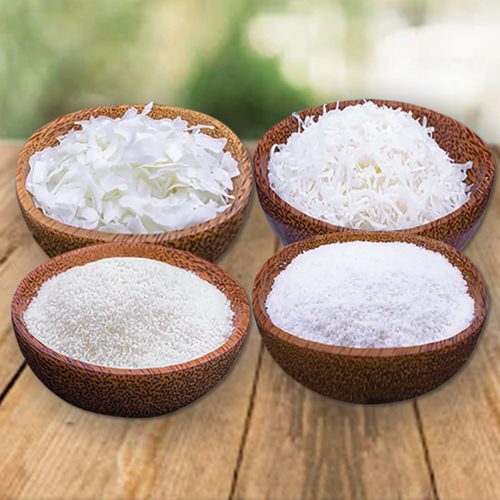
Quality control laboratories evaluate shredded desiccated coconut against strict physical benchmarks prior to export release:
-
Moisture Content (3.0% maximum): Dehydrated to 2.0%–2.5% to prevent bacterial activity, mold growth, and clump formation.
-
Free Fatty Acids (FFA 0.15% maximum): Measured as Lauric Acid equivalent. Low FFA percentages confirm fresh oil stability and zero enzymatic rancidity.
-
Color Brightness: Measured visually and colorimetrically to ensure a pure, natural white appearance free from yellow thermal oxidation or dark speck contamination.
-
Foreign Matter: 100% free from coconut shell fragments, husk fibers, insects, or extraneous foreign materials.
Chemistry of Oil Rancidity and Free Fatty Acid Development
Free Fatty Acids (FFA) serve as the primary chemical indicator of coconut oil degradation. When shredded desiccated coconut is exposed to moisture, heat, or lipolytic enzymes (lipases produced by molds), triglycerides break down via hydrolysis into free fatty acids and glycerol.
In high-fat shredded coconut, elevated FFA levels (exceeding 0.15% or 0.20%) produce a sharp, soapy taste and unpleasant off-odor, rendering the ingredient unusable for commercial baking or chocolate production. Quality assurance protocols mandate that suppliers maintain FFA levels below 0.15% at the time of export dispatch.
4. Microbiological Standards and Food Safety Compliance
Because shredded desiccated coconut is a raw agricultural product harvested and processed in tropical regions, steam-sterilization and rigorous microbiological screening are mandatory:
| Microbiological Parameter | Standard Industry Limit | Testing Method Reference |
| Total Plate Count (TPC) | 5,000 CFU/g or fewer | ISO 4833 / AOAC |
| Yeast and Mold | 100 CFU/g or fewer | ISO 21527 |
| Coliforms | 10 CFU/g or fewer | ISO 4832 |
| E. coli | Negative in 10g | ISO 16649 |
| Salmonella spp. | Absent in 250g / 375g | ISO 6579 / FDA BAM |
Modern Steam Sterilization Systems
To guarantee absolute compliance with international Salmonella safety standards without altering the natural flavor, color, or fat structure of shredded desiccated coconut, modern primary processing mills utilize automated continuous steam-sterilization systems.
These units expose the shredded coconut meat to superheated dry steam (100°C to 120°C) under precise pressure for 5 to 15 seconds, achieving a validated 5-log pathogen reduction. The coconut is then immediately re-dried in fluid-bed dryers to restore moisture levels below 3.0% before entering automated heat-sealed packaging lines.
5. Technical Sourcing Summary
Understanding Shredded Desiccated Coconut Facts empowers QA managers and B2B buyers to enforce strict quality standards during procurement. By verifying moisture limits, FFA percentages, and microbiological testing, importers guarantee smooth customs pre-clearance and superior end-product performance.
Our technical ingredient team provides full analytical support—including accredited Certificates of Analysis, allergen declarations, and non-GMO statements for every consignment. Contact our technical sales team today to request laboratory documentation, physical samples, and wholesale container quotes for baseline Shredded Desiccated Coconut Bulk orders.
Shredded Desiccated Coconut Bulk FAQ
Disclaimer: Unless otherwise stated, the images used in this article are the property of their respective owners. We do not claim ownership of any third-party images featured, and they are used here strictly for informational and educational purposes. If you are the copyright holder and wish to have an image removed, please contact us.