Exploring Ceylon Cinnamon Sticks Origin parameters provides agricultural importers, spice processors, flavor chemists, and retail category managers with deep insights into how regional harvest geography, coastal soil chemistry, traditional peeling craftsmanship, and Sri Lankan estate management govern finished quill quality. While all true Ceylon cinnamon belongs to the species Cinnamomum verum, subtle variations in quill diameter, color, oil density, and aromatic notes trace directly back to harvest origins.
Evaluating origin parameters allows procurement directors at VHB Group to secure origin-traceable supply chains, optimize volatile oil potency, and satisfy strict European Union Deforestation Regulation (EUDR) mandates.
Table of Contents
-
The Agronomic Terroir of Sri Lankan Cinnamon Plantations
-
Traditional Peeling Craftsmanship and Multi-Layer Quill Rolling
-
Regional Sourcing Zones: Galle, Matara, Ratnapura, and Southern Provinces
-
Origin Comparison Matrix: Ceylon vs. Saigon and Korintje Origins
-
EUDR Compliance, Fair Trade Traceability, and Smallholder Sourcing
-
Frequently Asked Questions (FAQ)
1. The Agronomic Terroir of Sri Lankan Cinnamon Plantations
Sri Lanka (formerly Ceylon) produces over 85% of the world’s supply of Cinnamomum verum. The unique physiological development of the tree’s inner bark depends on specific tropical island conditions:
[Sri Lankan Tropical Island Terroir]
  ├── Coastal Alluvial Sandy Loam Soils (High Potassium)
  ├── Annual Rainfall between 1,800mm and 2,500mm
  ├── High Solar Irradiation (2,200+ Hours/Year)
  └── Tropical Humidity & Warm Ambient Temperatures (27°C - 32°C)
-
Soil Chemistry: Sandy alluvial soils along Sri Lanka’s southern coastal belt promote thin, pliable inner bark growth with high aromatic oil content.
-
Micro-Climate Synergy: The interplay between monsoonal rainfall and high coastal sunshine drives rapid sap flow, allowing inner bark layers to separate cleanly from hardwood cores during harvest.
2. Traditional Peeling Craftsmanship and Multi-Layer Quill Rolling
Converting harvested stems into export-grade Ceylon cinnamon quills requires specialized manual artistry handed down through generations of Sri Lankan peeling families:
-
-
Harvesting Young Shoots: Straight vertical shoots (1.5 to 2.0 meters long) are cut from coppiced stools during the rainy season when sap flow is highest.
-
Outer Bark Scraping: Workers scrape away the rough, green outer skin using brass tools to expose the delicate, golden-brown inner bark (phloem).
-
Rubbing and Unsheathing: The scraped stem is rubbed smoothly with a brass rod to loosen the inner bark. Longitudinal cuts are made, allowing paper-thin strips of inner bark to be peeled off intact.
-
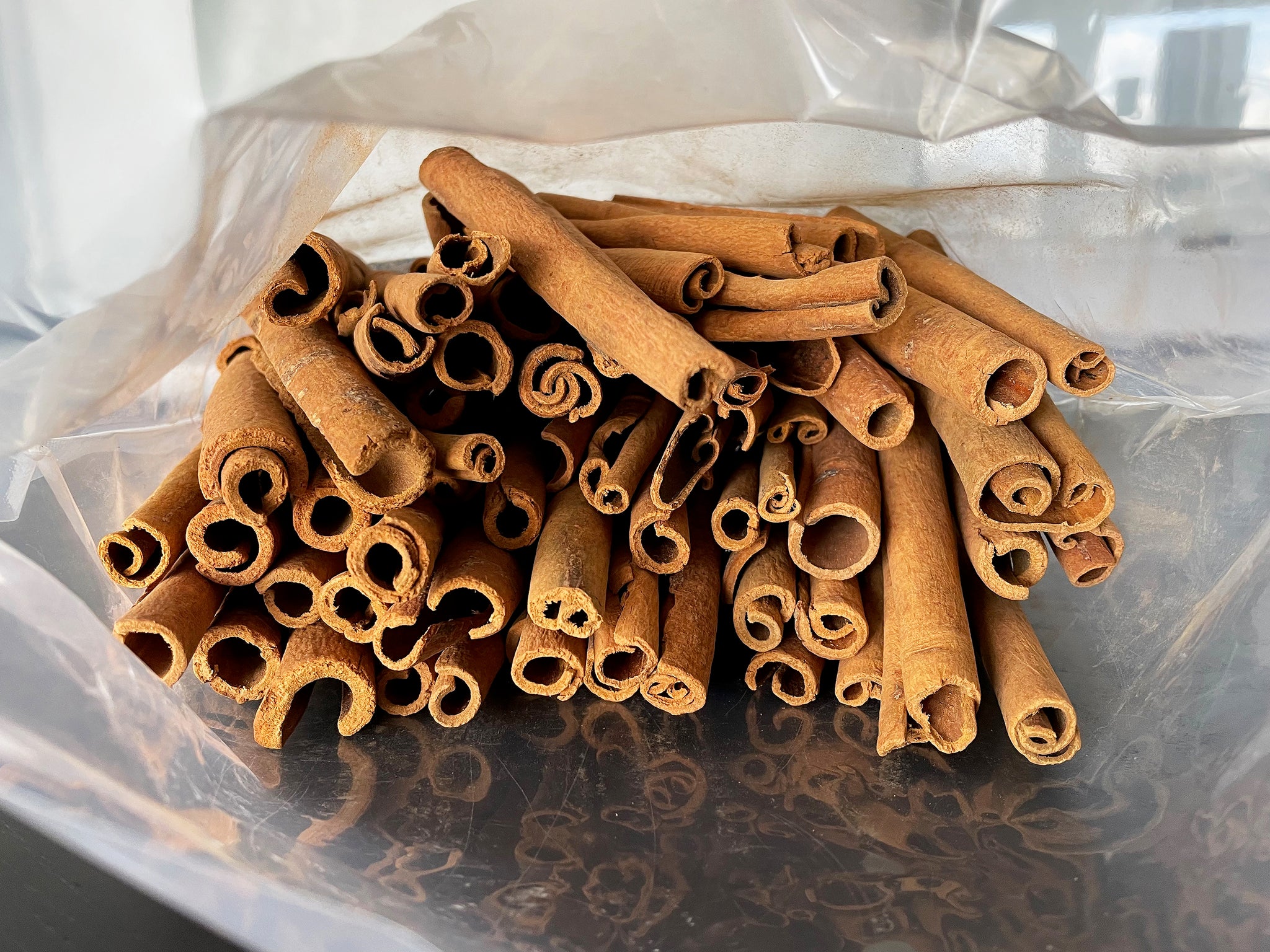
Hand Rolling (Cigar Construction): Multiple thin strips are joined together and stuffed with smaller bark pieces, forming a continuous, multi-layered 42-inch quill.
-
Shade Drying & Curing: Quills are shade-dried on raised racks to cure slowly, turning a bright golden-brown color without losing volatile essential oils.
-
3. Regional Sourcing Zones: Galle, Matara, Ratnapura, and Southern Provinces
Sri Lanka’s cinnamon-growing region is concentrated across the southern and southwestern provinces:
-
Galle & Matara Districts (Southern Belt): Renowned for producing the highest grades of thin, smooth quills (Alba and C5 Special) featuring sweet, refined floral aromas.
-
Ratnapura District (Sabaragamuwa Province): Inland foothill plantations producing sturdy C4, M4, and H1 quills with higher overall oil concentration, ideal for commercial grinding.
-
Kalutara District (Western Province): Coastal plantations yielding clean, medium-diameter quills for food service export.
4. Origin Comparison Matrix: Ceylon vs. Saigon and Korintje Origins
The following matrix compares primary global cinnamon origins:
| Sourcing Origin | Botanical Species | Quill Construction | Coumarin Content Range | Primary Sensory Profile & Best-Fit Application |
| Sri Lanka (Ceylon) | C. Verum | Soft, paper-thin, multi-layer quills | Ultra-Low (< 20 ppm) | Delicate, sweet, floral, citrus notes; ideal for EU compliance, gourmet retail & supplements. |
| Vietnam (Saigon) | C. Loureiroi | Hard, thick, single-layer bark rolls | High (2,000 – 6,000 ppm) | Intense, spicy-sweet, highly aromatic; ideal for US commercial baking & extraction. |
| Indonesia (Korintje) | C. Burmannii | Hard, medium-thick bark rolls | Moderate (1,000 – 3,500 ppm) | Smooth, mild, balanced sweetness; ideal for mass commercial spice grinding. |
5. EUDR Compliance, Fair Trade Traceability, and Smallholder Sourcing
Under the European Union Deforestation Regulation (EUDR), importers bringing cinnamon into Europe must provide precise polygon geolocation coordinates for the farm plots where the crop was harvested. This data certifies that production did not cause deforestation or forest degradation after December 31, 2020. VHB Group maintains full GPS farm mapping across partner estate cooperatives in southern Sri Lanka.
Ceylon Cinnamon Origin FAQ
Disclaimer: Unless otherwise stated, the images used in this article are the property of their respective owners. We do not claim ownership of any third-party images featured, and they are used here strictly for informational and educational purposes. If you are the copyright holder and wish to have an image removed, please contact us.