Tracing the exact Split Cassia Cinnamon Sourcing Origin Details is a fundamental requirement for agricultural importers, regulatory assurance directors, and international supply chain managers. Understanding exactly where the Cinnamomum cassia trees are cultivated, where the traditional peeling process occurs, and where the final splitting and sun-drying takes place highlights why this iconic spice commands such a massive presence on the global export market. The unique combination of highly regulated Southeast Asian forestry standards and advanced localized industrial processing creates a highly efficient, premium supply chain.
For procurement executives managing bulk container shipments through wholesale networks, complete transparency regarding the origin of the raw bark is crucial for passing stringent customs regulations, securing phytosanitary clearance, and verifying chemical purity. This guide breaks down the agricultural and processing supply chain that fuels the world’s leading cassia export hubs.
Table of Contents
-
The Agricultural Core of Cassia Sourcing
-
Peeling, Washing, and Sun-Drying Facilities
-
Tracing Ingredients: Cassia Bark and Packaging
-
Why Origin Specifications Matter for Importers
-
Supply Chain Assurance

The Agricultural Core of Cassia Sourcing
When evaluating the supply chain, the journey begins in massive, highly specialized agro-forestry zones. The global market is heavily dominated by Vietnam, Indonesia, and China. Vietnam is globally recognized for producing the highest-quality, highest-oil-content cassia in the world, cultivating massive yields in mountainous northern regions like Yen Bai, Lao Cai, and Quang Nam.
Licensed Corporate and Cooperative Forestry Hubs
The highest grade thick barks are sourced from these high-altitude, equatorial forests known for ideal rainfall and soil conditions. Trees must mature for 10 to 20 years before their bark develops the requisite thickness and volatile oil content. By sourcing directly from authorized forestry cooperatives and GFSI-certified master consolidators in Hai Phong or Ho Chi Minh City, international importers guarantee that they are receiving authentic, expertly cultivated spices. This direct supply chain bypasses fragmented, informal intermediaries and ensures consistent, traceable quality and sustainable harvesting practices.
Peeling, Washing, and Sun-Drying Facilities
The raw harvested bark only forms a fraction of the equation; the highly intensive, specialized industrial and traditional processing is what transforms a rough piece of wood into a premium, food-safe culinary ingredient.
View Cinnamon Processing Reference on Wikimedia Commons

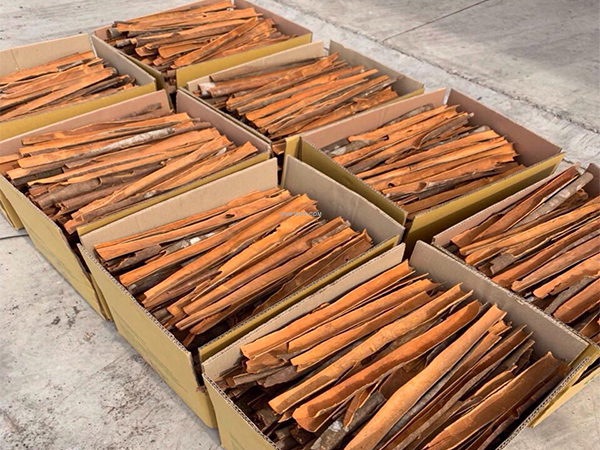
The heart of production takes place in processing complexes located near the forestry zones. After harvesting, local farmers and processors meticulously scrape the rough outer cork off the bark. The peeled bark is heavily washed and laid out on vast concrete patios or elevated tarpaulins to sun-dry, dropping moisture levels below 13.5%. Before export, premium split cassia processing requires rigorous mechanical or manual splitting into uniform widths, followed by color sorting and visual inspection to remove molded or insect-damaged pieces. Finally, the strips are passed over metal detectors and packed tightly into heavy-duty PE-lined master cartons.
Tracing Ingredients: Cassia Bark and Packaging
The bulk elements that compose the final product are sourced through a highly regulated, geographically specific supply chain.
| Ingredient Category | Primary Sourcing Region | Function in the Matrix |
| Raw Cassia Bark | Vietnam (Yen Bai), Indonesia, China | Provides the core botanical bark for processing. |
| Cinnamaldehyde Oils | Naturally occurring within the bark | Provides the intense sweet-spicy heat and complex aroma profile. |
| Food-Grade PE Liners | Advanced Asian Chemical Converters | Provides the absolute moisture barrier required inside the bulk cartons. |
| Corrugated Cartons | Local Packaging Converters | Provides the heavy-duty physical exterior protection for global export. |
Why Origin Specifications Matter for Importers
For B2B buyers, understanding the Split Cassia Cinnamon Sourcing Origin Details and logistical path is an absolute operational requirement for passing international border control and meeting food safety compliance in modern retail environments.
When clearing international customs (like the US FDA or European EFSA), agricultural importers must provide verified Certificates of Analysis (COA) detailing volatile oil levels, moisture content, and heavy metal testing. Knowing that the product is processed in globally audited, BRC, ISO, or HACCP-certified facilities entirely eliminates the risk of cargo confiscation due to unapproved sulfur dioxide (SO2) residues, mold contamination, or physical adulteration. Crucially, origin traceability ensures the buyer is receiving the exact chemical profile requested—specifically the high-oil Vietnamese Cinnamomum loureiroi versus the lower-oil Indonesian Cinnamomum burmannii.
Supply Chain Assurance
Total visibility into the origin of your botanical supply chain empowers distributors with absolute confidence in the quality, safety, and authenticity of their imported inventory. By combining premium raw material sourcing from Southeast Asia with highly specialized peeling, splitting, and drying technology, the supply chain delivers a perfectly harmonized product built for global export.
Split Cassia Sourcing Origin FAQ
Disclaimer: Unless otherwise stated, the images used in this article are the property of their respective owners. We do not claim ownership of any third-party images featured, and they are used here strictly for informational and educational purposes. If you are the copyright holder and wish to have an image removed, please contact us.