Understanding the exact Whole White Pepper Spice Grade & Aroma Facts is absolutely essential for agricultural importers, international spice buyers, and FMCG distributors who want to comprehend why this specific spice commands a premium commercial value in the global market. Unlike standard black pepper, white pepper undergoes a highly specific, time-intensive enzymatic processing method that drastically alters both its physical appearance and its complex, earthy flavor matrix, directly appealing to demographics seeking premium culinary ingredients.
For international procurement teams and supply chain managers looking to capitalize on this immense global demand, reviewing the operational logistics of the wholesale supply chain is the mandatory next strategic step. However, before investing in bulk container loads, buyers must fully understand the chemical, physical, and sensory components that make this decorticated spice a high-margin retail juggernaut.
Table of Contents
-
The Botanical Base: Piper Nigrum
-
The Retting and Decortication Process
-
Sensory Profile: Essential Whole White Pepper Spice Grade & Aroma Facts
-
Chemical Safety and Dietary Synergy
-
Wholesale Culinary Integration
The Botanical Base: Piper Nigrum
When analyzing the massive commercial success of this globally recognized spice, the primary differentiator lies in the harvest timing and subsequent processing of the botanical berry.
Both black and white pepper originate from the exact same climbing vine, Piper nigrum. However, to produce high-quality white pepper, the berries are allowed to ripen fully on the vine until they turn a deep red color (indicating peak sugar and essential oil development). Harvesting these fully mature berries requires precision timing and selective hand-picking, which inherently limits yield and drives the premium price point compared to unripe green berries used for black pepper.
The Retting and Decortication Process
A critical element within the manufacturing cycle is the heavy reliance on controlled water immersion and friction to remove the outer husk.
View White Pepper Processing Reference on Wikimedia Commons
To transform the red, ripe berries into creamy-white peppercorns, agricultural processors utilize a traditional process known as “retting.” The freshly harvested berries are packed into gunny bags and submerged in slow-running water (often streams or specialized concrete tanks) for 7 to 14 days. During this time, natural enzymatic fermentation breaks down the outer fleshy pericarp (the skin). Once softened, the berries are removed and subjected to mechanical friction or traditional trampling to completely strip away the dark outer skin, leaving only the smooth, light-colored inner seed. These seeds are then heavily sun-dried and mechanically washed to achieve the final “double-washed” premium grade.

Sensory Profile: Essential Whole White Pepper Spice Grade & Aroma Facts
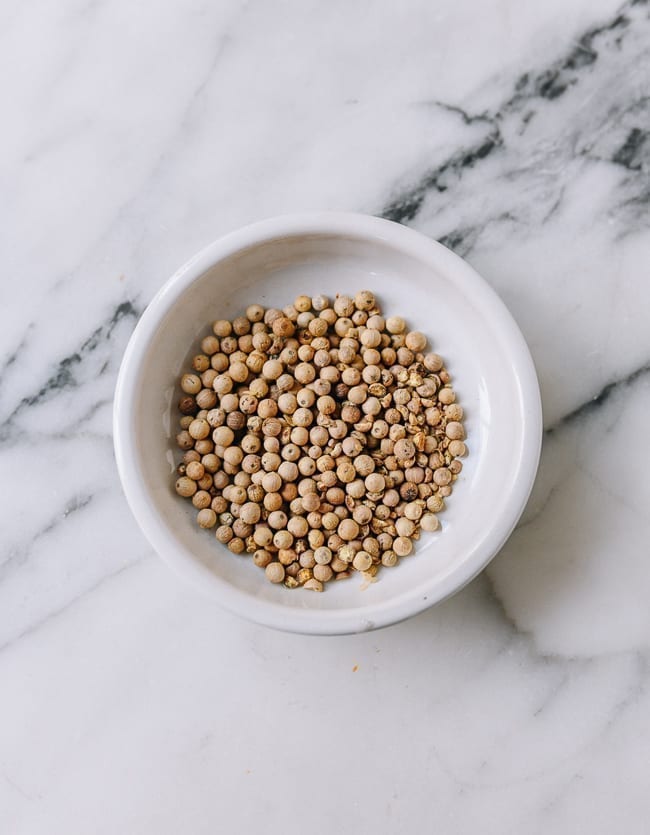
The most distinctive physical characteristic of perfectly processed white pepper is its smooth, creamy-grey to bright-white surface and the immediate, complex aromatic burst released upon grinding.
Balancing Earthiness, Heat, and Fermentation
The Whole White Pepper Spice Grade & Aroma Facts matrix is heavily characterized by its unique, earthy profile. Because it undergoes a water-based fermentation process (retting), white pepper develops a distinctly musky, fermented, and slightly floral aroma that black pepper lacks. While it contains less volatile essential oils (since the skin is removed), it actually delivers a sharper, more direct heat on the palate driven by high concentrations of Piperine. It serves as a cornerstone ingredient in Asian stir-fries, hot and sour soups, and European light sauces (like Béchamel or Alfredo) where pure heat is desired without dark speckling.
Chemical Safety and Dietary Synergy
To fully grasp the commercial appeal, FMCG food distributors must analyze the macro-chemical and safety profile. A standard bulk bag is carefully calibrated for maximum shelf stability and sensory delivery.
| Culinary Component | Function in the Matrix | Safety & Quality Profile |
| Piperine | Provides the sharp, intense heat and core pungency. | High levels indicate superior agricultural quality and maturity. |
| Essential Oils | Provides the floral and earthy aromatic top notes. | Lower than black pepper, but distinctively musky due to retting. |
| Moisture Content | Dictates exact shelf stability and prevents mold. | Must be strictly maintained below 13.5% to prevent fungal growth. |
| Color / Ash Content | Dictates the visual purity of the grade. | Double-washing minimizes greyish hues and guarantees a premium presentation. |
Wholesale Culinary Integration
Mastering the core culinary facts and retting matrices is the definitive key to understanding this product’s unstoppable global retail velocity in the spice aisle. From the careful selective harvesting of ripe berries to the precision engineering of the decortication and washing process, every single element of this processing cycle is designed to deliver a premium, highly pungent culinary ingredient. For international distributors and commercial kitchens, stocking authentic Southeast Asian white pepper guarantees access to a highly loyal, quality-focused commercial consumer base.
Whole White Pepper Aroma Facts FAQ
Disclaimer: Unless otherwise stated, the images used in this article are the property of their respective owners. We do not claim ownership of any third-party images featured, and they are used here strictly for informational and educational purposes. If you are the copyright holder and wish to have an image removed, please contact us.