
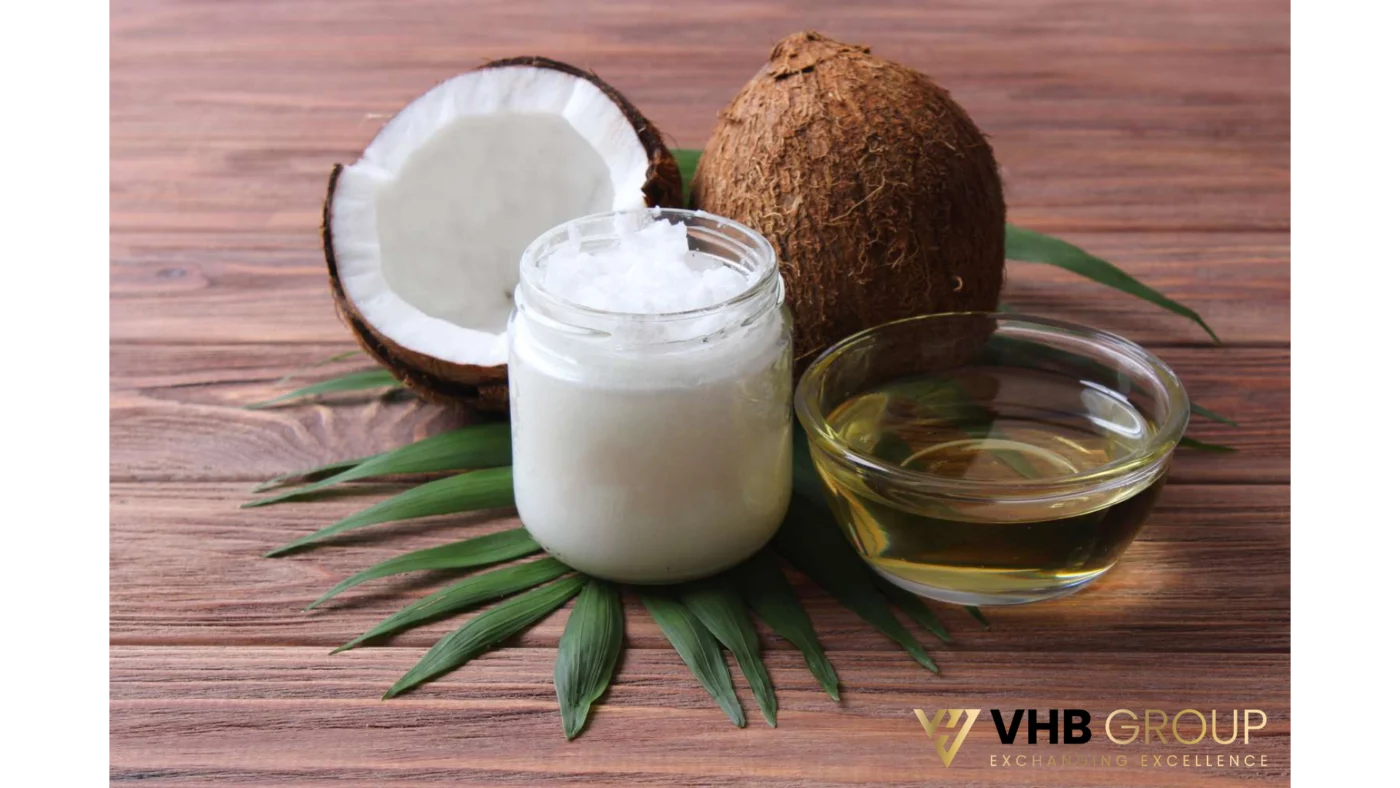
Selecting the ideal Coconut Oil Origin is one of the most critical decisions for global B2B procurement professionals, directly influencing product quality, chemical stability, and consumer trust. In today’s highly competitive industrial market, where coconut oil is a key ingredient in food processing, pharmaceuticals, cosmetics, and bio-industrial applications, supply chain managers cannot afford to treat this commodity as a generic item. The soil conditions, climatic stability, agricultural heritage, and local infrastructure of the source country dictate the purity, flavor profile, shelf-life, and fatty acid composition of the final oil. Vietnam has rapidly emerged as a dominant global hub for high-grade agricultural commodities, offering premium quality, highly competitive pricing, and logistical advantages that make it an unmatched sourcing destination.
In this guide, we will explore the major aspects of coconut oil sourcing and origins:
- Understanding Global Coconut Oil Origin Dynamics
- Why Vietnam is the Premier Coconut Oil Origin for B2B Procurement
- How Coconut Oil Origin Influences Physical and Chemical Properties
- Processing Methodologies: From Crop to Premium Oil
- Technical Specifications and Quality Standards
- Export Logistics, Packaging, and Supply Chain Integrity
- Frequently Asked Questions (FAQ)
- Conclusion: Partnering with VIHABA for Global Success
Understanding Global Coconut Oil Origin Dynamics
To establish a resilient supply chain, procurement managers must evaluate the global production landscape of coconut-based derivatives. Historically, the global trade of coconut oil has been concentrated in Southeast Asia due to the equatorial climate, rich volcanic or alluvial soils, and centuries of agricultural expertise. The global market is largely driven by three major producing regions: the Philippines, Indonesia, and Vietnam. Each region features distinct agricultural methodologies, crushing infrastructures, and oil profile characteristics.
While traditional giants like Indonesia and the Philippines focus on massive bulk exports of crude coconut oil (CNO) for industrial applications, Vietnam has carved out a premium market niche. Driven by technological modernization and strict adherence to international organic protocols, Vietnamese plantations offer exceptional Virgin Coconut Oil (VCO) and Refined, Bleached, and Deodorized (RBD) coconut oil. The choice of Coconut Oil Origin is no longer just about volume; it is about securing a supply chain that guarantees purity, minimal environmental impact, and seamless international certification compliance. As market demands shift toward clean-label products and complete traceability, buyers must examine the farm-level practices of their chosen origin to mitigate risks associated with heavy metal contamination, pesticide residues, and adulteration.
Why Vietnam is the Premier Coconut Oil Origin for B2B Procurement
Vietnam’s rise as a top-tier agricultural exporter is not accidental. The country’s unique geographical and climatic conditions make it an optimal environment for growing highly productive coconut palms. Specifically, the Mekong Delta region, and more specifically Ben Tre Province, is known globally as the capital of coconuts. Here, the nutrient-rich alluvial soils deposited by the Mekong River branches, coupled with consistent year-round sunshine and high humidity, yield coconuts with exceptionally thick kernels and high lauric acid content.
For B2B buyers evaluating their next Coconut Oil Origin, Vietnam presents several key structural advantages:
- High-Quality Alluvial Soil: The natural fertilization from the Mekong River leads to coconuts with superior nutrient profiles, producing oil that is naturally rich in medium-chain triglycerides (MCTs).
- Traceability and Transparency: Vietnam’s agricultural sector has transitioned rapidly toward digital traceability. Brands like VIHABA maintain direct, transparent supply networks with local farming cooperatives, ensuring clear origin verification from farm to final port.
- Favorable Trade Agreements: Vietnam is a signatory to numerous free trade agreements (FTAs), including the EVFTA (EU-Vietnam Free Trade Agreement) and CPTPP, which significantly reduce or eliminate import tariffs for global buyers in Europe, the Americas, and Asia.
By establishing long-term partnerships with certified local farmers in Ben Tre, Vietnamese suppliers are capable of maintaining strict agricultural inputs. The omission of chemical pesticides and synthetic fertilizers is a hallmark of Vietnam’s organic coconut initiative. This focus on sustainability not only preserves the regional groundwater and soil health but also translates directly into a clean, residue-free crop that meets the strict import regulations of North American and European authorities.
How Coconut Oil Origin Influences Physical and Chemical Properties
The geographic location, climate, and soil composition of a Coconut Oil Origin play a fundamental role in determining the physical and chemical characteristics of the extracted oil. Coconuts harvested from coastal regions with moderate soil salinity tend to develop a distinct aroma and high concentration of lauric acid (C12), which is the primary active compound responsible for coconut oil’s antimicrobial, anti-fungal, and high-stability properties.

Furthermore, local agricultural practices dictate the level of Free Fatty Acids (FFA) present in the raw copra before processing. In regions with humid climates and poor post-harvest handling, copra can quickly degrade, leading to high FFA content that requires extensive chemical refining. In contrast, Vietnam’s advanced infrastructure allows for immediate processing post-harvest. At VIHABA, we ensure that coconuts are processed within 48 hours of harvest, keeping FFA levels naturally low and preserving the delicate, sweet, and authentic aroma of fresh coconuts. This makes our geographical origin a superior choice for cosmetic and high-end food manufacturers who require minimal processing intervention. Furthermore, the iodine value, peroxide value, and refractive index remain incredibly stable, ensuring a longer shelf-life and robust performance in high-temperature applications.
Processing Methodologies: From Crop to Premium Oil
Once the origin is established, the extraction and processing methods define the final grade of the oil. Understanding these methods is crucial when developing a coconut oil wholesale commercial sourcing guide for your procurement team. Generally, B2B buyers source either Virgin Coconut Oil (VCO) or Refined, Bleached, and Deodorized (RBD) Coconut Oil depending on their specific formulation requirements.

Virgin Coconut Oil (VCO) Extraction
Virgin Coconut Oil is processed without high heat or chemical treatments, maintaining the oil’s natural nutrients, vitamins, and antioxidants. There are two primary commercial methods used in Vietnam’s top facilities:
- Cold-Pressed Extraction: Fresh coconut meat is dried at low temperatures and then mechanically pressed using expellers. The resulting oil is filtered to remove impurities, retaining its rich lauric acid profile and fresh coconut fragrance.
- Centrifugal Extraction: Fresh coconut milk is extracted from the wet kernel and then passed through a series of high-speed centrifuges. This process separates the water, proteins, and pure oil cleanly and rapidly, producing an ultra-light, premium-grade VCO preferred by luxury cosmetics brands.
Refined, Bleached, and Deodorized (RBD) Processing
For food production, confectionery, and chemical processing where a neutral taste, odor-free profile, and high smoke point (approx. 232°C / 450°F) are required, RBD coconut oil is the industry standard. This oil is extracted from dried copra using mechanical expellers. It then undergoes physical refining, natural clay bleaching to remove impurities and pigments, and steam deodorization. The resulting product is a highly stable, clear, and odorless oil with a long shelf life, perfect for deep frying and industrial food formulations.
Technical Specifications and Quality Standards
When importing from any Coconut Oil Origin, validating technical specifications through rigorous laboratory analysis is non-negotiable. B2B contracts must be anchored on clear chemical parameters to ensure product safety, functional performance, and regulatory compliance in destination markets. Below is the technical specification comparison table representing the export standards maintained by VIHABA.
| Parameter / Specification | Virgin Coconut Oil (VCO) | Refined, Bleached & Deodorized (RBD) | Testing Method |
|---|---|---|---|
| Appearance | Clear, colorless liquid (above 24°C) | Pale yellow to clear, odorless liquid | Visual Inspection |
| Lauric Acid (C12:0) | 48.0% – 53.0% | 45.0% – 51.0% | GC-MS Analysis |
| Free Fatty Acids (as Lauric) | Max 0.1% | Max 0.05% – 0.1% | AOCS Ca 5a-40 |
| Moisture & Volatile Matter | Max 0.1% | Max 0.1% | AOCS Ca 2c-25 |
| Peroxide Value (meq/kg) | Max 3.0 | Max 1.0 | AOCS Cd 8-53 |
| Iodine Value (g I2/100g) | 5.0 – 11.0 | 6.0 – 11.0 | AOCS Cd 1-25 |
| Smoke Point | 177°C (350°F) | 232°C (450°F) | Physical Testing |
To access global markets like North America, the European Union, and East Asia, sourcing from facilities with international certifications is mandatory. VIHABA strictly collaborates with processing units that carry globally recognized quality systems, including:
- ISO 22000 & HACCP: Guarantees food safety management systems are implemented across the entire processing chain.
- USDA Organic & EU Organic: Verifies that the farming, harvesting, and processing avoid synthetic fertilizers, pesticides, and chemical additives.
- Halal & Kosher: Ensures compliance with dietary laws, expanding access to diverse consumer segments worldwide.
- GlobalGAP: Focuses on agricultural sustainability, worker welfare, and environmental conservation at the farm level.
Export Logistics, Packaging, and Supply Chain Integrity
Securing a premium product from a reliable Coconut Oil Origin is only half the battle; preserving its quality during international transit is equally critical. Coconut oil has a melting point of approximately 24°C (75°F). Below this temperature, it solidifies into a white, opaque paste, and above it, it turns into a clear, free-flowing liquid. This physical transition requires specialized logistics knowledge to prevent leakage, moisture build-up, or quality degradation during oceanic transport.
VIHABA offers custom packaging solutions tailored to bulk, semi-bulk, and retail requirements:
- Flexitanks / Flexibags (Bulk): Ideal for large-scale industrial buyers. We utilize multi-layer, food-grade flexitanks holding up to 20,000 to 24,000 liters per 20ft container. For colder destinations, we can install heating pads to facilitate easy discharge at the port of arrival.
- Intermediate Bulk Containers (IBC Totes): Heavy-duty plastic or composite IBCs containing 1,000 liters, perfect for medium-sized manufacturing facilities seeking a balance between volume and ease of handling.
- Steel or Plastic Drums: Standard 200-liter tight-head drums, lined with food-grade protective coatings to prevent oxidation and chemical interaction with the container wall.
- Retail Packaging: Glass jars or PET bottles ranging from 250ml to 1 Liter, packed in robust master cartons for direct-to-shelf distribution.
Our logistical operations out of major Vietnamese shipping ports, such as Cat Lai in Ho Chi Minh City, offer efficient transit times to major global markets, minimizing supply chain bottlenecks and maintaining optimal inventory levels for our partners.
Conclusion: Partnering with VIHABA for Global Success
In the highly competitive world of B2B agriculture, securing a transparent, reliable, and high-quality Coconut Oil Origin is vital to sustaining your brand’s reputation and operational efficiency. Vietnam’s robust agricultural ecosystem, combined with cutting-edge extraction technologies, makes it the premier choice for companies seeking exceptional quality, stable pricing, and sustainable practices. As an experienced and trustworthy export partner, VIHABA bridges the gap between premium Vietnamese farms and your global production facilities. By offering complete transparency, verified quality standards, and tailormade logistics solutions, we ensure your supply chain remains seamless and highly profitable. Reach out to the VIHABA team today to request a quote, order samples, or discuss your custom sourcing requirements.