
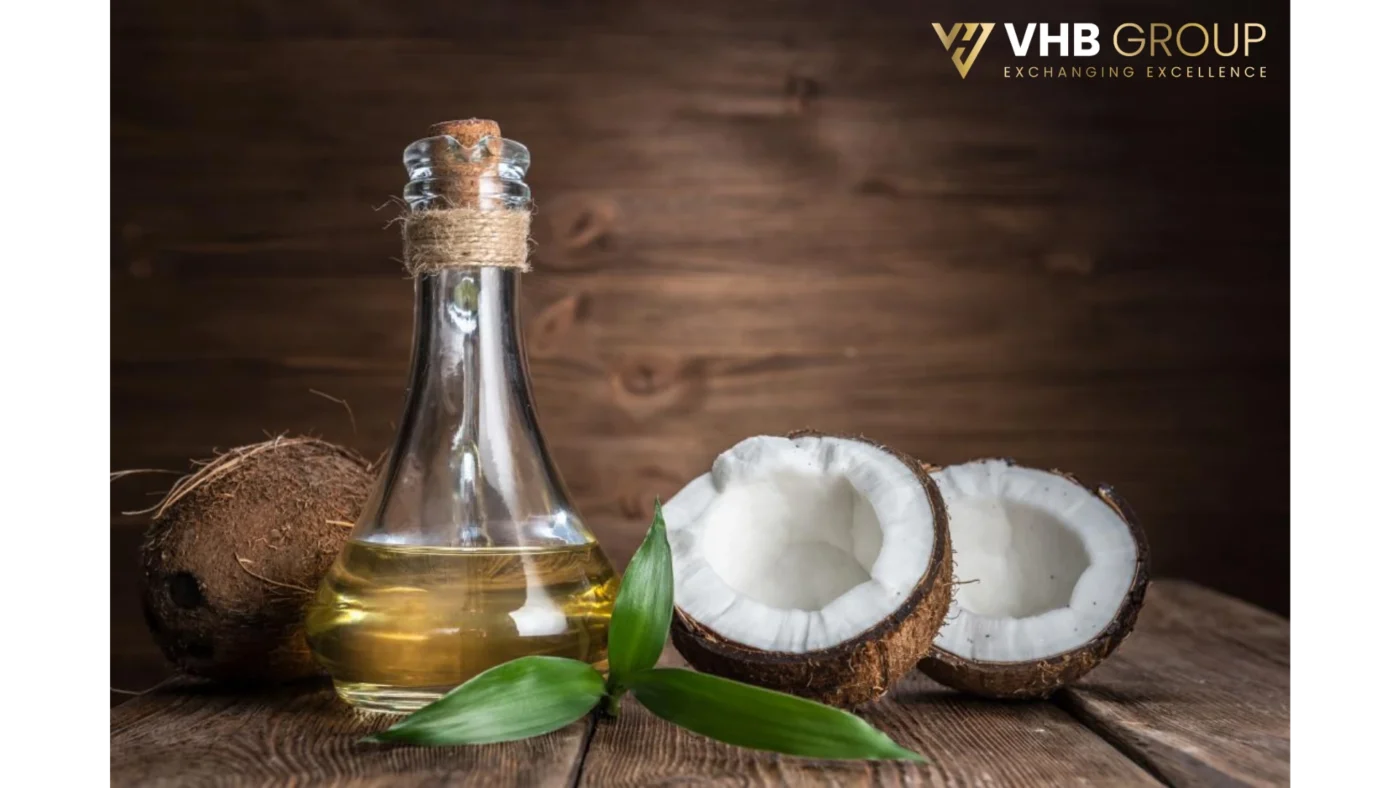
Establishing a reliable Crude Coconut Oil Distribute Channel is essential for international buyers seeking premium raw materials for industrial, cosmetic, and food applications.
As global industries transition toward sustainable, plant-based alternatives, crude coconut oil (CNO) has emerged as an invaluable commodity. Derived from the dried kernel (copra) of the coconut palm, CNO serves as the primary feedstock for refined, bleached, and deodorized (RBD) coconut oil, as well as a key ingredient in biolubricants, personal care surfactant formulations, and animal feed. Navigating the complexities of sourcing, transporting, and securing a sustainable supply chain requires a deep understanding of production dynamics and logistics.
In this comprehensive guide, we analyze the global market structure, look closely at Vietnam’s production strengths, detail the technical specifications required by international buyers, and outline how VIHABA optimizes its distribution networks to deliver premium crude coconut oil worldwide.
Table of Contents
- 1. Global Market Overview: The Role of a Crude Coconut Oil Distribute Channel
- 2. Vietnam’s Coconut Cultivation and Sourcing Advantages
- 3. Extraction Methods and Technical Specifications
- 4. Selecting the Right Crude Coconut Oil Distribute Channel
- 5. Packaging, Logistics, and Supply Chain Integrity
- 6. Sustainability, Certifications, and Compliance
- 7. Frequently Asked Questions (FAQs)
- 8. Conclusion: Partnering with VIHABA

Global Market Overview: The Role of a Crude Coconut Oil Distribute Channel
The global demand for coconut-derived oleochemicals is experiencing unprecedented growth. Industrially, crude coconut oil is highly valued for its high concentration of medium-chain fatty acids (primarily lauric acid), which provides exceptional lathering properties in soaps and detergents, excellent emollient characteristics in cosmetics, and high thermal stability in industrial lubricants. Consequently, setting up a resilient supply chain via a strategic Crude Coconut Oil Distribute Channel is vital for manufacturers looking to shield themselves from raw material shortages and volatile market pricing.
The traditional coconut-producing belt spans across Southeast Asia, with nations like the Philippines, Indonesia, and Vietnam leading global output. Historically, the supply chain has been fragmented, characterized by numerous smallholder farmers, local aggregators, and primary crushers before reaching export ports. For multi-national B2B buyers, this fragmentation presents significant challenges in maintaining consistent quality, tracking sustainability metrics, and securing steady volume allocations. Modern distribution networks must bridge these gaps by introducing vertical integration, rigorous quality control at the source, and optimized maritime logistics to deliver predictable sourcing outcomes.
Vietnam’s Coconut Cultivation and Sourcing Advantages
Vietnam has rapidly positioned itself as a highly competitive and reliable exporter of coconut products. The country’s unique geographical and climatic conditions create ideal environments for high-yield coconut palms, particularly in the Mekong Delta region. Ben Tre province, often hailed as the “coconut capital” of Vietnam, boasts over 70,000 hectares of coconut plantations, benefiting from nutrient-rich alluvial soils and abundant freshwater systems.
Vietnamese agricultural policies, combined with private sector investment, have transformed local farming practices. Today, a growing percentage of coconut farms in Vietnam are transitioning to organic cultivation methods, strictly avoiding chemical fertilizers and synthetic pesticides. By implementing strict agricultural management systems, Vietnamese producers ensure that the copra used for oil extraction is free from harmful chemical residues. For international buyers, sourcing through a dedicated Vietnamese channel guarantees access to a secure, premium supply that meets both environmental and quality standards.
Extraction Methods and Technical Specifications
Crude coconut oil is extracted from high-quality copra that has been systematically dried to reduce moisture content, preventing microbial degradation. The extraction process typically involves mechanical expeller pressing, where the dried copra is subjected to high pressure to extract the crude oil. To maximize yield from the remaining press cake, some facilities may employ food-grade solvent extraction, though premium industrial and cosmetic buyers generally prefer pure, mechanically expelled oil.
Once extracted, the oil undergoes filtration to remove suspended solids, resulting in a clear, light-brown liquid when warm, which solidifies into an off-white wax-like substance at temperatures below 24°C (75°F). Below is the typical technical specification sheet for export-grade crude coconut oil from Vietnam:
| Parameter | Standard Limits (B2B Export Grade) | Testing Method Reference |
|---|---|---|
| Free Fatty Acids (FFA, as Lauric) | Max 2.0% – 4.0% (depending on grade) | AOCS Ca 5a-40 |
| Moisture and Impurities (M&I) | Max 1.0% | AOCS Ca 2c-25 / Ca 3a-46 |
| Iodine Value (Wijs) | 7.5 – 10.5 g I2/100g | AOCS Cd 1-25 |
| Saponification Value | 250 – 264 mg KOH/g | AOCS Cd 3-25 |
| Peroxide Value | Max 2.0 meq/kg | AOCS Cd 8-53 |
| Color (Lovibond 5.25″ cell) | Y: 30 – 50, R: 4.0 – 7.0 | AOCS Cc 13b-45 |
| Lauric Acid Content (C12:0) | 45% – 52% | Gas Chromatography (GC) |
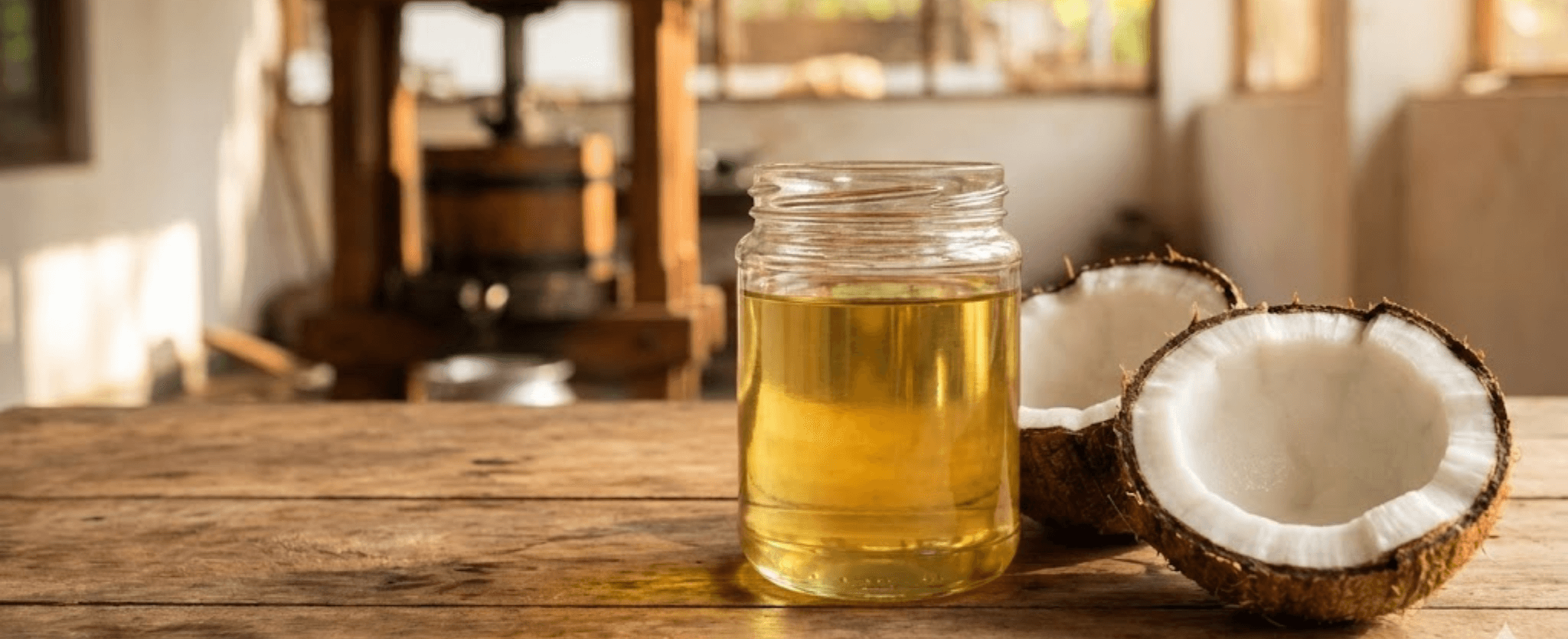
Selecting the Right Crude Coconut Oil Distribute Channel
Sourcing bulk raw materials requires deep collaboration with suppliers who understand industrial manufacturing requirements. B2B buyers must evaluate several critical factors when establishing a partnership through a Crude Coconut Oil Distribute Channel:
- Supply Chain Transparency: Importers must have visibility back to the processing mills. Traceability ensures that the copra used was harvested ethically, without utilizing child labor or contributing to localized environmental degradation.
- Consistent Volume Capacity: Industrial buyers cannot afford production downtime due to supply delays. A reliable channel must offer scalable monthly capacities backed by structured, long-term supply contracts.
- Adaptable Refinement Processing: Depending on whether the oil is intended for biofuel conversion, cosmetic saponification, or food-grade RBD refining, buyers require tailored control over starting FFA levels and moisture parameters.
VIHABA addresses these industry requirements by maintaining direct relationships with crushing mills across Vietnam’s prime agricultural zones. By minimizing intermediary steps, we enforce stringent quality checks, optimize cost structures, and pass those efficiency savings directly on to our global purchasing partners.
Packaging, Logistics, and Supply Chain Integrity
Because crude coconut oil naturally transitions between liquid and solid states depending on the ambient temperature, its transport requires highly specialized logistics management. VIHABA employs several bulk packaging systems to meet diverse buyer requirements and unloading capabilities:
Flexitanks
For large-volume, cost-effective liquid shipments, Flexitanks are installed inside standard 20-foot shipping containers. Capable of carrying up to 20 to 24 metric tons of liquid oil, flexitanks maximize cargo volume while minimizing loading and unloading labor. For shipments destined for colder climates, we install heating pads beneath the flexitanks. Upon arrival at the destination port, low-pressure steam or hot water is circulated through the pads to safely liquify the oil for easy pumping.
Intermediate Bulk Containers (IBC Totes) and Steel Drums
For mid-sized operations or buyers lacking bulk pumping infrastructure, we offer standard 1,000-liter composite IBC totes or heavy-duty 200-liter steel drums. These packaging methods provide excellent physical protection, simplify warehouse storage, and allow for easy mechanical handling using standard forklifts.
Cold-Weather Management and Quality Preservation
During transit, exposure to extreme cold can cause CNO to crystallize. While this does not damage the oil’s chemical properties, improper heating at the destination can burn the oil, altering its color and raising peroxide values. VIHABA provides detailed melting guidelines for each shipment, ensuring that unloading teams apply gentle, controlled heat to preserve the oil’s premium chemical characteristics.

Sustainability, Certifications, and Compliance
Corporate sustainability commitments are no longer optional. Modern consumers demand that brands prove their raw materials are sourced ethically and sustainably. VIHABA actively supports these values by selecting processing partners who adhere to internationally recognized compliance standards.
We work closely with local farming cooperatives to encourage sustainable agricultural management, water conservation, and fair compensation for smallholder farmers. Our supply chains conform to rigorous international certifications, including ISO 22000, HACCP, Halal, and Kosher standards. By matching our production practices with global regulatory expectations, we ensure our crude coconut oil can smoothly clear customs and integrate into any manufacturing supply chain worldwide.
Conclusion: Partnering with VIHABA
Developing an optimized, resilient Crude Coconut Oil Distribute Channel is key to mitigating supply chain risks and maintaining high product quality in the global B2B marketplace. By choosing Vietnam as your sourcing origin, you gain access to optimal growing conditions, competitive pricing, and modern processing infrastructure.
As a leading exporter of Vietnamese agricultural commodities, VIHABA is committed to delivering exceptional value through end-to-end supply chain transparency, strict quality control, and reliable logistics solutions. Whether your production requires bulk flexitanks for industrial manufacturing or drums for cosmetic formulations, VIHABA is your trusted partner for high-quality crude coconut oil. Contact our export sales team today to request a custom quote, obtain product samples, or discuss your long-term supply needs.
Crude Coconut Oil Distribution FAQ
Disclaimer: Unless otherwise stated, the images used in this article are the property of their respective owners. We do not claim ownership of any third-party images featured, and they are used here strictly for informational and educational purposes. If you are the copyright holder and wish to have an image removed, please contact us.