Sourcing Virgin Coconut Oil Wholesale inventory provides international B2B cosmetics manufacturers, nutraceutical formulators, food processors, and commercial B2B distributors with a high-margin, functional plant-oil commodity. Extracted directly from fresh, mature coconut kernels without chemical refining, bleaching, or deodorizing (RBD), Virgin Coconut Oil (VCO) stands out as a premium grade within the global oleochemical and specialty fats market.
For B2B procurement managers, sourcing full container load (FCL) consignments of wholesale virgin coconut oil requires managing complex technical variables—including extraction methodology selection, fatty acid composition verification, bulk packaging specifications, thermal phase-change logistics, organic certification, and customs clearance protocols. This technical guide evaluates the operational, chemical, and logistical protocols necessary to build a profitable, compliant supply chain.
Table of Contents
-
Global Market Demand & Industrial Applications of Wholesale Virgin Coconut Oil
-
Extraction Methodologies & Quality Grading Parameters
-
Chemical Composition, Medium-Chain Triglyceride (MCT) Profiling, and Specifications
-
Bulk Packaging Formats, Container Payload Yields, and Flexitank vs. Drum Logistics
-
B2B Landed Cost & Yield Index Mathematical Model
-
International Quality Standards, Organic Certifications, and Customs Compliance
-
Frequently Asked Questions (FAQ)

1. Global Market Demand & Industrial Applications of Wholesale Virgin Coconut Oil
The global market for virgin coconut oil continues to expand, driven by consumer demand across three main industrial sectors:
-
Cosmetics & Personal Care: High lauric acid content provides natural antimicrobial properties and deep skin-barrier hydration. Used widely as a base fat in premium soaps, body lotions, hair conditioners, and lip balms.
-
Nutraceuticals & Dietary Supplements: Formulated directly into daily wellness spoonfuls, liquid MCT carriers, or softgel capsules due to its rich Medium-Chain Fatty Acid (MCFA) structure.
-
Food Processing & Specialty Culinary: Acts as a heat-stable, non-hydrogenated, plant-based fat alternative for vegan bakery goods, dairy-free confectionery, non-dairy creamers, and keto-friendly snack formulations.
According to trade studies published by the Food and Agriculture Organization (FAO), the demand for unrefined, cold-pressed plant oils has outpaced conventional refined oils, making wholesale VCO a high-growth industrial commodity.
2. Extraction Methodologies & Quality Grading Parameters
The physical and sensory quality of wholesale virgin coconut oil depends on the processing technology deployed at origin. Under standards defined by the International Coconut Community (ICC) and Codex Alimentarius, VCO must be produced from fresh, mature coconut kernels (12 months old) using mechanical or natural means, without chemical altering or bleaching.
Wet-Milling Cold-Pressed Extraction
Fresh coconut meat is grated, pressed to extract coconut milk, and then separated into oil and water phases via mechanical centrifugation or controlled enzymatic action without high heat.
-
Primary Advantage: Produces a water-clear liquid oil with a mild, fresh coconut aroma and low moisture levels.
Dry-Milling Fresh Kernel Pressing
Fresh coconut meat is shredded and dried under low temperature controls (under 60°C) to lower moisture before being fed into continuous mechanical screw presses (expellers).
-
Primary Advantage: High oil extraction yield per metric ton of kernel, yielding a slightly warmer roasted aroma.
Centrifugal Separation vs. Traditional Fermentation
-
Centrifugal Method: High-speed industrial centrifuges separate oil from fresh milk emulsions in minutes, yielding low free fatty acid (FFA) levels (under 0.1%) and extended shelf life.
-
Natural Fermentation: Coconut milk settles naturally for 14–24 hours to break the emulsion. While low cost, it risks higher moisture retention and batch-to-batch variation if not monitored carefully.
3. Chemical Composition, Medium-Chain Triglyceride (MCT) Profiling, and Specifications
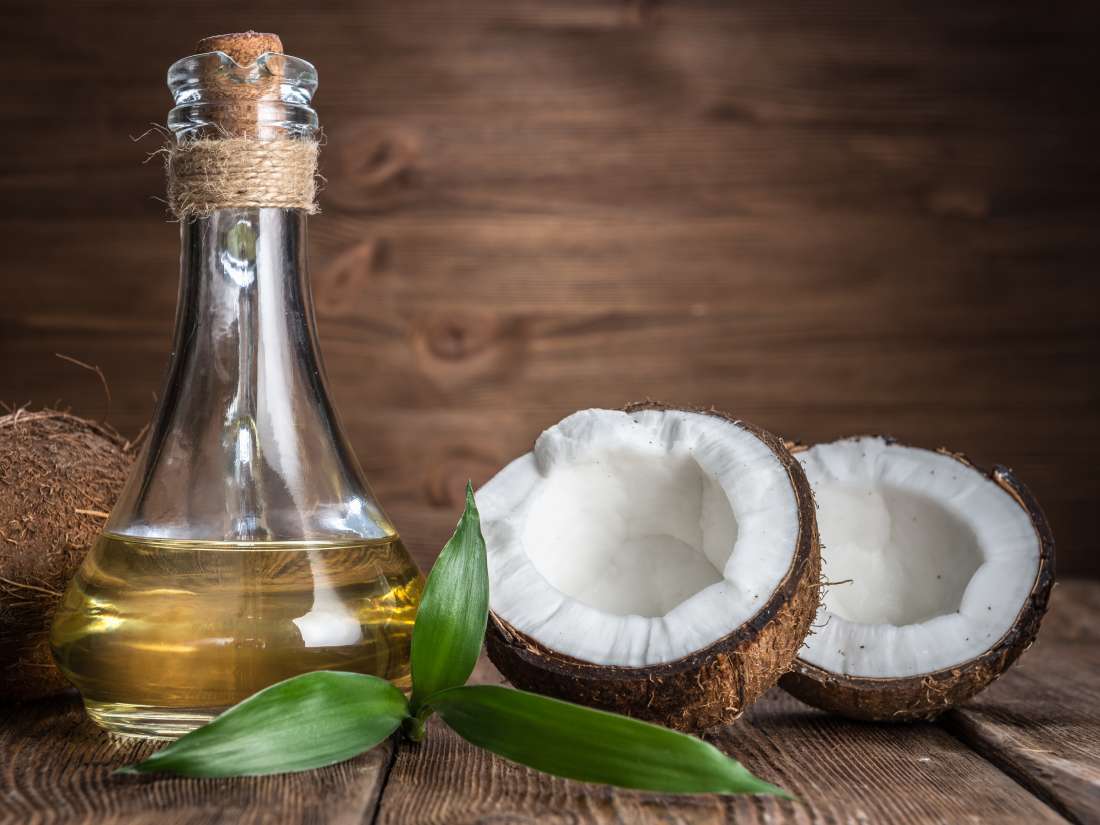
VCO is composed primarily of Medium-Chain Triglycerides (MCTs), which resist peroxidation and remain structurally stable under ambient oxidation risks.
Fatty Acid Matrix
The primary fatty acid in pure virgin coconut oil is Lauric Acid (C12:0), accounting for nearly half of the total lipid profile.
| Fatty Acid Name | Carbon Structure | Typical Composition Range (%) | Functional Industrial Value |
| Caproic Acid | C6:0 | 0.10% – 0.95% | Rapid metabolic conversion |
| Caprylic Acid | C8:0 | 4.00% – 10.00% | Antimicrobial & nutraceutical carrier |
| Capric Acid | C10:0 | 4.00% – 8.00% | Medium-chain energy lipid |
| Lauric Acid | C12:0 | 45.00% – 56.00% | Primary antimicrobial agent & cosmetic base |
| Myristic Acid | C14:0 | 16.00% – 21.00% | Structural lipid & emulsion builder |
| Palmitic Acid | C16:0 | 7.50% – 10.20% | Saturated fat consistency |
| Stearic Acid | C18:0 | 2.00% – 4.00% | Viscosity stability |
| Oleic Acid | C18:1 | 4.50% – 10.00% | Monounsaturated stability |
| Linoleic Acid | C18:2 | 0.70% – 2.50% | Essential polyunsaturated fatty acid |
Technical Specifications for Industrial Quality Control
To comply with International Organization for Standardization (ISO 22537) specifications, wholesale consignments must meet clear analytical thresholds:
-
Free Fatty Acid (FFA as Lauric Acid): Maximum 0.10% to 0.20%
-
Moisture & Volatile Matter: Maximum 0.10%
-
Peroxide Value (PV): Maximum 1.0 to 3.0 meq/kg
-
Iodine Value (IV): 4.1 to 11.0 g I2 / 100g oil
-
Color: Water-clear (Liquid state above 25°C) / Clean white (Solid state below 24°C)
4. Bulk Packaging Formats, Container Payload Yields, and Flexitank vs. Drum Logistics
Selection of bulk packaging directly influences freight loading efficiency, handling labor, and landed unit cost. Virgin Coconut Oil undergoes a physical phase change at approximately 24°C (75°F)—it exists as a clear liquid in tropical ambient conditions and solidifies into a firm white fat in cooler climates.
| Packaging Option | Unit Volumetric Capacity | Payload Yield per 20ft FCL | Primary Operational Best-Fit |
| Flexitanks | 21,000 – 22,000 Liters | 19.3 to 20.2 Metric Tons | High-volume industrial processing & lowest packaging cost |
| IBC Totes (Paper/Plastic) | 1,000 Liters per Tote | 18,000 to 20,000 Liters (18–20 Totes) | Mid-scale manufacturing & tote-tilting discharge systems |
| HDPE / Steel Drums | 200 Liters (55 Gallons) | 15,000 to 16,500 Liters (80 Drums) | Smaller batch runs & easy melting in standard hot-rooms |

Flexitanks (20ft Dry FCL)
Flexitanks are food-grade, multi-layer polyethylene bladders installed inside standard 20ft dry ocean containers.
-
Payload Yield: 21,000 to 22,000 Liters (approx. 19.3 to 20.2 Metric Tons).
-
Pros: Highest volumetric payload yield; eliminates drum disposal expenses.
-
Cons: Requires heating pads at destination ports if the oil solidifies in transit.
Intermediate Bulk Containers (IBC Totes – 1,000L)
Heavy-duty paper IBC totes or rigid plastic-cage totes with food-grade inner liners.
-
Payload Yield: 18 to 20 IBC Totes per 20ft FCL (18,000 to 20,000 Liters).
-
Pros: Ideal for mid-sized cosmetics factories equipped with tote-tilting discharge systems.
HDPE & Steel Drums (200L / 55 Gallon)
Standard food-grade tight-head or open-top drums stacked on pallets.
-
Payload Yield: 80 Drums per 20ft FCL (approx. 16,000 Liters / 14.7 Metric Tons).
-
Pros: Easy to melt in batch hot-rooms; convenient for smaller production runs.
5. B2B Landed Cost & Yield Index Mathematical Model
To evaluate total procurement cost across different packaging types and shipping routes, procurement teams apply a step-by-step landed cost calculation model:
Formula Breakdown:
Net Landed Cost per Usable Metric Ton = Total Landed Expenditure / Net Usable Metric Tons
Where:
-
Total Landed Expenditure =
(FOB Price per Ton x Mass) + Ocean Freight + Marine Insurance + (Mass x Customs Tariffs) + Destination Heating Charges -
Net Usable Metric Tons =
Mass x (1 - Unload Loss Percentage)
Variable Definitions:
-
FOB Price: Free On Board factory price per metric ton at origin port.
-
Mass: Total net weight of virgin coconut oil shipped in the consignment.
-
Ocean Freight: Total container transport fee to destination port.
-
Insurance: Marine insurance premium for cargo value.
-
Customs Tariffs: Applicable import tariffs, fat taxes, and port clearance fees.
-
Heating Charges: Destination port or facility reheating costs (required for flexitanks or solid drums in cold climates).
-
Unload Loss Percentage: Residual oil clinging to flexitank walls or drum liners upon discharge (typically 0.5% to 1.5%).
Modeling these variables helps procurement officers select the right combination of packaging and shipping terms before releasing purchase orders.
6. International Quality Standards, Organic Certifications, and Customs Compliance
Clearing international customs without administrative delays requires complete documentation verified by accredited origin laboratories.
Essential Export Documentation
-
Bill of Lading (B/L): Specifying food-grade stowage and precise gross/net weights.
-
Certificate of Analysis (CoA): Issued per batch, detailing FFA, moisture, peroxide value, and gas chromatography (GC) fatty acid breakdown.
-
Phytosanitary & Health Certificates: Issued by origin agricultural authorities confirming freedom from pests or biological contamination.
-
Organic Certificates: USDA Organic, EU Organic, or JAS certification issued by accredited bodies (e.g., Control Union, Ecocert) with full transaction certificates (TC).
Import Customs Harmonized System (HS) Codes
-
HS Code 1513.11.00: Crude coconut oil (often applied to raw, unrefined virgin oil).
-
HS Code 1513.19.00: Other coconut oil and its fractions (applied to specialized refined or fractionated variations).
Virgin Coconut Oil Wholesale FAQ
Disclaimer: Unless otherwise stated, the images used in this article are the property of their respective owners. We do not claim ownership of any third-party images featured, and they are used here strictly for informational and educational purposes. If you are the copyright holder and wish to have an image removed, please contact us.