Evaluating Green Coffee Beans Grading Facts provides critical technical data for commercial roasters, green coffee buyers, quality control managers, and cupping panelists. Physical grading and sensory classification systems establish the commercial value, roasting behavior, and flavor potential of green coffee consignments before purchase contracts are finalized.
Physical green coffee grading evaluates three core parameters: screen size uniformity, physical defect counts per sample weight, and sensory cupping scores. This technical guide analyzes the physical, chemical, and sensory facts governing green coffee classification across international trade associations and origin countries.
Table of Contents
-
The Purpose of Physical and Sensory Green Coffee Grading
-
Screen Size Mechanics and Sieve Measuring Systems
-
Defect Count Analysis: Primary vs. Secondary Defects (SCA Standard)
-
Moisture Content, Water Activity, and Green Bean Density
-
Cupping Score Protocol and Specialty vs. Commercial Classification
-
Frequently Asked Questions (FAQ)

1. The Purpose of Physical and Sensory Green Coffee Grading
Green coffee grading serves as the universal language of the international coffee trade. Establishing standardized grading criteria accomplishes three main commercial objectives:
-
Fair Price Determination: Correlates physical purity and flavor quality directly with market differentials above or below the Intercontinental Exchange (ICE) C-Market benchmark.
-
Roasting Performance Prediction: Uniform bean sizes and densities ensure predictable heat absorption during commercial roasting, preventing scorched or under-roasted beans.
-
Defect Elimination: Identifies physical defects (such as sour beans, mold, or stones) that introduce off-flavors, damage roasting equipment, or pose health risks.
2. Screen Size Mechanics and Sieve Measuring Systems
Green coffee screen size refers to the physical dimensions of the bean, measured by passing sample lots through round-hole metal sieves. Sieve sizes are calibrated in increments of 1/64th of an inch.
[Unsorted Green Coffee Sample]
              │
              ▼
[Stacked Sieve Shaker Column]
  ├── Screen 18 (18/64" = 7.14mm) ──► Large / AA / Supreme Beans
  ├── Screen 16 (16/64" = 6.35mm) ──► Medium / Superior / Excelso
  ├── Screen 14 (14/64" = 5.55mm) ──► Small / Grade 2 Beans
  └── Screen 12 (12/64" = 4.76mm) ──► Peaberries / Small Screen
Key Industry Screen Size Classifications
-
Screen 19/20 (Extra Large): Very large beans, referred to as Very Large or Jumbo.
-
Screen 18 (Large): Retained on a 18/64-inch (7.14mm) hole. Known as AA in East Africa or Supreme in Colombia.
-
Screen 16/17 (Medium/Large): Retained on a 16/64-inch (6.35mm) hole. Known as AB in Kenya or Excelso in Colombia.
-
Screen 14/15 (Medium): Standard commercial grade beans passing through Screen 16 but retained on Screen 14.
-
Peaberry (PB): A natural genetic mutation where a single rounded bean develops inside the cherry instead of two flat-sided beans. Sorted using specialized slotted sieves.
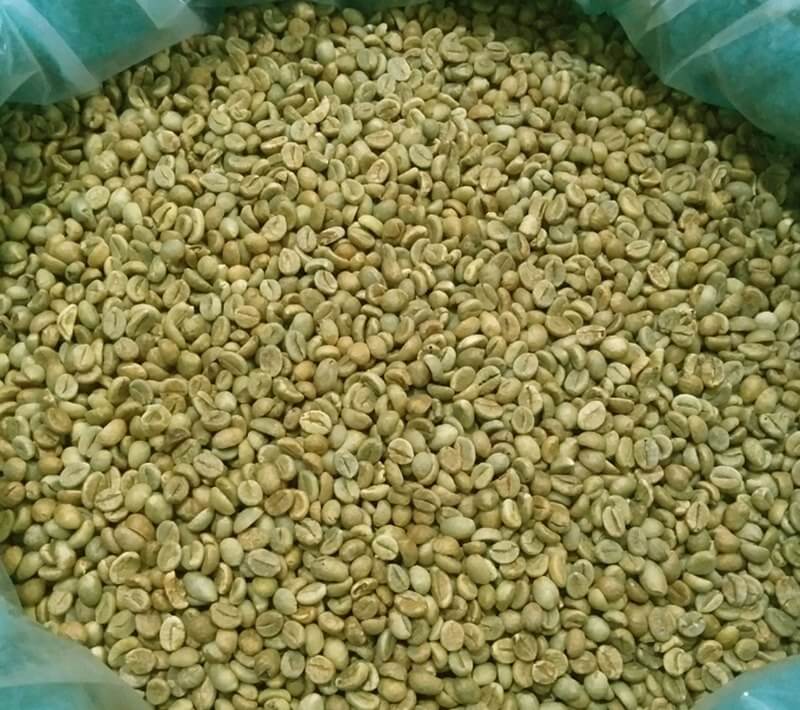
3. Defect Count Analysis: Primary vs. Secondary Defects (SCA Standard)
Under Specialty Coffee Association (SCA) grading protocols, a 350-gram green coffee sample is visually inspected under full spectrum lighting to categorize physical defects into Category 1 (Primary) and Category 2 (Secondary) defects.
┌─────────────────────────────────────────────────────────────────┐
│                    GREEN COFFEE DEFECT TYPES                    │
├──────────────────────────────────┬──────────────────────────────┤
│  Category 1: Primary Defects     │ Category 2: Secondary Defects│
├──────────────────────────────────┼──────────────────────────────┤
│ • Full Black Bean                │ • Partial Black / Partial Sour│
│ • Full Sour Bean                 │ • Parchment / Hull Fragments │
│ • Dried Cherry / Pod             │ • Broken / Chipped Beans     │
│ • Severe Insect Damage           │ • Slight Insect Damage       │
│ • Foreign Matter (Stones/Sticks) │ • Immature / Unripe (Quakers)│
└──────────────────────────────────┴──────────────────────────────┘
Category 1: Primary Defects (Severe Flavor Impact)
Primary defects severely compromise cup quality or present health hazards. A single primary defect disqualifies a lot from specialty classification.
-
Full Black / Full Sour: Caused by over-fermentation, agricultural disease, or fungal breakdown. Introduces harsh, foul, or fermented cup notes.
-
Foreign Matter: Stones, sticks, or metal pieces that damage industrial roasting equipment.
-
Fungus / Mold Damage: Beans containing visible fungal spores, creating high risks of Ochratoxin A contamination.
Category 2: Secondary Defects (Minor Flavor Impact)
Secondary defects reduce cup sweetness, body, or uniformity.
-
Broken / Chipped Beans: Damaged beans that burn easily during roasting.
-
Immature Beans (Quakers): Unripe beans picked before sugar synthesis, resulting in pale, peanut-like flavors after roasting.
-
Parchment / Hull: Residual dried fruit layer attached to the bean.
4. Moisture Content, Water Activity, and Green Bean Density
Physical laboratory measurement of green coffee extends beyond visual inspection into physical chemistry:
Moisture Content (10.0% to 12.0%)
Measured using calibrated capacitance moisture meters. Beans with moisture above 12.5% risk fungal decay during ocean shipping. Beans dried below 9.0% lose structural cell integrity, leading to rapid flavor fading and woody cup notes.
Water Activity (a_w 0.53 to 0.60)
Water activity measures the energy state of water in the bean. Water activity levels above 0.60 a_w allow mold spores and bacteria to reproduce, while levels between 0.53 and 0.58 a_w guarantee long-term flavor stability.
Physical Bean Density
High-density green beans (grown at higher altitudes with cooler temperatures) feature tight cellular structures that absorb heat slowly during roasting, allowing roasters to develop complex sugars and sweet acidity.
5. Cupping Score Protocol and Specialty vs. Commercial Classification
The final stage of green coffee evaluation is sensory cupping conducted by certified Q-Graders according to standardized SCA protocols.
| Grade Classification | Cupping Score Range | Allowable Primary Defects | Allowable Secondary Defects | Target Commercial Market |
| Specialty Grade (Grade 1) | 80.0 to 100.0 Points | 0 Primary Defects | Max 5 Full Secondary Defects | Specialty Roasters & Single-Origin Retail |
| Premium Grade (Grade 2) | 75.0 to 79.75 Points | Max 3 Primary Defects | Max 8 Full Secondary Defects | High-End Commercial & Supermarket Blends |
| Exchange Grade (Grade 3) | 70.0 to 74.75 Points | Complies with ICE Specs | Complies with ICE Specs | Commercial Mass Market & Food Service |
| Off-Grade / Below Standard | Below 70.0 Points | High Defect Counts | High Defect Counts | Instant Coffee Processing & Extraction |
Green Coffee Beans Grading Facts FAQ
Disclaimer: Unless otherwise stated, the images used in this article are the property of their respective owners. We do not claim ownership of any third-party images featured, and they are used here strictly for informational and educational purposes. If you are the copyright holder and wish to have an image removed, please contact us.