
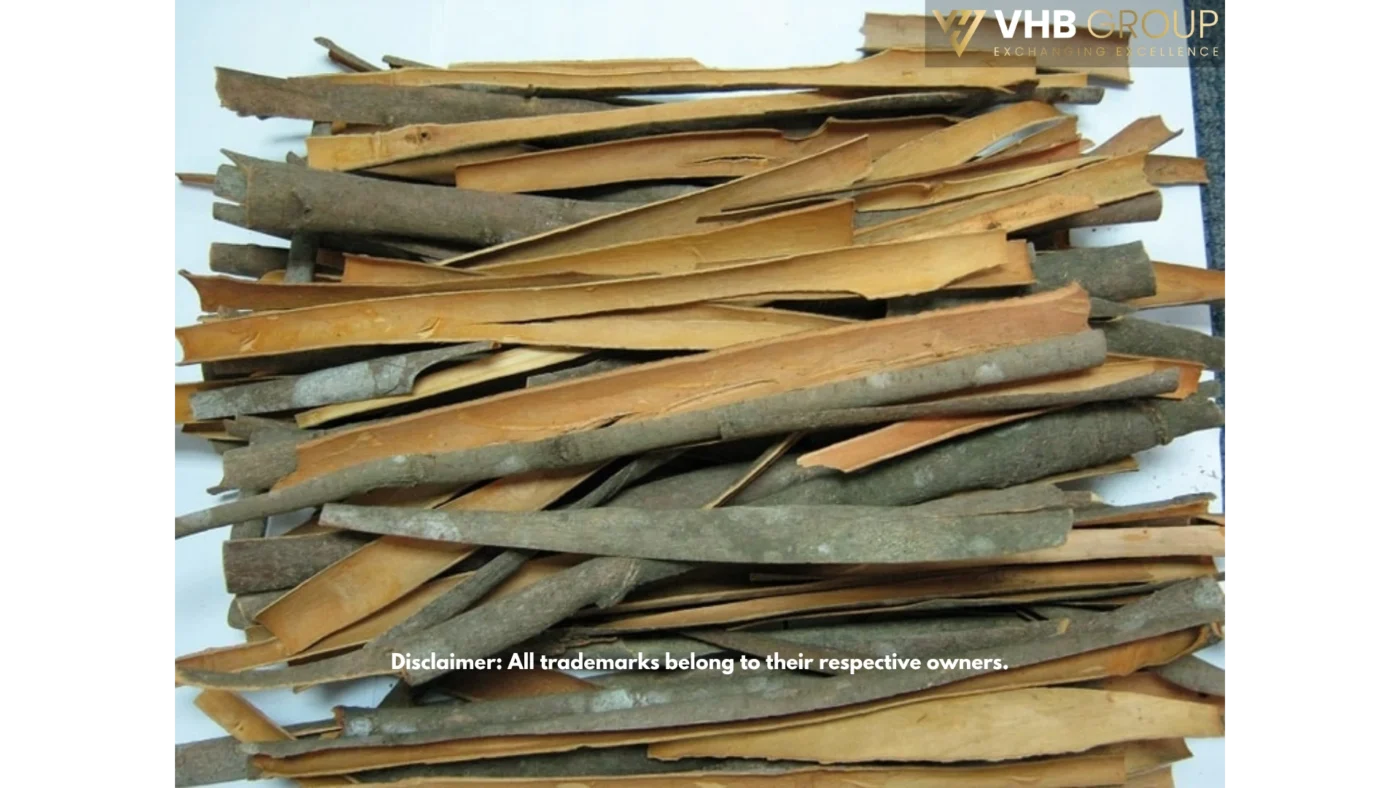
Securing Cleaned Split Cinnamon Wholesale contracts directly from certified Southeast Asian processors provides international spice importers, food manufacturers, and essential oil distillers with an uncompromised raw material foundation. Derived primarily from high-grade Cinnamomum cassia grown in Vietnam’s premier agricultural regions, cleaned split cinnamon represents a processed tier where outer bark fungi, lichen, and impurities are mechanically and manually scraped away before splitting. This meticulous preparation yields high essential oil retention, minimal volatile loss, and uniform moisture levels. For commercial spice brokers and industrial buyers, procuring cleaned split cinnamon in bulk offers high extraction yield, excellent margin potential, and dependable compliance with strict global food safety standards.
In this ultimate B2B guide, VHB Group examines the processing standards, essential oil specifications, packaging SKUs, maritime container logistics, and step-by-step import workflows required to procure cleaned split cinnamon in commercial quantities.
Table of Contents
-
What is Cleaned Split Cinnamon Wholesale and Why Is Global Demand Surging?
-
Technical Specifications: Cleaned Split Cinnamon vs. Raw Cinnamon Bark
-
Processing Standards: Washing, Scraping, and Splitting Facts
-
Quality Control, Mold Prevention, and International Compliance
-
Selecting a Verified Cleaned Split Cinnamon Wholesale Supplier

What is Cleaned Split Cinnamon Wholesale and Why Is Global Demand Surging?
Split cinnamon is produced by taking mature cassia tree bark, shaving off the rough outer epidermis (lichen and fungal layer), and splitting the inner bark vertically along the fiber lines. Unlike uncleaned cinnamon splits, which retain raw forest debris and higher microbial loads, cleaned split cinnamon undergoes intensive hand-sorting and mechanical cleaning prior to drying.
Global demand for Cleaned Split Cinnamon Wholesale inventory is accelerating across multiple industrial sectors:
-
Industrial Spice Grinding & Milling: Commercial millers require clean bark free from stone, dirt, and heavy lichen to protect high-speed hammer mills and guarantee low ash content in ground cinnamon powder.
-
Essential Oil & Oleoresin Extraction: Cleaned bark preserves cinnamaldehyde content (typically 2.5% to 4.0%), maximizing extraction efficiency during steam distillation.
-
Pharmaceutical & Nutraceutical Formulations: Health supplement manufacturers utilize cleaned cassia split extracts for blood sugar management and anti-inflammatory formulations, demanding strict limits on heavy metals and aflatoxins.
-
Food Service & Bakery Distribution: Large-scale commercial bakeries and spice packers favor clean split bark for consistent flavor infusion in syrups, teas, and spice rubs.
Benefits of Procuring Cleaned Split Cinnamon Wholesale from VHB Group
Partnering directly with VHB Group for full container load (FCL) spice procurement yields distinct commercial advantages:
-
Superior Volatile Oil Retention: Controlled shade-and-sun drying protocols preserve volatile aromatic compounds.
-
Reduced Foreign Matter Defect Rates: Strict optical and manual sorting reduces foreign matter to under 0.2%.
-
Optimized Moisture Balance: Standardized moisture levels below 13.5% eliminate mold risk during ocean transit.
Technical Specifications: Cleaned Split Cinnamon vs. Raw Cinnamon Bark
To evaluate value across commercial spice grades, procurement managers must analyze the chemical and physical metrics that separate cleaned split cinnamon from raw cassia bark.
| Technical Parameter | Cleaned Split Cinnamon (VHB Premium) | Standard Uncleaned Split Cinnamon | Raw Unscraped Cassia Bark |
| Volatile Essential Oil | 2.5% – 4.2% min | 1.5% – 2.5% | 1.0% – 2.0% |
| Moisture Content | 12.5% – 13.5% max | 14.0% – 15.5% max | 16.0% – 18.0% max |
| Outer Bark Scraping | 100% Fully Scraped & Cleaned | Partially Scraped (50% – 70%) | Unscraped (Raw Epidermis) |
| Foreign Matter | Below 0.2% max | Below 1.0% max | Up to 2.5% |
| Thickness Range | 1.2 mm – 2.5 mm | 1.0 mm – 3.0 mm | Variable (Unsorted) |
| Length Range | 20 cm – 45 cm | 10 cm – 40 cm | Irregular |
| Color Profile | Bright reddish-brown | Dull yellowish-brown | Greyish-brown with white moss |
| Primary Industrial Use | High-grade milling, extraction, retail | Medium-grade grinding, blending | Low-tier industrial extraction |

Processing Standards: Washing, Scraping, and Splitting Facts
The production of premium split cinnamon requires precise manual skill and controlled processing environments.
-
Harvesting & Debarking: Mature cassia trees (10 to 15 years old) are harvested during peak sap movement periods (spring and autumn) to allow clean peeling of the inner phloem.
-
Outer Layer Scraping: Trained workers use curved draw-knives to strip away the greyish outer cork and lichen without damaging the oil-dense inner bark layers.
-
Splitting & Trimming: Bark sheets are split lengthwise into uniform strips measuring 2cm to 4cm in width and trimmed to standard container length specifications.
-
Dehydration & Solar Drying: The split bark is dried on raised bamboo racks, avoiding ground contact to prevent soil contamination and mold spore accumulation.
For detailed botanical and historical background on cassia processing, consult the Wikipedia entry on Cinnamomum cassia and global food safety standards outlined by the U.S. Food and Drug Administration (FDA).
Packaging SKUs and Container Payload Optimization
Efficient logistics management depends on selecting the right bulk packaging format to maximize shipping density while protecting bark integrity.
Standard B2B Packaging Options
-
Pressed Corrugated Cartons (10kg / 20kg Net): Split bark is hydraulic-pressed into heavy-duty double-wall cartons to maximize container space utilization.
-
Woven Polypropylene (PP) Bags (25kg / 50kg Net): Economical packaging format designed for high-volume industrial extractors and commercial millers.
Full Container Load (FCL) Payload Metrics
-
20ft FCL Capacity (Pressed Cartons): Holds approximately 8.0 to 9.5 metric tons of cleaned split cinnamon.
-
40ft High Cube (HC) FCL Capacity (Pressed Cartons): Holds approximately 18.0 to 20.0 metric tons, offering significantly lower sea freight costs per kilogram.
Quality Control, Mold Prevention, and International Compliance
Maintaining export quality requires strict adherence to international phytosanitary and food safety frameworks. VHB Group enforces rigorous quality protocols prior to packing:
-
Sulfur Dioxide (SO2) Control: Processing ensures compliance with European Union regulations (under 50 ppm or zero-sulfur organic specification upon request).
-
Aflatoxin and Ochratoxin A Testing: High-performance liquid chromatography (HPLC) testing verifies compliance with global mycotoxin safety limits.
-
Microbial Decontamination: EtO (Ethylene Oxide) or Steam Sterilization options are available for clients supplying ready-to-eat food lines.
Comprehensive trade benchmarks published by global organizations like Statista show steady annual growth in spice import volume, underscoring the necessity of compliant supply lines.

Selecting a Verified Cleaned Split Cinnamon Wholesale Supplier
Partnering with an established exporter like VHB Group ensures supply chain transparency and consistent batch quality. Key evaluation criteria for wholesale buyers include:
-
Direct Factory Sourcing: Direct processing hubs located in primary cinnamon growing provinces (such as Yen Bai, Quang Nam, and Lao Cai) eliminate middleman markups.
-
Third-Party Lab Testing: Availability of Certificate of Analysis (CoA) from accredited laboratories (SGS, Eurofins, or Bureau Veritas) per shipment.
-
Flexible OEM Packing: Capability to private-label master cartons or adapt box dimensions to match automated warehouse racking systems.
Buyer Intent Guide: Pricing Structures and Incoterms
Commercial pricing for Cleaned Split Cinnamon Wholesale contracts varies based on volatile essential oil percentage, thickness, and chosen Incoterms:
-
FOB Haiphong / Ho Chi Minh Port: The supplier handles domestic transport, export customs, and port loading; the buyer assumes ocean freight risk.
-
CIF Destination Port: The seller manages maritime freight and cargo insurance directly to your designated port of entry.
-
CFR (Cost and Freight): Preferred by buyers maintaining independent global marine insurance policies.
Cleaned Split Cinnamon Wholesale FAQ
Disclaimer: Unless otherwise stated, the images used in this article are the property of their respective owners. We do not claim ownership of any third-party images featured, and they are used here strictly for informational and educational purposes. If you are the copyright holder and wish to have an image removed, please contact us.