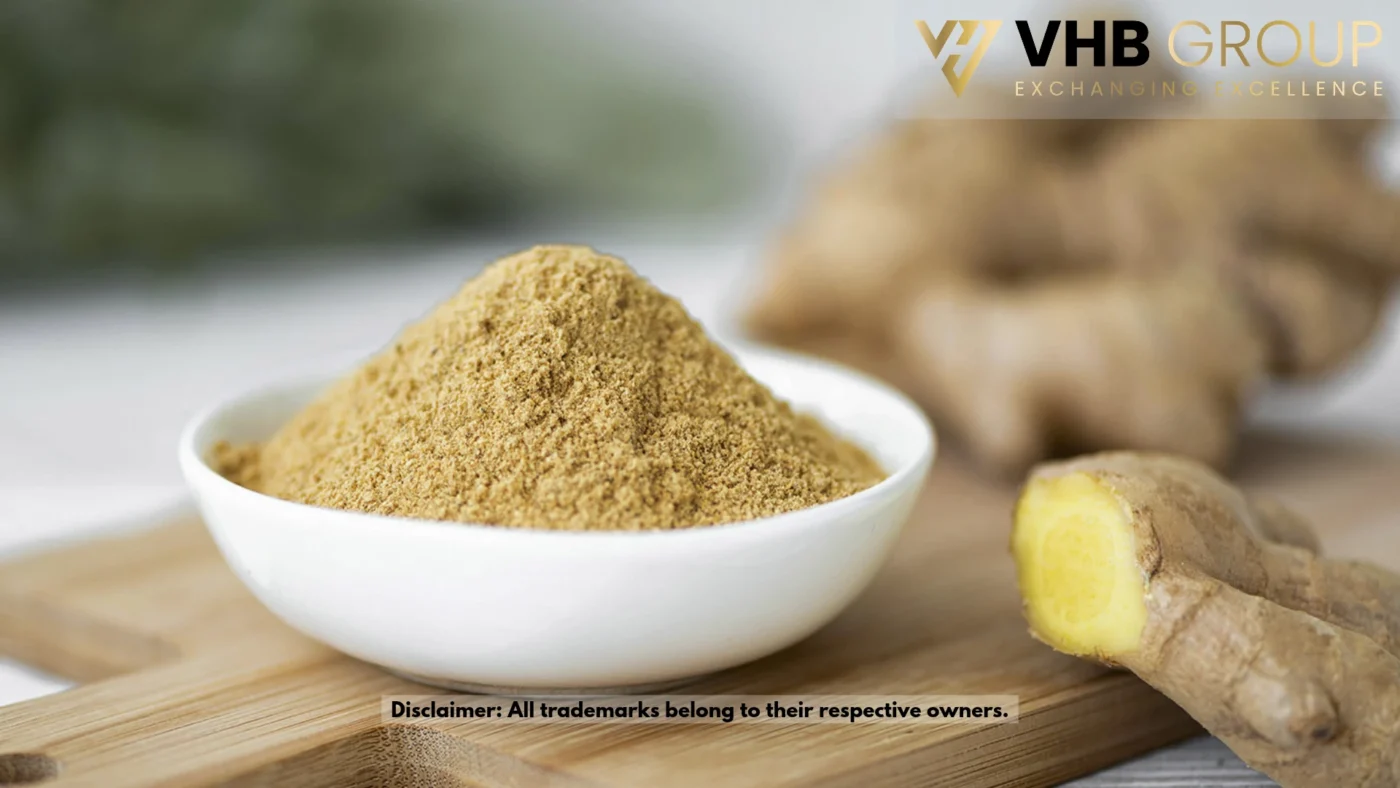
Understanding the exact Ginger Powder Grinding Mesh & Aroma Facts is absolutely essential for spice importers, R&D food scientists, and industrial seasoning buyers who need to specify the right technical grade for their production lines. Unlike fresh ginger—whose flavor is dominated by bright, juicy zingiberene—dried and milled ginger powder undergoes a distinct chemical transformation during dehydration and grinding, concentrating its pungent shogaols and gingerols while requiring precise particle-size engineering (mesh sizing) to perform properly in specific industrial applications.
For international procurement teams and supply chain managers looking to capitalize on this global commodity, reviewing the operational logistics of the wholesale supply chain is the mandatory next strategic step. However, before executing bulk contracts, buyers must fully understand the milling physics, volatile oil retention, and chemical profiles that separate premium export-grade ginger powder from inferior, heat-scorched dust.
Table of Contents
-
The Chemical Matrix: Gingerols, Shogaols, and Volatile Oils
-
Grinding Mesh Science: Cryogenic vs. Ambient Milling
-
Sensory Profile: Essential Ginger Powder Grinding Mesh & Aroma Facts
-
Quality Benchmarks and Microbiological Safety
-
Wholesale Spice Integration

The Chemical Matrix: Gingerols, Shogaols, and Volatile Oils
When analyzing the commercial value of export-grade ginger powder, the primary quality metrics are its volatile essential oil content and its non-volatile pungent compounds.
Fresh ginger owes its sharp bite primarily to gingerols. However, when the rhizome is sliced and dehydrated (sun-dried or kiln-dried), a chemical dehydration reaction converts a portion of the gingerols into shogaols—compounds that are nearly twice as pungent as gingerol. This is why dried ginger powder delivers a deeper, warmer, and more lingering heat than fresh ginger. Simultaneously, the characteristic citrusy, woody aroma is driven by volatile essential oils (predominantly zingiberene, β-sesquiphellandrene, and ar-curcumene), which typically measure between 1.5% and 2.5% in high-grade export powder.
Grinding Mesh Science: Cryogenic vs. Ambient Milling
A critical element within the manufacturing cycle is controlling friction heat during the grinding process and achieving uniform particle size distribution (measured in US Standard Mesh).
View Dried Ginger Rhizomes and Powder Reference on Wikimedia Commons
Standard ambient hammer-milling generates significant friction heat (often exceeding 70°C–90°C), which rapidly flashes off delicate volatile essential oils and scorches the natural starches, turning the powder dull brown and muted in aroma. Premium export mills utilize cool-grinding or cryogenic grinding (injecting liquid nitrogen to keep temperatures sub-zero during milling). This preserves up to 30% more volatile oil, maintains a bright creamy-yellow color, and prevents the natural oleoresins from gumming up the sieves.
Standard Industrial Mesh Specifications
-
40–60 Mesh (Coarse-to-Medium): Ideal for dry spice rubs, curry blends, and herbal tea bags where rapid clumping must be avoided.
-
60–80 Mesh (Standard Fine): The global commercial workhorse for commercial baking (gingerbread, cookies), savory sauces, and retail spice jars.
-
100–120 Mesh (Ultra-Fine): Engineered for instant beverage mixes, smoothies, and nutraceutical capsules requiring rapid dispersion and smooth mouthfeel.
Sensory Profile: Essential Ginger Powder Grinding Mesh & Aroma Facts
The most distinctive physical characteristic of high-grade ginger powder upon opening a freshly sealed PE-lined sack is its free-flowing, pale buff-to-golden-yellow hue and an immediate, sharp, lemony-peppery aroma that tingles the nasal passages.

Balancing Heat, Color, and Dispersion
The Ginger Powder Grinding Mesh & Aroma Facts matrix is defined by its clean, lingering warmth. Inferior powders milled from unpeeled, fibrous roots or spent (de-oiled) ginger exhibit a dark greyish-brown color, excessive woody fiber, and a flat, dusty taste. Authentic, high-oil export powder dissolves smoothly into batters and broths, delivering a clean, pungent kick without gritty sediment.
Quality Benchmarks and Microbiological Safety
To fully grasp the commercial appeal and pass strict international border inspections, B2B buyers must specify exact laboratory parameters on their Certificate of Analysis (COA).
| Quality Parameter | Standard Export Specification | Functional Significance |
| Moisture Content | ≤ 10.0% – 12.0% | Prevents caking, clumping, and mold/aflatoxin growth during transit. |
| Volatile Essential Oil | 1.5% – 2.5% (v/w) | Primary indicator of aromatic potency and proper cool-milling. |
| Total Ash / Acid-Insoluble | ≤ 7.0% / ≤ 1.0% | Verifies thorough washing and absence of soil/sand contamination. |
| Mesh Size Pass Rate | ≥ 95% through target mesh | Ensures uniform dosing in automated food and capsule machinery. |

Wholesale Spice Integration
Mastering the core chemical facts and grinding mesh specifications is the definitive key to sourcing high-performing ginger powder for industrial applications. By specifying cool-milled 60–80 mesh grades with verified volatile oil percentages and low moisture, international distributors and food manufacturers guarantee consistent flavor delivery across every production batch.
Ginger Powder Mesh & Aroma FAQ
Disclaimer: Unless otherwise stated, the images used in this article are the property of their respective owners. We do not claim ownership of any third-party images featured, and they are used here strictly for informational and educational purposes. If you are the copyright holder and wish to have an image removed, please contact us.