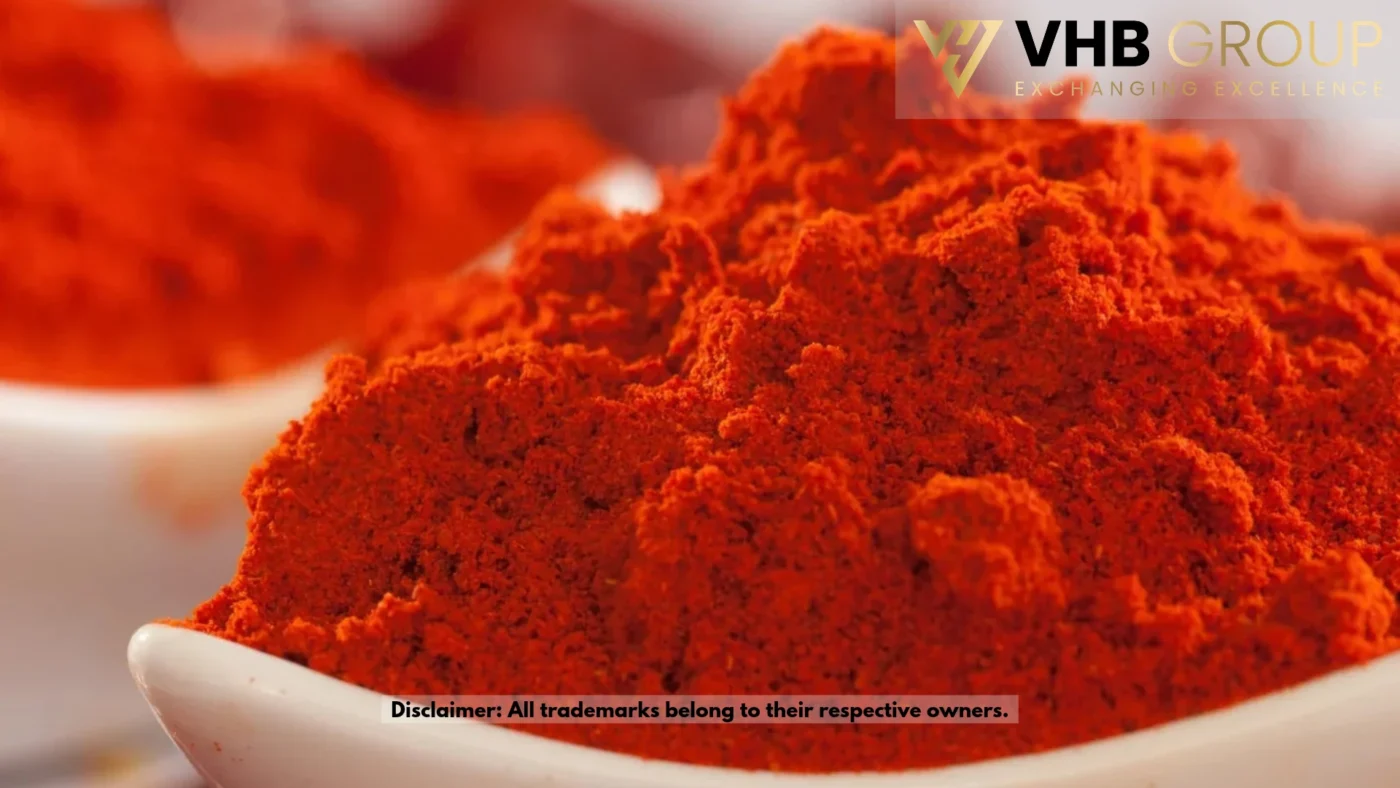
Sourcing Chili Powder Bulk Wholesale Supply inventory provides international food manufacturers, industrial seasoning blenders, snack coaters, and FMCG trading partners with an essential, high-velocity botanical ingredient in the global savory and spice sectors. Milled from mature, dehydrated Capsicum annuum and Capsicum frutescens pods cultivated across premier Asian agricultural hubs (such as India, China, and Vietnam), commercial chili powder is heavily demanded for its calibrated Scoville heat, vibrant natural ASTA red color, and effortless automated dispersion, distinguishing it as a foundational staple across sauce, meat processing, instant noodle, and snack production lines.
For B2B procurement managers and supply chain directors working with agricultural exporters, managing full container load (FCL) consignments of bulk chili powder requires carefully evaluating Scoville Heat Units (SHU), ASTA color ratings, particle mesh tolerances, steam-sterilization status, moisture-barrier packaging, ocean container payload limits, and strict international Sudan-dye and aflatoxin customs clearance protocols. This technical guide evaluates the operational, financial, and logistical frameworks necessary to establish a highly profitable import and distribution model for this globally demanded agricultural commodity.
Table of Contents
-
Global Market Demand for Industrial Chili Powder
-
Product Portfolio Breakdown
-
Packaging Configurations and Freight Density
-
Chili Powder Bulk Wholesale Supply: B2B Sourcing Options
-
Landed Cost Calculation Framework
-
Import Compliance, Harmonized System Codes, and Customs Documentation
-
Strategic Wholesale Procurement

Global Market Demand for Industrial Chili Powder
The global food processing, condiment, and savory snack industries rely fundamentally on standardized, ready-to-dose chili powders that deliver exact heat levels and uniform crimson color across massive commercial batches. Bulk chili powder commands massive year-round export liquidity across North America, the European Union, the Middle East, and East Asia. It serves as the primary heat and color engine in commercial barbecue rubs, hot sauces, instant ramen seasoning sachets, extruded corn snacks, and processed meat marinades.
Growth Drivers in the Market
The continuous growth in the bulk chili powder sector is driven by global consumer appetite for bold, spicy flavor profiles alongside the clean-label shift toward natural red carotenoid coloring in savory foods. Industrial buyers consistently pivot toward standardized export-grade chili powder because it eliminates in-house grinding dust hazards, guarantees calibrated SHU heat consistency, and offers an 18-to-24-month ambient shelf life when sealed in moisture-barrier packaging.
Commercial Advantages
Adding bulk chili powder to a B2B spice distribution catalog delivers distinct commercial advantages:
-
High Freight Efficiency: Finely milled chili powder packs far more densely than hollow whole dried pods, roughly doubling ocean container tonnage and slashing per-kilogram shipping overhead.
-
Precision Blending Consistency: Certified export mills blend distinct cultivars (such as fiery Teja S17 and high-color Byadgi) to hit exact buyer specifications for both SHU heat and ASTA color.
-
Multi-Sector Industrial Demand: Simultaneously serves snack food coaters, meat processors, sauce manufacturers, and retail spice repackers.
Product Portfolio Breakdown
Curating an optimal inventory mix requires selecting the right heat tier, color value, steam-sterilization status, and particle mesh size tailored to target industrial demographics.
Core Product SKUs
When structuring a container load from Asian spice export hubs, the core grades form the absolute foundation of the procurement strategy:
-
Standard Culinary Chili Powder (30,000–45,000 SHU, 40–60 ASTA): The flagship industrial grade (commonly milled from Guntur Sannam S4) for general curry powders, sauces, and food service.
-
Extra-Hot Industrial Chili Powder (70,000–100,000+ SHU): Milled from fiery cultivars (such as Teja S17 or Bird’s Eye) for hot sauces, spicy instant noodles, and fiery snack seasonings.
-
High-Color / Mild Chili Powder (100–160 ASTA, 5,000–15,000 SHU): Milled from Byadgi or Kashmiri-type pods, prized for delivering deep natural red color without overpowering heat.
-
Steam-Sterilized (Low-Micro) Grade: Treated via saturated steam to meet strict EU and US FDA ready-to-eat microbiological thresholds without irradiation or ethylene oxide (EtO).

Packaging Configurations and Freight Density
When managing ocean shipments, physical logistics heavily dictate profitability. Finely milled chili powder is moderately dense, intensely staining, and sensitive to both ambient moisture and UV light. Export shipments are packed in heavy-duty multi-wall kraft paper bags, laminated woven polypropylene (PP) sacks, or corrugated cartons lined with thick food-grade polyethylene (PE) inner liners to lock out humidity and prevent pigment leakage.
Master Packing Yields
Understanding the exact packing specifications is critical for calculating container payloads:
| Packaging SKU Format | Standard Weight | Packaging Structure | Primary Distribution Channel |
| Industrial Multi-Wall Bag | 25 kg | 3-Ply Kraft Paper + PE Liner | Spice Blenders, Food Processors |
| Cleanroom Export Carton | 20 kg / 25 kg | 5-Ply Carton + Blue PE Liner | EU/US Cleanroom & Snack Plants |
| Bulk FIBC Tote (Super Sack) | 500 kg / 1,000 kg | Food-Grade Woven PP + Liner | Large-Scale Sauce & Noodle Factories |

Chili Powder Bulk Wholesale Supply: B2B Sourcing Options
Commercial buyers access wholesale inventory through primary procurement channels. Large food processors and regional spice distributors typically source directly from ISO 22000, BRC, or HACCP-certified spice mills operating near major cultivation belts in India (Guntur in Andhra Pradesh; Byadgi in Karnataka), China (Shandong/Xinjiang), or Vietnam. Direct mill sourcing ensures full lot traceability, custom SHU/ASTA blending, and competitive Free On Board (FOB) pricing at major export ports like Mundra, Chennai, Qingdao, or Ho Chi Minh City.
Landed Cost Calculation Framework
Procurement teams must accurately forecast their financials before executing a purchase order. Calculating net landed per-kilogram costs involves applying a structured, multi-step financial calculation process.
Step-by-Step Financial Breakdown
-
Step 1: Calculate Ocean Freight Charges (typically utilizing 20ft standard dry containers holding ~15–17 metric tons of 25kg bags, or 40ft containers holding ~25–26 metric tons) + Origin Port Fees + Import Customs Duties + Marine Cargo Insurance + Destination Drayage.
-
Step 2: Add the Total Shipping Overhead and mandatory third-party lab testing fees (e.g., HPLC SHU, ASTA color, aflatoxin, and Sudan-dye screening) to the Free On Board (FOB) Purchase Price per Metric Ton.
-
Step 3: Divide the Total Landed Cost by total net kilograms to establish the exact landed cost per kg.
Import Compliance, Harmonized System Codes, and Customs Documentation
Clearing ground chili powder imports through international customs is a highly regulated process due to strict global screening against Sudan dyes, aflatoxins, and pesticide residues. Securing your shipments requires flawless documentation verified by accredited origin laboratories.
Essential Export Documentation Suite
-
Commercial Shipping Documents: Master Bill of Lading (B/L), Commercial Invoice, Detailed Packing List, and a Certificate of Origin (COO).
-
Harmonized System Classification: For customs declaration, crushed or ground Capsicum (chili powder) is strictly classified under HS Code 0904.22.
-
Sanitary, Phytosanitary & Lab Data: Importers must hold a Phytosanitary Certificate, Official Health Certificate, and a comprehensive Certificate of Analysis (COA) verifying moisture content (≤ 10%), zero Sudan I–IV synthetic dyes, aflatoxins (B1 ≤ 5 ppb; Total ≤ 10 ppb), total ash (≤ 8%), and strict pesticide Maximum Residue Limits (MRLs).
Strategic Wholesale Procurement
Mastering the procurement of bulk chili powder is the definitive key to securing vibrant, heat-calibrated, and compliant supply chains in the global spice and food manufacturing sectors. From verifying HPLC Scoville and ASTA assays to specifying airtight PE-lined 25kg bags, every operational detail directly protects color intensity and customs clearance speed.
Chili Powder Bulk Wholesale FAQ
Disclaimer: Unless otherwise stated, the images used in this article are the property of their respective owners. We do not claim ownership of any third-party images featured, and they are used here strictly for informational and educational purposes. If you are the copyright holder and wish to have an image removed, please contact us.