
Beyond the Exhibition Noise: Monetizing Market Disruption at the Midpoint of THAIFEX
Scalable FMCG sourcing solutions serve as the definitive corporate framework for regional margin protection on Day 4 of THAIFEX 2026. As international brand architectures navigate shifting economic realignments across the ASEAN corridor, raw capital allocation has completely replaced general market exploration. The midpoint of this global trade forum has consolidated corporate attention inside Hall 2, filtering out casual observation to favor multi-market procurement consortiums and institutional brand architects.
Operating as a highly capitalized trade gateway, the combined enterprise ecosystem of VHB and M-Pacific at Booth 2W23 has transformed this commercial midpoint into an active engine for high-velocity contract execution. Global directors are bypassing superficial product displays to lock in secure, volume-guaranteed pipelines. This shift confirms that long-term survival in volatile consumer spaces requires deep alignment with an asset-heavy corporate partner.
The current macroeconomic landscape leaves no room for unhedged logistics lines or loose supply arrangements. Corporate decision-makers face severe structural headwinds, including erratic shipping container allocations and complex cross-border environmental compliance mandates. Legacy distribution models are proving entirely unequipped to manage these modern institutional pressures. Consequently, serious procurement officers are centralizing their volume portfolios at our hub to secure continuous corporate stability.
On Day 4, the difference between transactional middlemen and real infrastructure owners becomes glaringly obvious. While temporary brokers scramble to pitch unhedged freight allocations under volatile spot-market pressures, the unified ecosystem of VHB and M-Pacific focuses entirely on the long-term mechanics of corporate supply alignment. C-suite executives are auditing structural capital availability and direct control over transport lanes, turning our presentation console into a high-intensity negotiation zone.
This corporate focus stems from a broader realization: expanding a consumer goods footprint in high-growth territories cannot rely on fragmented supply chains. By establishing direct infrastructure dominance, VHB and M-Pacific underwrite international consumer pipelines against sudden cross-border shipping halts. This strategic positioning transforms Day 4 from a mid-fair review into a decisive arena where market share is captured for upcoming fiscal cycles.
Macroeconomic Margin Defense: Insulating International Portfolios from Regional Inflationary Shocks
Protecting corporate balance sheets from localized inflationary pressures demands an aggressive approach to inventory staging that middle-tier agents cannot finance. Throughout Day 4, our financial compliance directors focused on demonstrating how scalable FMCG sourcing solutions insulate high-volume portfolios from sudden spot-market price spikes. By operating as a multi-market anchor, VHB provides corporate partners with an impenetrable defensive shield that secures cost predictability across massive product movements.
This systematic approach to margin defense relies entirely on extensive capital reserves and direct infrastructure ownership. By executing direct primary sourcing channels, we eliminate the unnecessary transaction markups that traditionally erode corporate profitability during international transit. Global brand owners recognize that cost stabilization requires a structural alliance with a heavily capitalized parent organization capable of absorbing systemic market shocks on its own balance sheet.
[Spot-Market Broker Network] ──> High Volatility ──> Margin Erosion (High Risk)
[VHB & M-Pacific Infrastructure] ──> Asset-Backed ──> Cost Predictability (Protected Balance Sheet)
Unprecedented volatility in ocean freight fees and regional currency values creates severe compliance and pricing friction for unhedged consumer brands. Relying on transactional brokers leaves multinational operations exposed to unexpected cost run-ups that can quickly eliminate downstream retail profit margins.
The strategy presentations delivered at Booth 2W23 on Day 4 detailed how our direct integration of supply lines eliminates these intermediate risks. By managing the primary manufacturing nodes and deep-water container space directly, the VHB and M-Pacific alliance ensures absolute pricing stability across entire contract lifecycles.
This corporate buffer protects international consumer brands from sudden regional market changes. When corporate buyers secure volume guarantees within our network, they protect their downstream retail pricing models from inflation.
This operational security allows corporate boards to execute multi-market product rollouts with total pricing clarity, transforming supply infrastructure from an volatile cost center into a distinct tool for protecting corporate profitability.
The New Geometry of Demand: How Rapid Consumer Realignment is Rewriting the ASEAN Retail Playbook
The purchasing velocity of the modern regional demographic is shifting with unprecedented speed, forcing international consumer groups to completely re-engineer their localized inventory assets. Sourcing frameworks built on historical data are failing to capture active market share because they treat diverse retail environments as a static matrix. Our afternoon consultations highlighted how VHB and M-Pacific leverage real-time market insights to realign multi-category portfolios with shifting consumer demand patterns instantaneously.
Successfully navigating this changing retail landscape requires a sophisticated combination of regional consumer insights and immediate inventory adaptability. Our trade delegates spent Day 4 showing enterprise directors how our platform bridges the operational gap between global corporate vision and hyper-local market realities. By optimizing product specifications, packaging sizes, and ingredient profiles to match regional expectations, we guarantee sustained market adoption and protect our partners’ long-term brand equity from competitive displacement.
The modern consumer landscape across emerging trade lanes is highly fragmented. Western brands often struggle here because they apply uniform distribution models to regions defined by diverse consumer behaviors and distinct purchasing frequencies.
At Booth 2W23, our market intelligence teams proved that maintaining a static inventory portfolio leads to high storage costs or damaging out-of-stock scenarios. Our analytical models replace outdated forecasting with live tracking that detects shifts in product velocity before they affect retail inventories.
By connecting this real-time market tracking directly with our flexible packaging lines, VHB and M-Pacific enable global brands to adjust their retail formats instantly. Whether adapting ready-to-drink formulations for urban micro-fulfillment or calibrating snack pack sizes for traditional independent retail channels, our platform optimizes your product positioning.
This close alignment with regional market needs protects downstream brand presence, ensuring that international assets remain resilient against rapid competitive shifts.
Portfolio Velocity Warfare: Compressing Commercial Cycles to Maximize Corporate Capital Yields
In the high-stakes consumer sector, stagnant inventory represents tied-up corporate capital that actively diminishes an organization’s return on investment. Surviving the current commercial era demands an unyielding focus on accelerating the Cash-Conversion-Cycle across all international distribution lines. During Day 4, our operations teams used active performance metrics to prove how scalable FMCG sourcing solutions drastically compress total transit timelines, allowing brands to rapidly liquidate inventory assets and maximize corporate capital yields.
[Capital Allocation] ──> [Sourcing Execution] ──> [Customs Validation] ──> [Market Realization]
         ▲                                                                        │
         └─────────────────────── (Compressed Cycle Yield) ───────────────────────┘
This structural compression is achieved by removing the administrative and operational bottlenecks that historically slow down international product staging. By synchronizing manufacturing output directly with real-time consumer demand metrics, VHB and M-Pacific help global enterprise brands systematically eliminate wasteful safety stock overhead. This level of cycle efficiency transforms the traditional supply line from an unavoidable corporate expense into a highly optimized engine for generating capital liquidity.
When high-volume product lines spend weeks sitting idle in transborder customs yards or exurban consolidation hubs, the financial impact extends far beyond immediate storage fees. Prolonged transit times tie up massive amounts of working capital, limiting an organization’s ability to fund active marketing programs, execute new product rollouts, or capture emerging market opportunities.
Our core operational presentation on Day 4 focused heavily on this metric, proving that our asset-heavy approach removes hours of administrative delays from international logistics lines.
By integrating physical staging hubs directly with digital pre-clearance compliance tracking systems, our platform ensures that product containers move through complex maritime and rail routes at maximum speed. This streamlined movement allows enterprise partners to maintain lean warehouse footprints while simultaneously improving on-shelf retail availability.
For international consumer brands, accelerating cycle times lowers total operational overhead while maximizing working capital efficiency, transforming cross-border distribution channels into a major driver of corporate capital yields.
Architectural Curation: Inside the Booth 2W23 High-Density Retail Volume Presentation
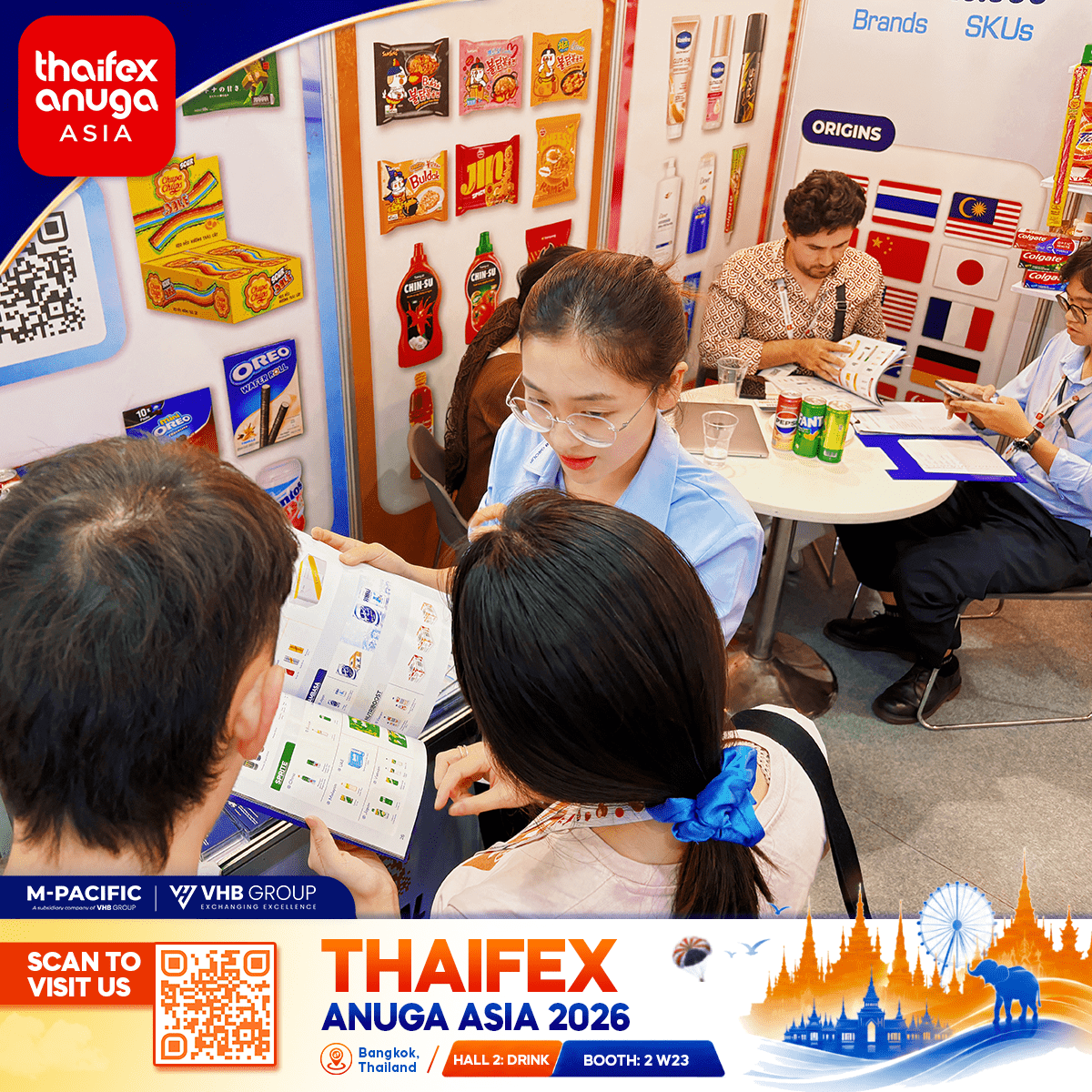
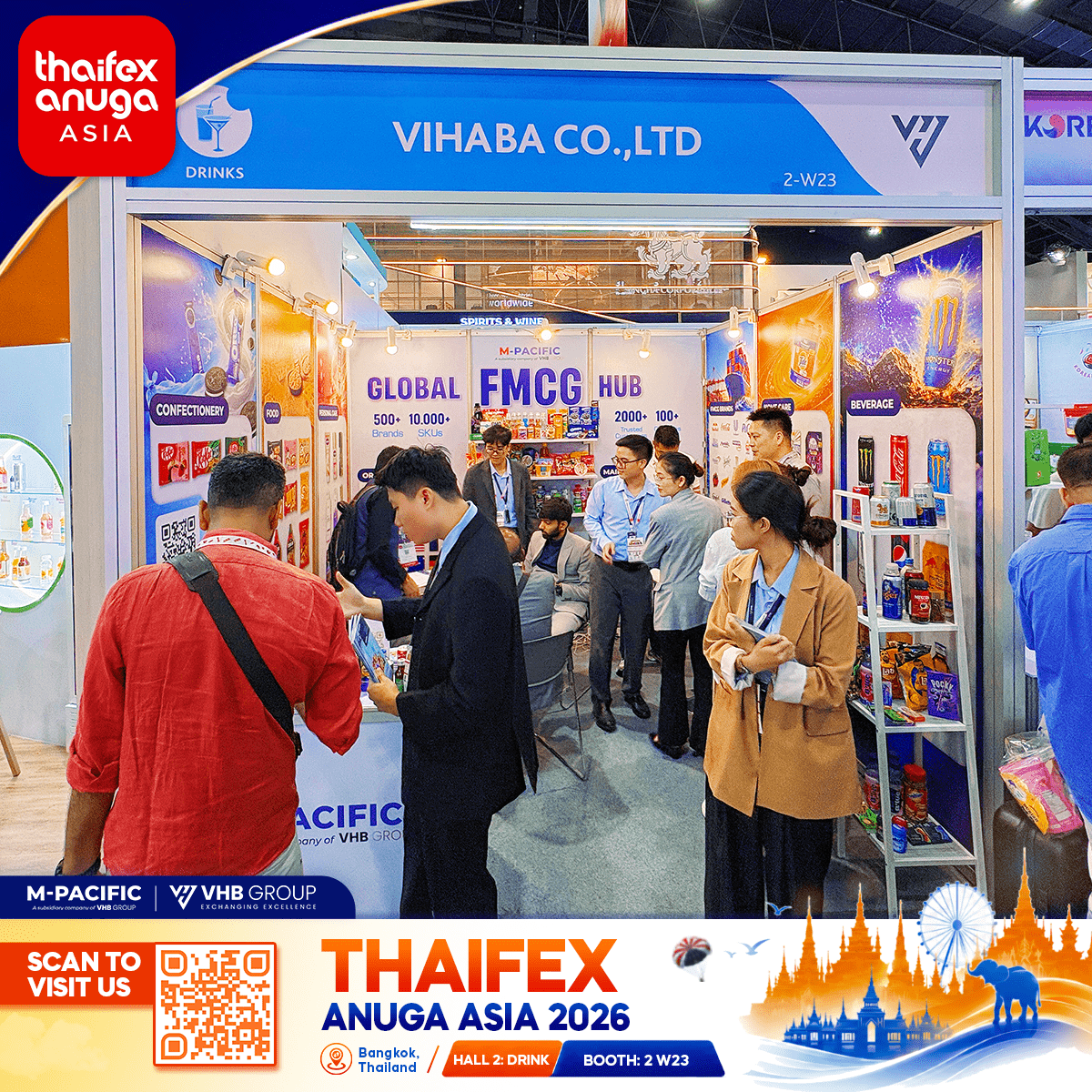
The physical layout of our unified exhibition pavilion was deliberately engineered to function as a high-density corporate environment, establishing an authoritative space optimized for multi-million-dollar contract execution away from the general noise of the fair.
-
The Corporate Portal: A prominent, commanding architectural facade under the VHB banner that instantly signals institutional scale, financial stability, and world-class distribution capacity to passing corporate buyers.
-
The High-Density Volume Display: A beautifully organized presentation showcase tracking our extensive carrying capacity across ready-to-drink liquid lines, conscious snack portfolios, and personal care staples.
-
The Analytics Terminal: A dedicated digital command space where our systems engineers demonstrate our real-time regional cargo tracking platforms, proving our execution velocity with live data.
-
The Strategy Boardroom: A private, executive-level environment explicitly reserved for C-suite networks to formalize long-term supply agreements under strict corporate confidentiality.
Every element of Booth 2W23 was designed to emphasize structural capability and operational transparency. Rather than distracting visitors with standard promotional gimmicks, our presentation hub focused strictly on data-driven physical realities. Procurement executives navigating the pavilion on Day 4 found a structured corporate environment designed specifically for deep financial auditing and logistical stress-testing.
By using high-definition data terminals to display real-time transit metrics and compliance verifications, we provided visiting brand managers with undeniable proof of our distribution speed. Our presentation areas were engineered to act as active consultation spaces where procurement teams could hand over their current supply chain metrics for a complete operational audit. This intentional design set our pavilion apart on the show floor, positioning the VHB and M-Pacific command console as the primary hub for high-level commercial alignment.
The Regulatory Safe Haven: Protecting Cross-Border Goods from Shifting Multi-Market Enforcement Mandates
Navigating the complex regulatory frameworks of international trade frontiers represents a severe operational liability for unhedged brand owners. A single missing paperwork certificate or an incorrect customs classification code can instantly freeze high-value shipments at international checkpoints, resulting in catastrophic retail stockouts and expensive port demurrage fees.
VHB and M-Pacific act as a sophisticated regulatory shield for our enterprise partners, utilizing automated verification systems to ensure absolute compliance with shifting transborder tracing laws and multi-market environmental tracking updates.
Our compliance architecture utilizes advanced database matching to forensically audit every product line against the specific requirements of the destination territory long before cargo ever arrives at the port of entry. This comprehensive approach to pre-clearance completely removes administrative guesswork from cross-border commercial execution.
By maintaining direct, native integration with regional trade enforcement frameworks, we ensure that our partners’ consolidated portfolios move through complex border checkpoints smoothly, preserving valuable product shelf-life and guaranteeing uninterrupted market access.
As international environmental tracking mandates and raw material tracing systems become standard across global supply networks, non-compliance represents an immediate threat to market stability. Multinational brands expanding across the ASEAN economic zone are finding that standard customs brokers are wholly unequipped to handle these strict new tracking protocols.
Our specialized regulatory briefing zones at Booth 2W23 on Day 4 directly addressed these challenges, demonstrating how our digital data integration builds complete traceability directly into every manifest.
This deep compliance integration guarantees that high-volume shipments pass through complex multi-market checks without delay. By executing automated audits of raw ingredient sheets, manufacturing certificates, and localized labeling parameters simultaneously, our platform insulates enterprise partners from unexpected border holds.
This advanced protective layer ensures absolute continuity of supply, safeguarding your brand’s market reputation and preventing the costly retail line disruptions that frequently destroy cross-border profitability.
Strategic Geographic Arbitrage: Capitalizing on Regional Trade Corridors for Unmatched Wholesale Cost Advantages
True market dominance is achieved by organizations that understand how to legally leverage international tariff schedules and regional trade agreements to minimize total landed costs. Our afternoon presentations demonstrated how scalable FMCG sourcing solutions allow international brands to execute strategic geographic arbitrage across emerging cross-border lanes.
By staging, consolidating, and routing massive commodity volumes through optimized trade zones, VHB systematically lowers import duties and minimizes fiscal overhead for our corporate partners.
This sophisticated cost-mitigation strategy relies on our deep institutional relationships and localized infrastructure assets across the primary commercial hubs of the region. Rather than relying on rigid, single-mode transit routes that leave brands vulnerable to localized port delays or sudden duty increases, our platform utilizes a multi-node distribution network.
If a primary shipping route experiences unexpected regulatory gridlock, our systems automatically re-route cargo through optimized rail and maritime corridors, protecting our partners’ bottom lines and preserving their wholesale cost advantages over less agile competitors.
| Sourcing Model | Freight Routing Strategy | Landed Cost Profile | Supply Chain Resilience |
| Traditional Logistics | Rigid, Single-Mode Maritime Lanes | High Duty Exposure + Unhedged Surges | Low (Vulnerable to Port Chokepoints) |
| VHB Arbitrage Network | Intermodal Multi-Node Corridors | Optimized Tariff Breaks + Capital Hedges | High (Automated Route Realignment) |
The fiscal implications of cross-border tariff structures are a primary focus for procurement teams attempting to protect multimarket gross margins. Miscalculating free trade qualifications or using non-optimized transit nodes can expose an organization to heavy import penalties and unnecessary taxes.
Our strategic geographic arbitrage framework addresses this vulnerability by actively routing consolidated portfolios through regional economic zones that offer substantial tax breaks and duty exemptions.
By managing the physical staging process across multiple regional infrastructure hubs, VHB and M-Pacific allow global brand owners to legally minimize total landed costs. This systematic optimization ensures that our enterprise partners secure product lines at lower costs than competitors using standard logistics networks.
This operational advantage translates directly into enhanced retail pricing flexibility, enabling global consumer brands to capture market share while preserving maximum profitability across every expansion territory.
The Executive Procurement Mindset: Why Global Brand Directors Bypassed Promotional Displays for Institutional Stability
The exceptional conversion rates and partnership milestones achieved during Day 4 are a direct reflection of a major shift in the psychological priorities of modern procurement executives. Corporate buyers are no longer influenced by superficial marketing displays or generic promotional discounts; they are intensely focused on mitigating counterparty risk and securing long-term operational stability.
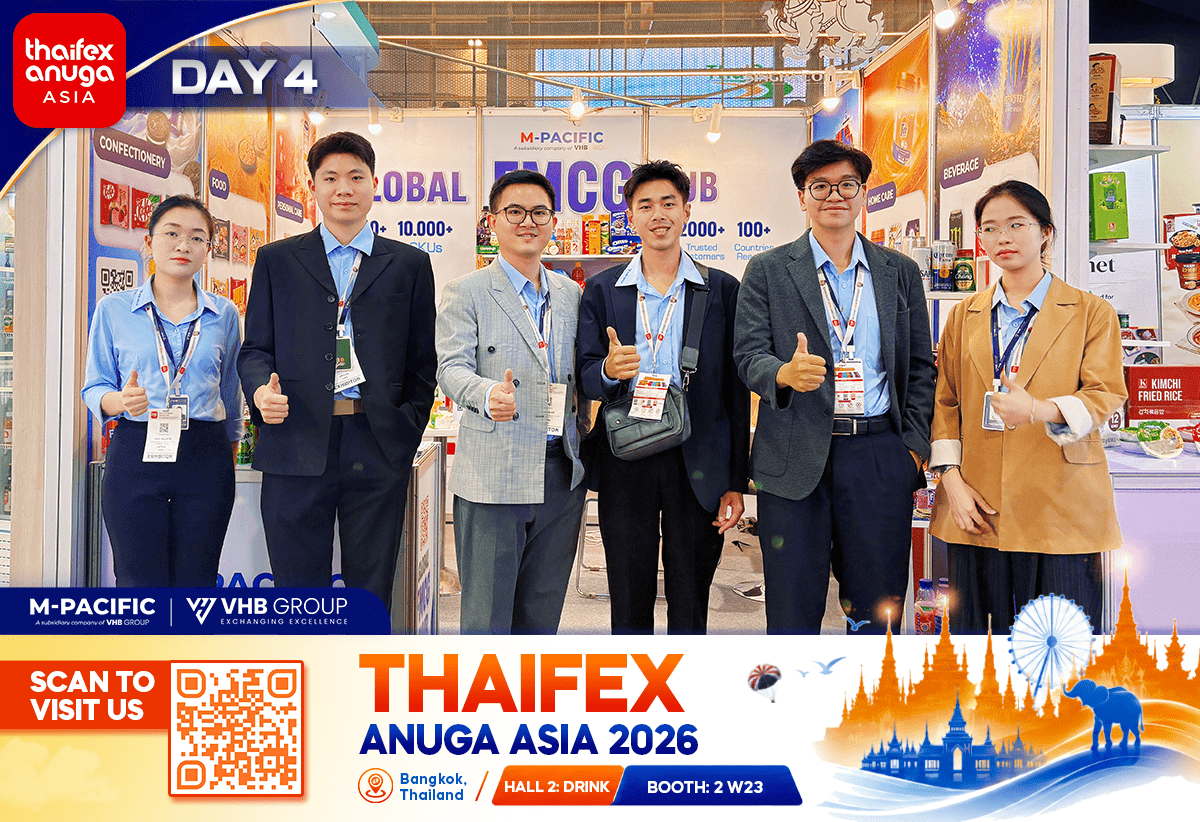
Our operations team spent the day transforming standard product introductions into deep, interactive supply chain audits. Visiting directors arrived at our tables carrying the burden of recent distribution failures—missed product launches, broken cold-chains, and unfulfilled volume allocations.
By plugging their historical performance metrics directly into our diagnostic models, we were able to pinpoint the exact structural inefficiencies plagues their networks. This transparent, data-driven approach transformed casual booth visits into permanent corporate alignments, proving that the ultimate differentiator in modern enterprise trade is the quality of the institutional infrastructure backing your execution.
When international procurement heads evaluate high-volume sourcing frameworks, their primary metric is consistency of supply. The modern corporate landscape heavily punishes structural distribution failures, meaning that an out-of-stock scenario during a peak consumer cycle can result in massive revenue losses and permanent brand damage.
Our strategy sessions at Booth 2W23 on Day 4 directly matched this executive reality, moving past standard product feature lists to focus entirely on structural capacity stress-testing.
By demonstrating our extensive asset footprint, capital backing, and deep regulatory compliance integrations, we provided visiting brand managers with complete confidence in our network’s resilience. Executives realized that partnering with a unified infrastructure owner like VHB and M-Pacific is the most reliable way to insulate their organizations from catastrophic supply chain disruptions.
This realization turned our presentation console into the primary destination for serious corporate negotiation, highlighting a market-wide shift away from transactional brokers toward secure, asset-heavy partnerships.
The Post-Fair Execution Playbook: The Integrated Corporate Onboarding and Deployment Matrix
At the highest levels of international commerce, qualitative promises of reliability are insufficient; true operational success requires a transparent, standardized sequence of execution. To satisfy the demands of corporate expansion directors auditing our pavilion today, our operations team is presenting the exact ground-level stages we use to onboard new enterprise brands and guide them from the trade floor straight to regional retail success.
We have completely abandoned generalized onboarding models that ignore the practical realities of cross-border commerce. This ground-level deployment relies on a structured, high-density matrix that coordinates our partnership lifecycle across seven clear operational phases:
| Activation Phase | Ground-Level Operational Action | Institutional Value Delivery |
| 1. Strategic Consultation | Conducting an on-site, face-to-face operational audit at Booth 2W23 to isolate structural supply chain friction points. | Defines immediate, data-driven parameters for regional expansion goals and margin protection. |
| 2. Portfolio Calibration | Executing a systematic product evaluation to select specific SKUs that align with localized demographic purchasing habits. | Minimizes slow-moving inventory by matching manufacturer output directly to regional consumer palates. |
| 3. Regulatory Alignment | Running automated pre-clearance audits of product ingredient sheets, customs codes, and multi-market health certificates. | Eliminates administrative compliance errors long before cargo reaches the port of entry. |
| 4. Consolidation Architecture | Physically managing, sorting, and packing mixed-SKU crates at our centralized distribution facilities. | Maximizes container volume yields and compresses total freight overhead costs. |
| 5. Transit Execution | Routing high-volume physical cargo across international trade lanes using pre-arranged maritime and rail capacity hedges. | Insulates corporate partners from spot-market container shortages and seasonal corridor congestion. |
| 6. Capillary Deployment | Mobilizing smaller, agile transit assets to move inventory through localized last-mile infrastructure networks. | Bypasses urban gridlock to place global brands directly onto the shelves of independent traditional trade outposts. |
| 7. Market Optimization | Continuously aggregating point-of-sale telemetry data and regional retail performance feedback. | Allows teams to dynamically adjust replenishment frequencies, protecting on-shelf availability and retail presence. |
The Final Strategic Lockdown: Securing Immediate Volume Lines Before Fiscal Quarter Calendars Close
The commercial momentum recorded during Day 4 makes one reality undeniable: the future of international trade belongs entirely to those who choose to break away from legacy brokerage networks and anchor their operations to an asset-heavy, data-driven foundation. The brands that will lead the market over the next fiscal cycle are actively utilizing the closing hours of this exhibition to secure their sourcing networks and insulate their pipelines from upcoming macroeconomic shocks.

The unified alliance of VHB Group and M-Pacific stands completely ready to underwrite your long-term commercial success in the ASEAN theater. We invite you to step out of the frantic noise of the general exhibition halls and enter a space defined by executive clarity and absolute operational execution. Visit our senior delegation at Hall 2, Booth 2W23, and let us execute a comprehensive strategic audit of your current sourcing and distribution networks, transforming your regional supply chain into an ironclad competitive advantage.