Securing a premium, reliable supply of High Fat Desiccated Coconut Bulk is a cornerstone for global food manufacturers, confectioners, and industrial bakeries looking to maintain superior product quality.
As the global demand for plant-based, clean-label, and nutrient-dense ingredients continues to surge, understanding the nuances of coconut sourcing has never been more critical for procurement officers. Desiccated coconut is not merely a decorative topping; it is a highly functional ingredient that dictates the texture, moisture retention, lipid formulation, and flavor profile of finished goods.
When purchasing in bulk, even minor variations in oil content, moisture, or microbiological safety can lead to production delays, product recalls, or compromised shelf stability. This comprehensive B2B buyer’s guide explores the agronomy, technical standards, logistical considerations, and market dynamics that define the procurement of high-quality desiccated coconut.
Mini Table of Contents
- Understanding the Value of High Fat Desiccated Coconut Bulk
- Sourcing Regions and Global Agricultural Standards
- Technical Specifications of High Fat Desiccated Coconut Bulk
- Quality Certifications and Food Safety Compliance
- Supply Chain Logistics for Bulk Coconut Shipments
- Pricing Trends and Market Dynamics in the Coconut Industry
- Optimizing Your Wholesale Strategy with High Fat Desiccated Coconut Bulk
- Frequently Asked Questions
- Conclusion: Partnering with VIHABA for Your High Fat Desiccated Coconut Bulk Needs
Understanding the Value of High Fat Desiccated Coconut Bulk

Desiccated coconut is classified primarily by its fat content and its cut size. In the B2B food processing industry, high fat desiccated coconut (typically containing 63% to 68% natural coconut lipids) is widely regarded as the gold standard. Unlike reduced-fat alternatives, which are often the byproducts of coconut milk or cream extraction, high fat desiccated coconut retains the full lipid profile of the fresh coconut kernel. This makes it an incredibly rich source of Medium-Chain Triglycerides (MCTs), particularly lauric acid, which is highly prized for its stability against oxidation and its nutritional benefits.
From a functional standpoint, the natural fat content in the coconut kernel acts as a structural stabilizer. In industrial baking, the fat slows down the staling process by retaining moisture and creating a tender crumb structure. In confectionery, it provides a luxurious mouthfeel and carries volatile flavor compounds that low-fat alternatives simply cannot replicate. Furthermore, the natural oil in the coconut helps bind other dry ingredients together, reducing the need for added hydrogenated fats or artificial emulsifiers in clean-label formulations.
Processing High Fat Desiccated Coconut Bulk requires precise industrial dehydration. The white kernel of mature coconuts (Cocos nucifera) is peeled, washed, pasteurized, shredded, and dried in advanced fluidized bed dryers. The goal is to reduce moisture levels to under 3.0% while preserving the delicate white color and the sweet, natural aroma. If the temperature during drying is too high, the natural sugars can caramelize, causing yellowing; if it is too low, the residual moisture remains too high, leading to rapid microbiological spoilage and hydrolytic rancidity.
Sourcing Regions and Global Agricultural Standards
The quality of desiccated coconut begins in the soil. The global supply of coconut is concentrated in the tropical belts of Southeast Asia, with Vietnam, the Philippines, and Indonesia leading export volumes. Vietnam’s Ben Tre province, situated in the fertile Mekong Delta, has emerged as a premier hub for high-fat coconut production. The region’s rich alluvial soil, combined with year-round high humidity and optimal salinity levels, produces coconuts with exceptionally thick, oil-rich kernels that are perfect for producing premium desiccated coconut.
To meet the rigorous demands of multinational food brands, sourcing practices must align with global agricultural standards. Sustainable agronomy is increasingly becoming a non-negotiable requirement. Leading exporters implement programs that support smallholder farmers, promoting practices such as organic fertilization, intercropping (planting cocoa or bananas alongside coconut trees to optimize land use and soil health), and natural pest control. For instance, the use of biological control agents to manage the coconut rhinoceros beetle reduces the reliance on synthetic chemical pesticides, ensuring that the harvested nuts have zero chemical residue.
Agricultural maturity is another critical factor. Coconuts must be harvested at peak maturity—typically between 11 and 12 months old. At this stage, the water inside the nut has mostly been absorbed, and the kernel has reached its maximum thickness and oil concentration. Harvesting immature nuts results in a lower fat yield and a higher percentage of simple sugars, which complicates the drying process and results in an inferior end product with poor shelf stability. Therefore, rigorous on-field selection and post-harvest curing (storing harvested nuts for 1 to 2 weeks to allow complete moisture absorption) are essential agricultural practices implemented by premium suppliers.
Technical Specifications of High Fat Desiccated Coconut Bulk
For B2B buyers and Quality Assurance (QA) departments, technical data sheets are the primary tool for verifying quality. When evaluating High Fat Desiccated Coconut Bulk, procurement teams must look closely at physical, chemical, and microbiological parameters to ensure seamless integration into their production lines.
Physically, the product must be free-flowing, natural white in color, and entirely free from yellow specks, black spots (testa residue), or foreign matter. The cut size must be uniform. Fine grade is typically used for biscuits, cake fillings, and delicate pastries, while Medium grade is preferred for granola, macaroons, and decorative toppings.
Chemically, the parameters are strictly monitored. Free Fatty Acid (FFA) levels must be kept exceptionally low (typically under 0.1% or 0.3% calculated as lauric acid) because elevated FFA levels indicate that the lipids have begun to break down, which leads to a soapy flavor and shortens the shelf life. The sulfur dioxide (SO2) level is also highly regulated; many markets demand sulfite-free desiccated coconut, which must contain less than 10 ppm of SO2.
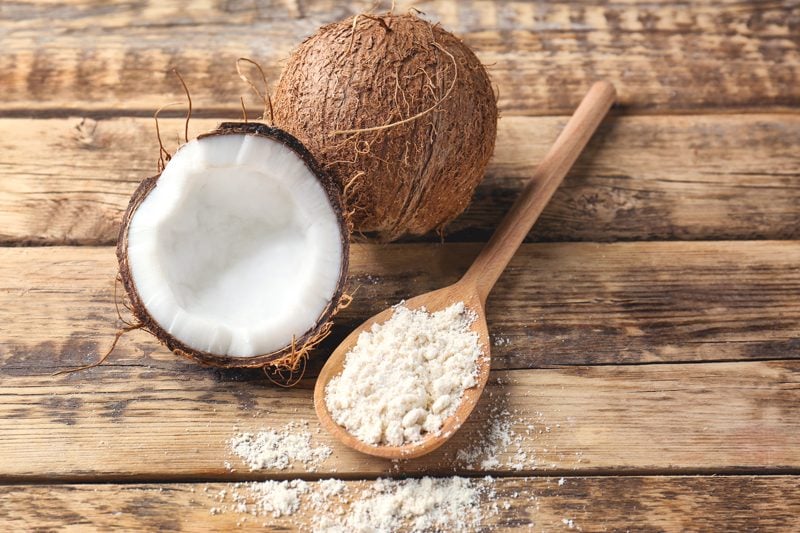
The table below outlines the standard industrial specifications for premium-grade high fat desiccated coconut:
| Parameter Group | Specific Indicator | Standard Specification Limit | Testing Methodology / Reference |
|---|---|---|---|
| Physical & Organoleptic | Appearance | Natural white, free-flowing, no yellowing | Visual Inspection |
| Odor & Flavor | Sweet, mild, typical of fresh coconut | Sensory Panel | |
| Granulation (Fine Grade) | 90% passing through 1.4mm sieve | Sieve Analysis | |
| Chemical Specs | Fat Content | Min 63% – 65% (dry basis) | Soxhlet Extraction |
| Moisture Content | Max 3.0% | Oven Drying Method | |
| Free Fatty Acid (FFA) | Max 0.1% – 0.3% (as Lauric Acid) | Titration | |
| Sulfur Dioxide (SO2) | Sulfite-free (<10ppm) or Preserved (<100ppm) | Monier-Williams Method | |
| Microbiological Specs | Salmonella | Absent in 25g (Negative) | ISO 6579 / FDA-BAM |
| E. coli | Absent in 1g (Negative) | ISO 16649 / FDA-BAM | |
| Total Plate Count (TPC) | Max 5,000 cfu/g | ISO 4833 | |
| Yeast & Mold | Max 100 cfu/g | ISO 21527 |
Understanding these limits is critical because even a slight deviation in moisture or fat content can dramatically alter how the ingredient behaves under industrial baking conditions. For instance, if the fat content drops below 63%, a recipe formulated for high-fat coconut may turn out dry and crumbly, requiring a costly reformulation of the liquid binders in the production line.
Quality Certifications and Food Safety Compliance
In international trade, certifications are the language of trust. When purchasing bulk agricultural commodities, food safety hazards—particularly microbiological contamination like Salmonella—are a primary concern. Coconut trees grow in tropical, humid environments where soil-borne pathogens thrive. Therefore, the processing facility must maintain pristine hygiene and implement robust Hazard Analysis Critical Control Point (HACCP) programs.
For B2B buyers in Europe, North America, and Australia, sourcing from facilities certified by Global Food Safety Initiative (GFSI) recognized schemes is essential. Certifications such as BRCGS (British Retail Consortium Global Standard), FSSC 22000, and IFS Food guarantee that the processing mill operates under strict hygiene, environmental monitoring, and traceability protocols. These facilities feature separated wet and dry processing areas, HEPA-filtered air in packing rooms, and automated optical sorters to eliminate physical contaminants like wood splinters, metal filings, or foreign organic matter.
Beyond food safety, religious and lifestyle certifications are crucial for expanding market access. Halal and Kosher certifications are standard requirements for Middle Eastern and North American markets, respectively. Furthermore, as consumers demand ethical transparency, certifications like Fairtrade, Sedex (SMETA) audits for labor standards, and USDA Organic or EU Organic certifications add massive value to the supply chain. Ensuring that your supplier can provide authentic, up-to-date certificates for these standards prevents customs delays and safeguards your brand’s reputation.
Supply Chain Logistics for Bulk Coconut Shipments
Transporting bulk agricultural products across oceans involves significant logistical risks, particularly regarding temperature fluctuations and humidity control. High fat desiccated coconut is highly sensitive to environmental factors. Because of its high oil content, it easily absorbs ambient odors, and if exposed to high temperatures, the fat can melt and bleed, leading to a compacted, rancid product upon arrival.
Packaging is the first line of defense. The standard bulk packaging is multi-wall Kraft paper bags with an inner heat-sealed polyethylene (PE) liner, typically weighing 25 kg or 50 lbs. The PE liner prevents moisture from entering and blocks oxygen, which would otherwise accelerate lipid oxidation. For larger industrial operations, bulk bags (super sacks or totes) containing 500 kg to 1,000 kg are also utilized, though they require specialized handling equipment at the receiving facility.

During maritime transit, the primary risk is container rain (condensation). When shipping from warm tropical ports in Southeast Asia to cooler regions in Europe or North America, the rapid change in ambient temperature causes moisture within the container air to condense on the metal ceiling and drip onto the cargo. This can ruin entire shipments by causing mold growth on the outer paper bags.
To mitigate this, freight forwarders must use container desiccants (silica gel or calcium chloride bags), container liners, and ensure that the wooden pallets used (which must be ISPM 15 heat-treated) have low moisture levels. Standard shipping volumes are approximately 12 to 13 metric tons in a 20-foot GP container, and up to 25 to 26 metric tons in a 40-foot High Cube container.
Pricing Trends and Market Dynamics in the Coconut Industry
The pricing of high-fat desiccated coconut is subject to various global market forces. Unlike heavily traded commodities like wheat or soybeans, coconut markets are highly regionalized and are deeply influenced by localized factors in Southeast Asia. Sourcing managers must monitor these trends closely to time their buying cycles and secure stable pricing.
One of the main drivers of pricing volatility is weather. Extreme weather events, such as typhoons in the Philippines or prolonged droughts caused by El Niño in Vietnam and Indonesia, directly impact coconut yields. A severe drought can reduce nut sizes and lower the oil content of the kernel, resulting in lower processing yields for mills and a sharp rise in market prices.
Additionally, there is intense competition for raw materials. Desiccated coconut mills must compete with coconut water extraction plants and coconut oil refineries for the same harvest of mature nuts. When global demand for coconut water or virgin coconut oil spikes, the cost of raw nuts rises, squeezing the margins of desiccated coconut producers.
Macroeconomic factors also play a major role. Ocean freight rates, local labor costs in processing countries, fuel prices (which impact drying costs), and exchange rate fluctuations (particularly the USD exchange rate against local currencies) all contribute to final FOB or CIF prices. To protect against this volatility, many large-scale food manufacturers move away from spot-market buying. Instead, they establish long-term contracts (6 to 12 months) with reliable exporters, ensuring a guaranteed volume and a fixed pricing structure that protects their budgeting forecasts.
Optimizing Your Wholesale Strategy with High Fat Desiccated Coconut Bulk
To establish a highly resilient and cost-effective supply chain, procurement departments must adopt a strategic approach to sourcing High Fat Desiccated Coconut Bulk. Relying solely on spot market purchases exposes your operations to supply shortages and quality variations. Instead, successful buyers focus on developing deep relationships with direct processors and aggregators who can guarantee consistency.
A key strategy is to conduct thorough supplier audits and request pre-shipment samples for laboratory analysis. When evaluating samples, always compare the laboratory results with the specifications of the actual cargo delivered. Furthermore, working with an experienced exporter like VIHABA ensures that you bypass unnecessary intermediaries. VIHABA acts as a direct bridge to Vietnam’s finest agricultural processing facilities, managing the entire quality assurance process, laboratory testing, certification compliance, and complex export logistics. This direct-from-source model guarantees price competitiveness, total transparency, and unmatched quality control from the farm gate to your factory warehouse.
Conclusion: Partnering with VIHABA for Your High Fat Desiccated Coconut Bulk Needs
Procuring agricultural commodities at scale requires a delicate balance of technical knowledge, logistical expertise, and strong local partnerships. Securing high-quality, certified, and sustainably sourced High Fat Desiccated Coconut Bulk is vital for safeguarding your food manufacturing operations against quality inconsistencies and supply chain disruptions.
By partnering with a reliable, customer-centric exporter like VIHABA, your business gains access to premium-grade Vietnamese agricultural supplies backed by strict quality control, transparent sourcing, and streamlined maritime logistics. Whether you require customized cuts, specific packaging, or long-term contract pricing, VIHABA is committed to delivering excellence. Contact the VIHABA export team today to request technical data sheets, obtain competitive wholesale quotes, and secure your supply of premium High Fat Desiccated Coconut Bulk.
High Fat Desiccated Coconut Bulk FAQ
Disclaimer: Unless otherwise stated, the images used in this article are the property of their respective owners. We do not claim ownership of any third-party images featured, and they are used here strictly for informational and educational purposes. If you are the copyright holder and wish to have an image removed, please contact us.