
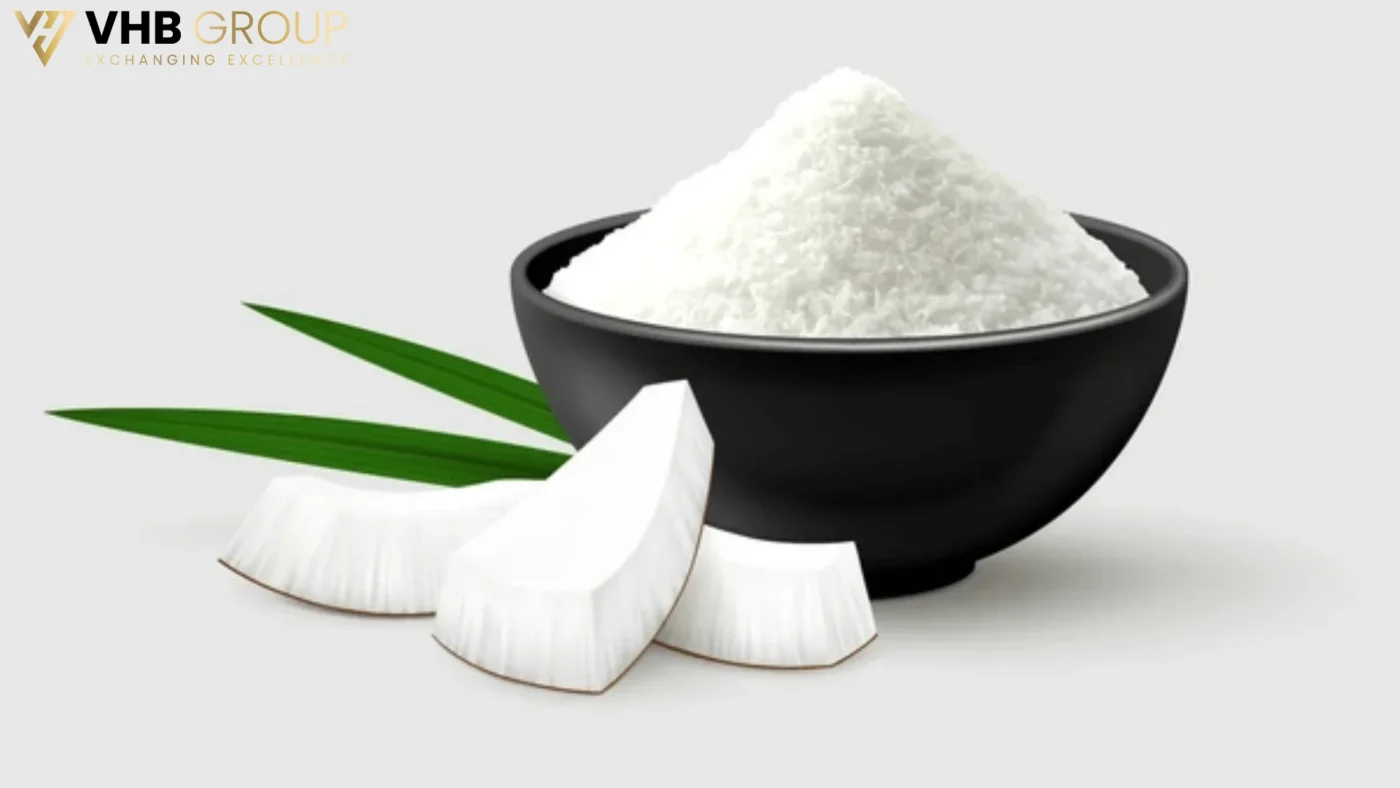
When analyzing global agricultural commodity trends, understanding the fundamental Medium Grade Desiccated Coconut Facts is crucial for B2B importers, food manufacturers, and confectionery producers worldwide. Desiccated coconut is not merely a baking decoration; it is a highly functional, nutrient-dense ingredient that drives value across multiple food sectors, including bakery, confectionery, dairy, and ready-to-eat cereals. For procurement officers seeking a balance between texture, fat content, and cost efficiency, medium grade desiccated coconut represents the industry sweet spot.
At VIHABA, we prioritize transparency and supply chain integrity. As a premier Vietnamese agricultural exporter, we believe that empowering our partners with deep technical insights is the foundation of long-term commercial trust. In this comprehensive guide, we unpack the critical technical specifications, manufacturing standards, and sourcing advantages that define this premium agricultural commodity. To facilitate smooth navigation through this extensive industry analysis, we have structured this guide into the following key sections:
- Global Market Overview of Desiccated Coconut
- Essential Medium Grade Desiccated Coconut Facts and Quality Specifications
- Vietnamese Cultivation Regions and Sourcing Excellence
- Processing Methods and Technological Workflows
- International Standards, Certifications, and Packaging
- Frequently Asked Questions
Global Market Overview of Desiccated Coconut
The global market for desiccated coconut has experienced robust growth over the past decade, driven by rising consumer demand for natural, plant-based ingredients and clean-label food products. According to recent agricultural trade reports, the market is projected to expand at a compound annual growth rate (CAGR) of over 5.5% through 2030. Within this market, the medium grade classification occupies a substantial share, valued for its versatility in both industrial food processing and consumer retail packaging.
Key importing regions such as North America, Europe, and the Middle East rely heavily on major producing nations in Southeast Asia to satisfy their domestic consumption. Vietnam, alongside traditional giants like the Philippines and Indonesia, has emerged as a powerhouse exporter. Vietnam’s agricultural strategy, backed by modernized processing technologies and stringent quality control, has positioned its coconut products as premium options in highly regulated Western markets.
Furthermore, the shift towards healthy dietary lifestyles, such as gluten-free, vegan, and ketogenic diets, has propelled the use of medium grade desiccated coconut as a staple ingredient. B2B buyers must navigate complex market dynamics, including varying harvest yields caused by climatic factors like El Niño, fluctuating maritime freight rates, and evolving import tariffs. Understanding these macroeconomic factors, paired with local sourcing conditions, allows global procurement teams to establish resilient and cost-effective raw material pipelines.
Essential Medium Grade Desiccated Coconut Facts and Quality Specifications
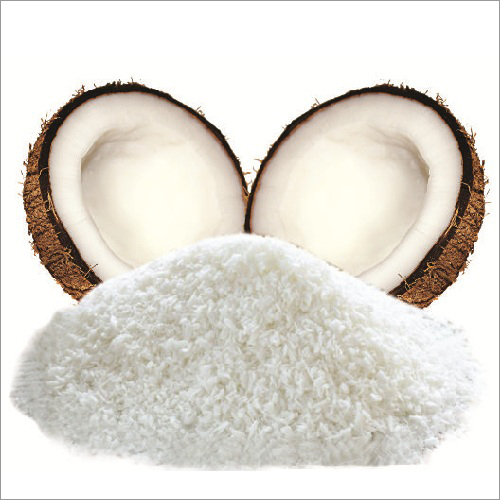
For B2B buyers, understanding the technical differences between various grades of desiccated coconut is vital for product development and quality assurance. Unlike fine grade (which is highly powdery and used primarily in fillings or smooth batters) or coarse grade (which features large, highly visible flakes), medium grade desiccated coconut offers a distinct, granulated texture that provides a pleasant chewiness and excellent visual appeal on finished products. Below are the key physical, chemical, and microbiological standards that define high-quality medium grade desiccated coconut.
Below is a comprehensive specification table mapping out the critical parameters for premium export-quality medium grade desiccated coconut, aligning with international standards:
| Parameter | Specification Standard (Medium Grade) | Testing Methodology |
|---|---|---|
| Moisture Content | Max 3.0% | Oven drying method (ISO 665) |
| Total Fat Content | High Fat: Min 63% – 65% | Reduced Fat: 45% – 50% | Soxhlet extraction (ISO 1443) |
| Free Fatty Acids (FFA) | Max 0.1% – 0.3% (as Lauric Acid) | Titration (ISO 660) |
| Particle Size (Sieve Test) | Approx. 1.4 mm – 2.5 mm (Retained on specific mesh) | Mechanical sieve shaker |
| Color & Appearance | Natural white, free from yellow specks or dark spots | Sensory / Colorimeter |
| Sulfur Dioxide (SO2) | Free (Sodium Metabisulfite free) or Max 100 ppm (upon request) | Monier-Williams method |
| Salmonella | Absent in 25g | ISO 6579 / FDA-BAM |
| E. Coli | Absent in 1g | ISO 16649 |
Maintaining these strict parameters is essential for extending shelf life and preventing rancidity. The high fat content in premium medium grade desiccated coconut provides the characteristic rich, nutty flavor and mouthfeel, but it also requires exceptional moisture control and packaging integrity to prevent oxidation during maritime transit. Reviewing these Medium Grade Desiccated Coconut Facts is the first step in aligning your product formulations with high-performing ingredients that meet the safety and sensory expectations of modern consumers.
Vietnamese Cultivation Regions and Sourcing Excellence
Vietnam’s geography provides the perfect environment for cultivating high-yield, flavorful coconuts. The Mekong Delta region, specifically the province of Ben Tre, is globally recognized as the “Capital of Coconuts.” The alluvial soils deposited by the Mekong River branches, combined with a stable tropical climate and optimal rainfall, yield coconuts with an exceptionally rich oil content and a naturally sweet profile. These local ecological factors explain why Vietnamese coconut products are highly prized for their natural flavor intensity without the need for artificial flavor enhancers.
At VIHABA, we source our raw materials directly from certified cooperatives in Ben Tre. By establishing direct relationships with local farmers, we ensure fair-trade practices, promote sustainable farming techniques, and maintain complete traceability from farm to factory. Importers who utilize our medium grade desiccated coconut bulk sourcing guide benefit from our integrated supply chain, which eliminates unnecessary intermediaries and guarantees consistent, fresh-harvest quality year-round.
Sustainable agricultural practices are at the heart of our operations. We actively encourage organic cultivation methods, water conservation, and zero-waste processing. In our processing facilities, every part of the coconut is utilized—the husk for coir and bio-fuel, the shell for activated carbon, the water for beverages, and the kernel for our premium desiccated coconut. This circular economy model not only reduces our carbon footprint but also optimizes cost structures for our B2B clients, reinforcing our role as a forward-thinking agricultural partner.
Processing Methods and Technological Workflows
The transformation of fresh, mature coconuts into high-quality medium grade desiccated coconut is a highly sophisticated, multi-step process that requires state-of-the-art machinery and strict adherence to hygienic standards. Our factories operate under stringent quality management protocols to ensure each batch meets uniform standards. The production line can be divided into several critical phases:
1. Harvesting and De-husking
Coconuts are harvested at optimal maturity (typically 11 to 12 months) when the kernel has reached its maximum thickness and oil content. The outer fibrous husk is removed at the farm level, and the de-husked nuts are transported to our processing facilities within 24 to 48 hours to ensure freshness and prevent kernel fermentation.
2. De-shelling and Paring
At the factory, the hard inner shell is carefully cracked and removed. Skilled operators then perform “paring,” which involves scraping away the thin, brown outer skin (testa) of the kernel. This step is critical because any residual brown skin will result in dark specks in the final product, lowering its grade and aesthetic appeal. The pared coconuts are then inspected individually by quality control staff.
3. Washing and Sterilization
The white coconut kernels are thoroughly washed in clean, chlorinated water to remove any remaining coconut water or dirt. Afterward, they undergo a rigorous steam sterilization process. This pasteurization step is designed to eliminate potential pathogens, particularly Salmonella and E. coli, ensuring the product is 100% safe for direct human consumption and meets stringent Western microbiology criteria.
4. Disintegration and Grating
The sterile kernels are passed through high-speed stainless-steel disintegrators or cutters. The cutting blades are precisely calibrated to shred the coconut meat into the exact particle size required for the “medium grade” classification. Regular sieve tests are conducted throughout this phase to maintain consistency in particle distribution.
5. Controlled Drying
The shredded coconut is immediately transferred to continuous fluid-bed dryers. Warm, filtered air is circulated through the product bed to gradually reduce the moisture content from approximately 50% down to less than 3%. The drying temperature must be carefully managed; if the temperature is too high, the coconut oil will caramelize, causing the product to turn yellow instead of retaining its pristine white color.
6. Cooling, Sifting, and Metal Detection
After drying, the product is cooled to room temperature to halt any residual thermal processes and prevent condensation inside the packaging. It is then passed through rotary sifters to remove any undersized (fine) or oversized (coarse) particles, ensuring a uniform medium grade product. Before packaging, the desiccated coconut passes through highly sensitive, multi-frequency metal detectors to guarantee complete freedom from foreign metallic contaminants.
International Standards, Certifications, and Packaging
Navigating international food safety regulations is a primary concern for modern B2B buyers. To facilitate seamless customs clearance and ensure absolute safety for consumer brands, our production facilities operate under strict global compliance frameworks. VIHABA’s medium grade desiccated coconut conforms to the following international benchmarks:
- HACCP & ISO 22000: Ensures robust, preventative hazards management across all processing stages, critical for importing into strict regulatory markets.
- BRCGS (British Retail Consortium Global Standard): Certifies that our manufacturing processes meet the highest levels of safety, quality, and operational criteria required by global retail networks.
- Halal & Kosher: Allows our products to be integrated into diverse, dietary-restricted food products globally, opening up broader market segments.
- GlobalGAP Alignment: Demonstrates our commitment to safe and sustainable agricultural practices at the farm level, ensuring environmental and worker welfare.
To preserve the pristine quality of the product during long-distance ocean freight, we utilize multi-layered, food-grade packaging solutions. The standard packaging for bulk export includes a multi-ply kraft paper bag with an inner food-grade polyethylene (PE) liner (usually 25kg or 50kg net weight). For specialized industrial applications, we also offer 1,000kg jumbo bags. The PE liner acts as a critical moisture and aroma barrier, protecting the desiccated coconut from atmospheric humidity and preventing the absorption of external odors during transit.
Proper container loading and shipping conditions are equally vital. We ensure that our export containers are clean, dry, free from strong odors, and well-ventilated. Desiccant silica gel bags are strategically placed inside the container to control condensation (container sweat) as the vessel travels through different climatic zones, safeguarding the product’s premium quality until it reaches your warehouse.
Conclusion
In conclusion, mastering these Medium Grade Desiccated Coconut Facts empowers global B2B buyers to make informed purchasing decisions that elevate their product quality, optimize production efficiency, and protect consumer safety. From the lush, nutrient-rich plantations of Ben Tre, Vietnam, to our state-of-the-art, certified processing facilities, VIHABA delivers premium, sustainable, and reliable medium grade desiccated coconut to the global market. Whether you are a large-scale confectionery manufacturer or a global distributor, our dedicated team is ready to support your supply chain with competitive pricing, exceptional quality control, and seamless logistics. Partner with VIHABA today to secure your premium coconut supply and drive long-term business success.
Medium Grade Desiccated Coconut FAQ
Disclaimer: Unless otherwise stated, the images used in this article are the property of their respective owners. We do not claim ownership of any third-party images featured, and they are used here strictly for informational and educational purposes. If you are the copyright holder and wish to have an image removed, please contact us.