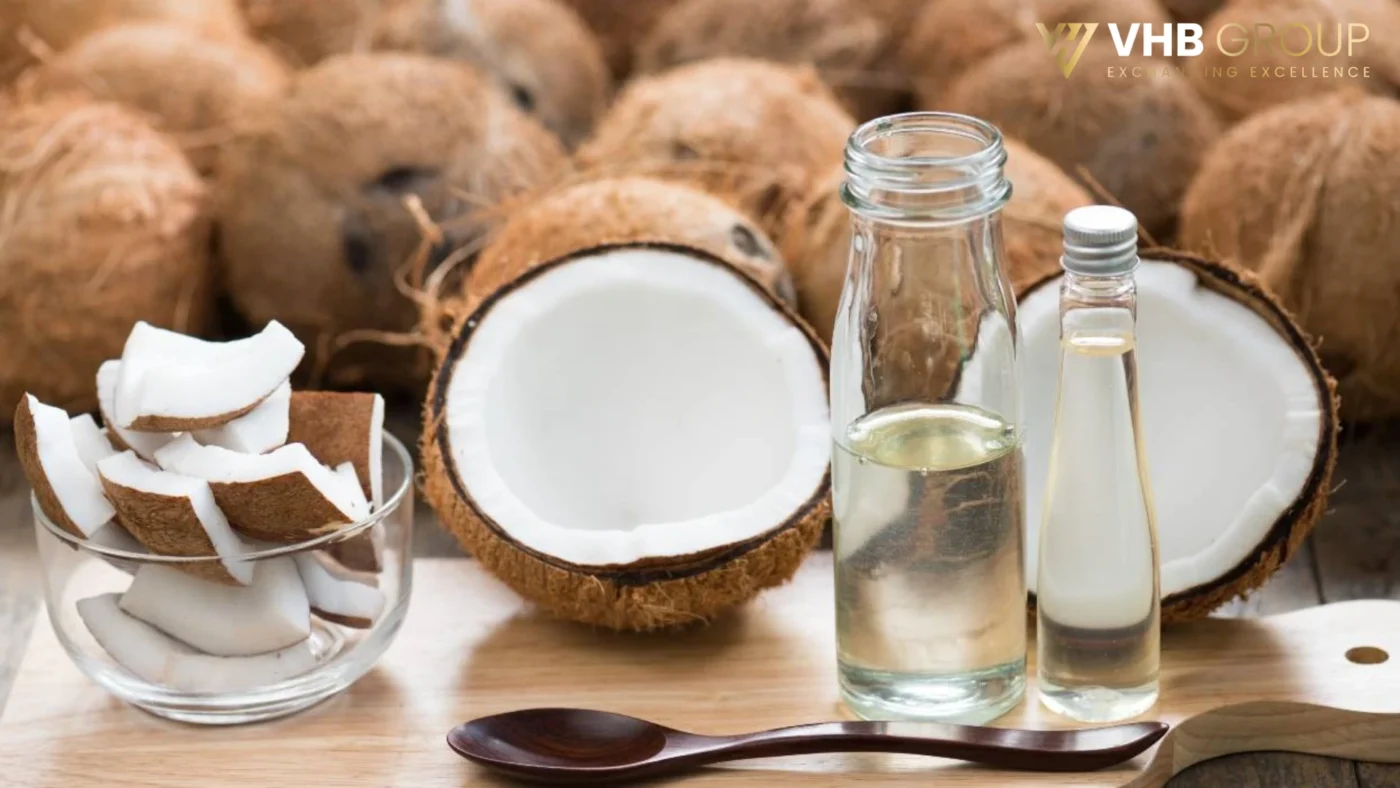
Analyzing the Cold Pressed Coconut Oil Distribute Channel network provides a detailed roadmap for moving unrefined coconut oil from primary extraction mills in Southeast Asia to global industrial end-users, cosmetic formulators, nutraceutical manufacturers, and retail chains. Building a resilient Route-to-Market (RTM) strategy requires navigating multi-tiered distribution layers—including ocean freight logistics, thermal state warehousing, customs clearance handling, and multi-channel last-mile delivery.
Optimizing distribution channels enables procurement directors and logistics managers at VHB Group to lower landed freight costs, maintain thermal quality control, and ensure continuous material flow to international buyers.
Table of Contents
-
The Multi-Tiered Supply Chain for Premium Cold Pressed Coconut Oil
-
Direct B2B Industrial Formulation Supply vs. Wholesale Importing Consolidators
-
Route-to-Market Matrix Across End-Use Industry Sectors
-
Thermal State Logistics: Managing Solid-to-Liquid Phase Change in Transit
-
Quality Preservation in Warehouse Storage and Last-Mile Distribution
-
Frequently Asked Questions (FAQ)
1. The Multi-Tiered Supply Chain for Premium Cold Pressed Coconut Oil
The global distribution network for cold pressed coconut oil operates through structured B2B channels designed to transport high-value organic fats efficiently:
[Origin Extraction Mills (Ben Tre, Vietnam)]
                   │
                   ▼
[Primary Export Packaging & Logistics Hub]
  (Flexitanks, IBC Totes, Steel Drums, Jars)
                   │
       ┌───────────┴───────────┐
       ▼                       ▼
[Direct Industrial B2B]   [Import Wholesalers & Consolidators]
 (Cosmetics & Food)        (Regional Warehousing & Distribution)
       │                       │
       ▼                       ▼
[Large Factories]         [Organic Supermarkets & Boutique Brands]
-
Origin Extraction Mills: Harvesting fresh coconuts, extracting oil via centrifugal separation or low-heat pressing, and conducting primary filtration.
-
Export Logistics Hubs: Filling bulk flexitanks, IBC totes, 200L steel drums, or private-label glass jars for ocean export.
-
Direct B2B Formulation Supply: Shipping full container loads (FCL) directly to large cosmetics factories and organic food processing plants.
-
Wholesale Import Consolidators: Distributing palletized drum or jar inventory to mid-sized brands, pharmacy chains, and specialty health stores.
2. Direct B2B Industrial Formulation Supply vs. Wholesale Importing Consolidators
Commercial buyers access cold pressed Cold Pressed Coconut Oil Distribute through two primary supply channels:
Direct B2B Industrial Formulation Supply
Large cosmetics conglomerates, multi-national organic food processors, and supplement manufacturers establish direct annual supply contracts with primary origin mills. Shipments move in bulk flexitanks (21,000L), IBC totes (1,000L), or steel drums (200L) directly to manufacturing facilities.
-
Key Advantage: Delivers the lowest landed cost per metric ton; guarantees strict batch consistency, organic transaction certificates, and direct farm-to-factory traceability.
-
Trade-Off: Requires substantial Minimum Order Quantities (MOQs, typically 1x20ft FCL minimum) and long ocean transit lead times (30–45 days).
Wholesale Importing Consolidators and Warehousing
Mid-sized skincare brands, regional food manufacturers, and boutique retailers source through FMCG import consolidators or chemical distributors who maintain local inventory in regional warehousing hubs (e.g., Rotterdam, Los Angeles, Singapore).
-
Key Advantage: Provides small order quantities (single pallets or drums), rapid local delivery (2–5 days), and localized customs clearance handling.
-
Trade-Off: Higher unit cost per kilogram due to intermediate warehousing margins and localized freight handling.

3. Route-to-Market Matrix Across End-Use Industry Sectors
Different customer segments demand tailored packaging formats, delivery timelines, and logistics setups:
| Industry Segment | Primary Customer Outlets | Dominant Packaging SKU | Transport Mode | Relative Channel Gross Margin |
| Industrial Cosmetics | Skincare & Haircare Factories | 200L Steel Drums / IBC Totes | Full Truckload (FTL) / FCL | Quality-Driven Margin |
| Organic Food Processing | Commercial Bakeries & Snacks | Bulk Flexitanks / IBC Totes | FCL Ocean Containers | Lean Volumetric Margin |
| Nutraceutical Brands | Softgel Encapsulators | 200L Steel Drums / Jars | LTL Freight / Palletized Trucks | High Quality Margin |
| Organic Retail Modern Trade | Supermarkets & Health Chains | 500ml Glass Jars / Tubes | Central Warehouse FTL | Standard Retail Margin |
| Specialty E-Commerce | Direct-to-Consumer Brands | 250ml Glass Jars / Sprays | Parcel Express / Courier | High Unit Gross Margin |
4. Thermal State Logistics: Managing Solid-to-Liquid Phase Change in Transit
Managing the physical state transition of cold pressed coconut oil (24°C / 75°F melting point) represents a critical logistical challenge during transit:
┌─────────────────────────────────────────────────────────────────┐
│                  THERMAL LOGISTICS PROTOCOLS                    │
├─────────────────────────────────┬───────────────────────────────┤
│    Warm Transit (> 25°C / 77°F) │    Cool Transit (< 20°C / 68°F)│
├─────────────────────────────────┼───────────────────────────────┤
│ • Water-clear liquid oil        │ • Solid white butter mass     │
│ • High flowability              │ • Requires hot-room melting   │
│ • Requires leak-proof sealing   │ • Warm-water pad reheating    │
└─────────────────────────────────┴───────────────────────────────┘
Cold-Climate Flexitank Reheating Protocols
When flexitanks carrying cold pressed coconut oil arrive at cold-climate discharge ports during winter, the oil solidifies into a block of solid fat. Pumping requires installing low-pressure hot-water heating pads underneath the flexitank prior to dispatch.
-
Heating Application: Warm water (35°C to 40°C) is circulated through the heating pad for 12 to 18 hours to liquefy the oil smoothly.
-
Quality Safeguard: Heating water temperature must never exceed 45°C (113°F) to preserve delicate heat-sensitive antioxidants, polyphenols, and fresh coconut aromas.
Hot-Room Melting for Drums and IBC Totes
Skincare and food manufacturing plants receiving solid steel drums or IBC totes store containers inside dedicated “hot rooms” maintained at 35°C to 40°C for 24 to 48 hours to melt the oil gently before pumping into batch mixing tanks.
5. Quality Preservation in Warehouse Storage and Last-Mile Distribution
Maintaining product freshness from origin mills to end-use production lines requires systematic quality controls:
-
Hermetic Air Seals: Warehouses must ensure containers maintain airtight seals to prevent atmospheric moisture absorption, which elevates Free Fatty Acid (FFA) levels via hydrolysis.
-
Ideal Warehouse Storage Envelope: Optimal long-term storage temperatures range between 15°C and 25°C (59°F to 77°F) in dry, dark warehousing environments.
-
Digital Batch Traceability: VHB Group utilizes QR codes and RFID pallet tags mapped to origin Lot numbers, allowing buyers to access batch Certificate of Analysis (CoA) parameters, organic transaction certificates, and harvest details instantly.
Cold Pressed Coconut Oil Distribution FAQ
Disclaimer: Unless otherwise stated, the images used in this article are the property of their respective owners. We do not claim ownership of any third-party images featured, and they are used here strictly for informational and educational purposes. If you are the copyright holder and wish to have an image removed, please contact us.