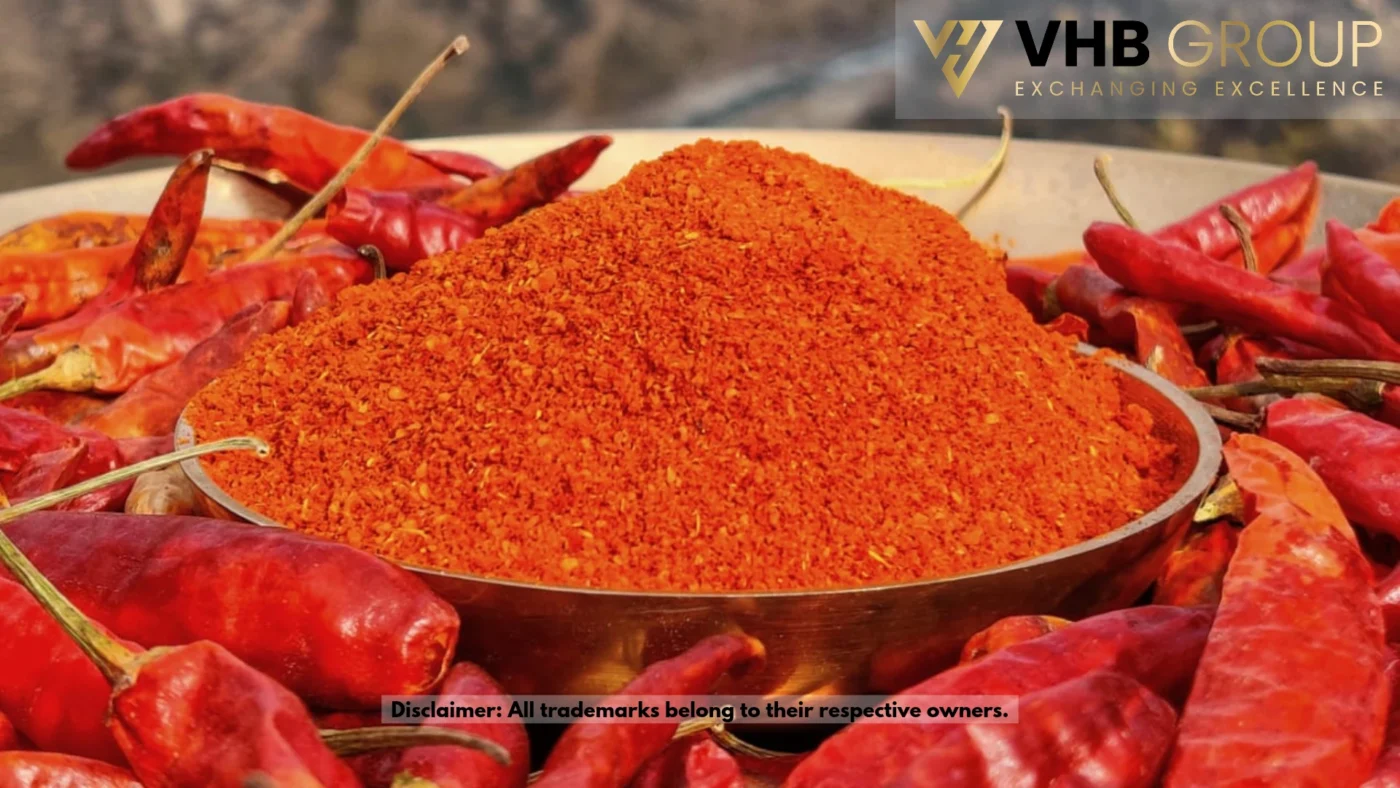
Understanding the exact Chili Powder Scoville Heat & Mesh Facts is absolutely essential for spice importers, R&D food scientists, and industrial seasoning buyers who need to specify the exact technical grade for their production lines. Commercial chili powder is not a generic commodity; its industrial performance is governed by three precise technical metrics: capsaicinoid heat (SHU), extractable red pigment (ASTA), and particle mesh size, all of which determine how evenly the spice disperses, coats, and colors commercial food matrices.
For international procurement teams and supply chain managers looking to capitalize on this global commodity, reviewing the operational logistics of the wholesale supply chain is the mandatory next strategic step. However, before executing bulk contracts, buyers must fully understand the milling physics, heat-color calibration, and laboratory benchmarks that separate premium cool-milled chili powder from scorched, inconsistent dust.
Table of Contents
-
The Chemical Matrix: Capsaicinoids (SHU) and Carotenoids (ASTA)
-
Milling Science: Cool-Grinding, Seed Ratio, and Mesh Size
-
Sensory Profile: Essential Chili Powder Scoville Heat & Mesh Facts
-
Quality Benchmarks and Adulteration Screening
-
Wholesale Spice Integration

The Chemical Matrix: Capsaicinoids (SHU) and Carotenoids (ASTA)
When analyzing the commercial value of export-grade chili powder, buyers specify two independent laboratory measurements:
-
Scoville Heat Units (SHU): Measures pungency driven by capsaicinoids (capsaicin and dihydrocapsaicin), quantified via High-Performance Liquid Chromatography (HPLC). Commercial export chili powders are standardized into distinct tiers: Mild (5,000–15,000 SHU), Medium / Standard (30,000–45,000 SHU), and High-Heat / Fiery (70,000–100,000+ SHU).
-
ASTA Color Value: Standardized by the American Spice Trade Association, ASTA measures total extractable red carotenoid pigments (capsanthin and capsorubin). High-color grades (100–160 ASTA) deliver rich, vibrant crimson coloring to sauces and snack coatings, whereas standard heat-focused powders typically measure 40–70 ASTA.

Milling Science: Cool-Grinding, Seed Ratio, and Mesh Size
A critical element within the manufacturing cycle is controlling friction heat during grinding and achieving uniform particle size distribution (measured in US Standard Mesh).
View Red Chili Powder Texture Reference on Wikimedia Commons
Chili pods contain natural seed oils and heat-sensitive red carotenoids. Standard high-heat hammer-milling generates excessive friction temperatures that oxidize the red pigment into a dull brownish-red and cause oily clumping on screens. Premier export mills utilize cool-grinding or cryogenic milling systems to keep temperatures low, preserving bright crimson color and clean aroma.
Standard Industrial Mesh Specifications
-
20–40 Mesh (Coarse / Crushed): Used for visible red pepper flecks in marinades, pizza toppings, kimchi pastes, and dry meat rubs.
-
40–60 Mesh (Standard Fine): The global commercial workhorse for curry blends, chili con carne mixes, sauces, and retail spice jars—offering free-flowing handling without excessive airborne dust.
-
60–80 Mesh (Ultra-Fine): Engineered for snack-food seasoning tumblers (potato chips, extruded corn puffs) and instant noodle soup sachets where rapid electrostatic adherence and smooth dispersion are mandatory.
Sensory Profile: Essential Chili Powder Scoville Heat & Mesh Facts
The most distinctive physical characteristic of high-grade chili powder upon opening a freshly sealed PE-lined sack is its vibrant, rich crimson-to-deep-scarlet hue, free-flowing velvety texture, and an immediate, sharp, fruity-pungent aroma.
Balancing Heat, Color, and Dispersion
The Chili Powder Scoville Heat & Mesh Facts matrix is defined by clean heat delivery without bitter, burnt notes. Because chili seeds contain fixed oils but minimal red pigment, mills carefully control the pod-to-seed ratio during grinding—removing excess loose seeds for high-ASTA color grades while retaining natural seed balance for standard culinary grades.

Quality Benchmarks and Laboratory Specifications
To fully grasp the commercial appeal and pass strict international border inspections, B2B buyers must specify exact laboratory parameters on their Certificate of Analysis (COA).
| Quality Parameter | Standard Export Specification | Functional Significance |
| Moisture Content | ≤ 10.0% | Prevents caking, clumping, and aflatoxin/mold growth during transit. |
| Mesh Size Pass Rate | ≥ 95% through target mesh | Ensures uniform dosing in automated food and seasoning machinery. |
| Aflatoxin B1 / Total | ≤ 5 ppb / ≤ 10 ppb | Mandatory EU and US FDA safety threshold for border clearance. |
| Sudan I–IV Dyes | Strictly Absent (Not Detected) | Zero-tolerance border screening against illegal synthetic red dyes. |
Wholesale Spice Integration
Mastering the core Scoville heat ratings, ASTA color values, and grinding mesh specifications is the definitive key to sourcing high-performing chili powder for industrial applications. By specifying cool-milled 40–60 mesh or 60–80 mesh grades with verified HPLC assays and strict Sudan-free clearance, international distributors and food manufacturers guarantee consistent performance across every production batch.
Chili Powder Heat & Mesh Specs FAQ
Disclaimer: Unless otherwise stated, the images used in this article are the property of their respective owners. We do not claim ownership of any third-party images featured, and they are used here strictly for informational and educational purposes. If you are the copyright holder and wish to have an image removed, please contact us.