
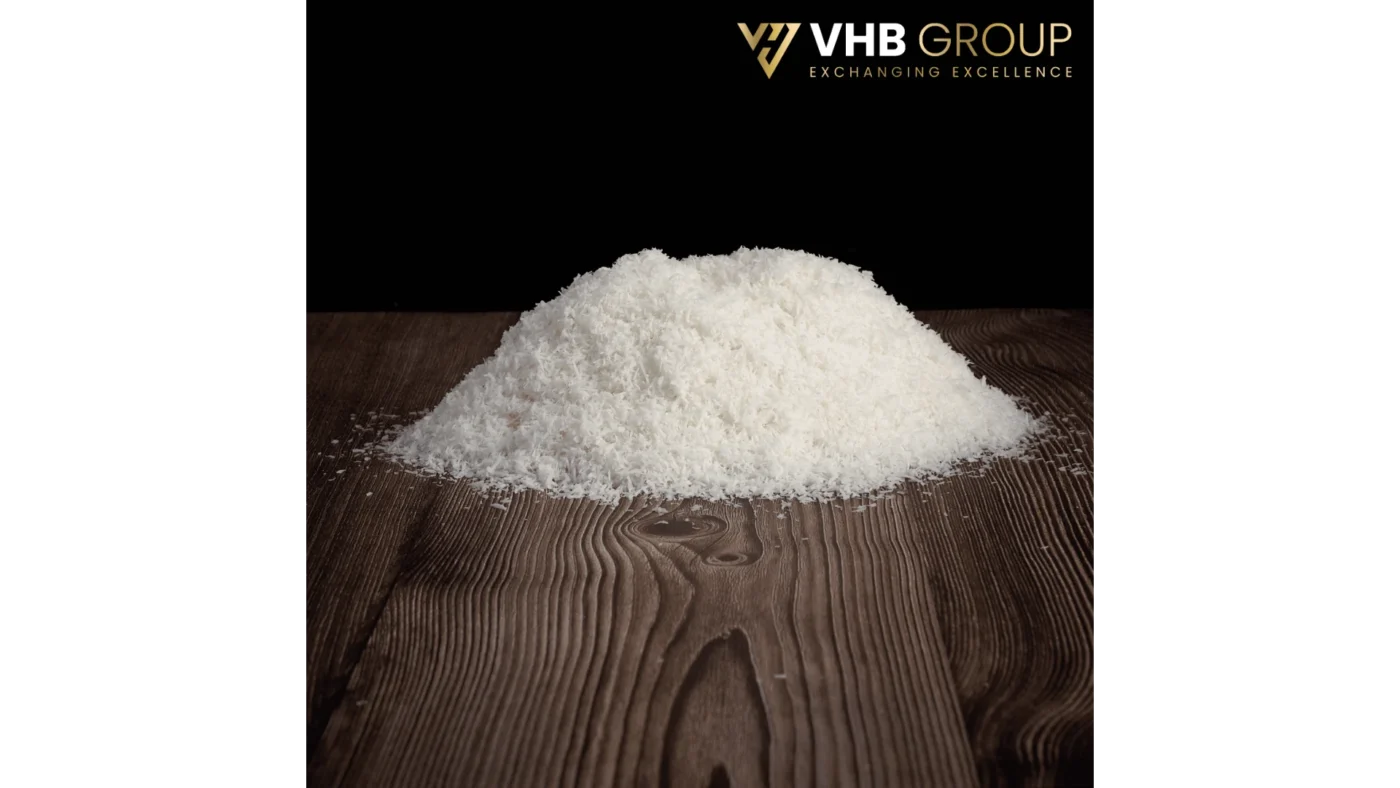
When sourcing premium agricultural raw materials for industrial food manufacturing, identifying a consistent and premium Medium Grade Desiccated Coconut Origin is a foundational step toward securing long-term quality and cost-efficiency. Desiccated coconut is not merely a commodity; it is a critical functional ingredient that dictates the texture, flavor, moisture retention, and shelf life of premium confectionery, bakery, and dairy products. For B2B procurement managers, supply chain directors, and global importers, understanding where and how this versatile ingredient is cultivated and processed is essential for mitigating risk and maximizing product value.
Global demand for coconut-derived ingredients continues to escalate, driven by the consumer shift toward plant-based diets, clean-label ingredients, and natural dietary fats. As market dynamics evolve, agricultural buyers are moving beyond simple price-per-ton evaluations to analyze origin-specific characteristics. The geographic origin of desiccated coconut influences everything from the oil content (lipid profile) and natural sweetness to the environmental sustainability and ethical footprint of the final product. In this comprehensive guide, we will unpack the technical and regional aspects of this vital ingredient, highlighting how to select the best origin for your industrial manufacturing needs.
Table of Contents
- What is Medium Grade Desiccated Coconut?
- Understanding the Medium Grade Desiccated Coconut Origin
- Why Vietnam is the Premier Medium Grade Desiccated Coconut Origin
- State-of-the-Art Processing and Quality Control
- Technical Specifications and Analytical Standards
- B2B Packaging, Logistics, and Supply Chain Integrity
- Frequently Asked Questions (FAQs)
- Conclusion: Partnering with VIHABA for Global Success
What is Medium Grade Desiccated Coconut?
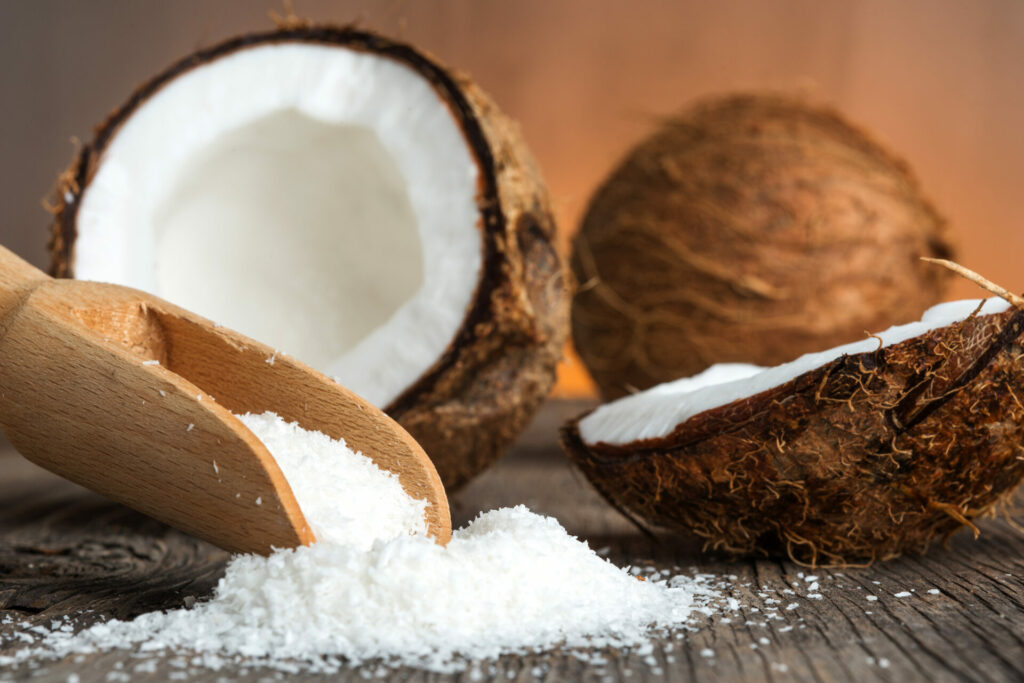
Desiccated coconut is classified into grades primarily based on the particle size of the grated, dried kernel. Medium grade desiccated coconut occupies a highly sought-after position between fine grade (which has a powdery, flour-like texture) and coarse grade (which consists of large flakes or shreds). With a typical particle size range of 2.0 mm to 4.8 mm, the medium grade offers the optimal balance of texture and dispersibility, making it highly versatile for diverse industrial applications.
From a functional standpoint, the medium grade is preferred in applications where the physical presence of the coconut is meant to be felt, but not dominant. In bakery applications, it provides a pleasant chewiness and structural integrity to macaroons, biscuits, and cookies. In the confectionery sector, it is the standard choice for coconut-filled chocolate bars, supplying both structure and a burst of natural fat upon consumption. Additionally, its ability to hold flavorings and colors makes it an ideal base for decorative toppings in industrial dessert production.
Nutritionally, medium grade desiccated coconut retains the natural, energy-dense profile of the raw coconut kernel. It is rich in dietary fiber, essential minerals such as manganese and copper, and high-quality saturated fats, primarily in the form of medium-chain triglycerides (MCTs) like lauric acid. When evaluating suppliers, understanding how the physical and chemical properties of the kernel are preserved during drying is key to securing an ingredient that performs consistently on the production line.
Understanding the Medium Grade Desiccated Coconut Origin
The geographic environment where the coconuts are grown plays a massive role in the final quality of the ingredient. The Medium Grade Desiccated Coconut Origin refers to the specific agricultural zone, soil chemistry, and microclimate that dictate the biological composition of the coconut palms. Coconuts cultivated in high-salinity coastal soils under tropical equatorial sunshine develop distinct characteristics compared to those grown in sandy inland soils.
Several key factors define a premium coconut origin:
- Soil Mineralogy: Deep, alluvial, well-drained soils rich in potassium, nitrogen, and organic matter are critical. High natural potassium levels in the soil directly correlate with higher oil yields and a richer flavor profile in the coconut kernel.
- Microclimate Stability: Coconut palms flourish in environments with stable temperatures between 27°C and 35°C, high humidity, and consistent annual rainfall of 1,500 mm to 2,500 mm. These conditions prevent stress on the palms, ensuring uniform kernel development.
- Cultivar Characteristics: The specific botanical varieties grown in an origin (such as the tall palms or hybrid varieties) determine the thickness, oil density, and natural sugar content of the meat, which ultimately impacts the yield and texture of the desiccated output.
By focusing on the origin, industrial buyers can secure desiccated coconut that exhibits minimal batch-to-batch variation. This stability is critical for automated production lines where small variations in moisture absorption or fat content can disrupt processing parameters, resulting in machine downtime or inconsistent end-product quality.
Why Vietnam is the Premier Medium Grade Desiccated Coconut Origin
When analyzing global agricultural hubs, Vietnam has emerged as a powerhouse and the premier medium-grade-desiccated-coconut-origin. Specifically, the Ben Tre province in the Mekong Delta is globally recognized as the “Land of Coconuts.” This region boasts unique ecological advantages that are virtually impossible to replicate elsewhere. The extensive river network of the Mekong Delta deposits nutrient-rich silt onto the surrounding agricultural land, creating an incredibly fertile environment where coconut palms thrive naturally without the heavy application of synthetic fertilizers.
Vietnam’s coconut industry has undergone a rapid technological transformation. Modern Vietnamese processors have shifted from artisanal, small-scale operations to state-of-the-art, fully automated refining facilities. This allows for rigorous control over food safety, particle size distribution, and moisture levels, ensuring that international standards such as ISO 22000, HACCP, Halal, Kosher, and BRCGS are met with absolute precision. For global buyers, this combination of naturally superior raw materials and advanced industrial capacity makes Vietnam the ideal partner for bulk procurement.
Moreover, Vietnamese exporters like VIHABA emphasize supply chain transparency and sustainability. With a strong commitment to fair-trade practices, organic cultivation methods (including USDA Organic and EU Organic certifications), and direct-from-farm sourcing, VIHABA ensures that our partners receive premium ingredients while supporting local farming communities. For a comprehensive operational roadmap on securing these products, importers should consult our medium grade desiccated coconut bulk sourcing guide, which details purchasing cycles, shipping strategies, and tariff structures.
State-of-the-Art Processing and Quality Control
The transformation of fresh coconuts into premium medium grade desiccated coconut requires a seamless, highly hygienic manufacturing process. From the moment of harvest, timing is critical. Fully mature coconuts (usually 11 to 12 months old) are harvested, as they contain the optimal oil and moisture ratios required for desiccation. Younger nuts lack the necessary oil content, while over-mature nuts can develop rancid off-flavors.
The processing flow consists of several vital steps, each monitored as a Critical Control Point (CCP) to prevent contamination:
- De-husking and De-shelling: The tough outer fibrous husk and the hard inner shell are carefully removed to expose the fresh white kernel covered by a thin brown skin (testa).
- Paring: The brown testa is shaved off, leaving only the pure, white coconut meat. This step is critical; any residual testa will manifest as unsightly dark specks in the final medium-grade product.
- Washing and Blanching: The pared kernels are washed thoroughly in purified water and then subjected to high-temperature steam blanching. This pasteurization process is vital for microbiological safety, effectively destroying pathogens like Salmonella, E. coli, and Listeria.
- Grating/Disintegration: The sterile white meat is fed into industrial stainless-steel disintegrators configured to grate the meat into the precise particle sizes defined by the “medium” grade specification (2.0 mm to 4.8 mm).
- Fluidized Bed Drying: The wet grated coconut is transferred to high-capacity fluidized bed dryers. Heated air is forced through the product bed, gently reducing the moisture level from approximately 50% down to less than 3.0%. Precise temperature control (usually between 80°C and 110°C) is maintained to prevent scorching, preserving the natural snow-white color of the coconut.
- Cooling and Sifting: The dried product is cooled immediately to prevent heat-induced lipid oxidation. It is then passed through a series of vibrating stainless-steel sieves to segregate the medium-sized particles from fine and coarse fractions.
- Metal Detection and Packaging: Finally, the product passes through advanced multi-frequency metal detectors before being packed into food-grade, moisture-barrier bulk packaging.
Technical Specifications and Analytical Standards
For industrial food formulators, raw material consistency is verified through rigorous laboratory analysis. Medium grade desiccated coconut must conform to strict physical, chemical, and microbiological parameters to ensure safety and processability. Understanding these specifications allows quality assurance teams to verify that shipments match the standard profile expected from a premium source.

Below is the standard technical specification sheet for premium Vietnamese Medium Grade Desiccated Coconut exported by VIHABA:
| Parameter Group | Analytical Parameter | Target Specification Limit | Standard Test Method / Reference |
|---|---|---|---|
| Physical & Chemical | Moisture Content | Max 3.0% | AOAC / Air Oven Method |
| Total Fat Content (Dry Basis) | Min 65.0% ± 2.0% | Soxhlet Extraction / Acid Hydrolysis | |
| Free Fatty Acids (FFA as Lauric Acid) | Max 0.10% | Titration (AOCS Ca 5a-40) | |
| Sulfur Dioxide (SO2) | Free (Non-SO2) or Max 50 ppm (per request) | Monier-Williams Method | |
| Organoleptic | Color | Natural white, free from yellow specks or scorching | Visual / Colorimeter |
| Flavor & Odor | Sweet, mild, typical of fresh coconut; no rancid odor | Sensory Panel Evaluation | |
| Microbiological | Total Plate Count (TPC) | Max 5,000 cfu/g | ISO 4833-1 |
| Yeast & Mold | Max 100 cfu/g | ISO 21527-1 | |
| Escherichia coli | Negative in 1g | ISO 16649-2 | |
| Salmonella spp. | Negative in 25g (or 375g per request) | ISO 6579-1 |
By sourcing from an origin that consistently achieves these tight parameters, manufacturers prevent issues such as moisture migration in baked goods, off-flavors caused by high FFA levels, and catastrophic microbiological recalls. VIHABA guarantees that every batch is backed by a comprehensive Certificate of Analysis (COA) from accredited third-party laboratories.
B2B Packaging, Logistics, and Supply Chain Integrity
Even the highest-quality desiccated coconut can degrade rapidly if packaging and logistics are not executed with precision. Because of its high lipid content (65%+), desiccated coconut is highly susceptible to rancidity (lipid oxidation) and moisture absorption from the atmosphere. To preserve product integrity during long ocean transits, VIHABA utilizes multi-barrier, heavy-duty industrial packaging.
The standard packaging configuration consists of multi-ply Kraft paper bags with an inner food-grade Polyethylene (PE) liner. This liner acts as an airtight, moisture-proof barrier that preserves the freshness, natural aroma, and white color of the product. Common bulk weights are 25 kg, 50 lbs, or custom jumbo bulk bags (super sacks) ranging from 500 kg to 1,000 kg for high-volume automated manufacturing lines.
When planning logistics, temperature control and container selection are crucial. Desiccated coconut should be shipped in clean, dry, well-ventilated ocean containers. It must be kept away from heat sources (such as the ship’s engine room) and stored in cool, dry warehouses upon arrival. Exposure to temperatures above 30°C can cause the natural coconut oil to melt and migrate, leading to compaction (clumping) and accelerated oxidation. VIHABA works closely with top-tier shipping lines to manage container positioning, loading patterns, and humidity control, ensuring that your raw materials arrive in perfect, ready-to-use condition.
Conclusion: Partnering with VIHABA for Global Success
Selecting the right Medium Grade Desiccated Coconut Origin is a strategic business decision that directly impacts your brand’s product quality, consumer satisfaction, and operational efficiency. Vietnam’s fertile Mekong Delta, combined with advanced, sustainable manufacturing capabilities, represents the pinnacle of modern coconut production. By prioritizing agricultural sustainability, technological excellence, and complete supply chain transparency, Vietnam has established itself as the premier source for international B2B buyers.
As a leading exporter of agricultural products, VIHABA is committed to bridging the gap between premium Vietnamese agricultural cooperatives and global industrial food manufacturers. Our direct-from-origin model ensures that you receive the freshest, most consistent medium grade desiccated coconut, fully customized to your technical specifications and backed by rigorous international certifications. Partner with VIHABA today to secure a resilient, high-quality ingredient stream that will elevate your product offerings and drive your enterprise’s growth in the global marketplace.
Medium Grade Desiccated Coconut Origin FAQ
Disclaimer: Unless otherwise stated, the images used in this article are the property of their respective owners. We do not claim ownership of any third-party images featured, and they are used here strictly for informational and educational purposes. If you are the copyright holder and wish to have an image removed, please contact us.