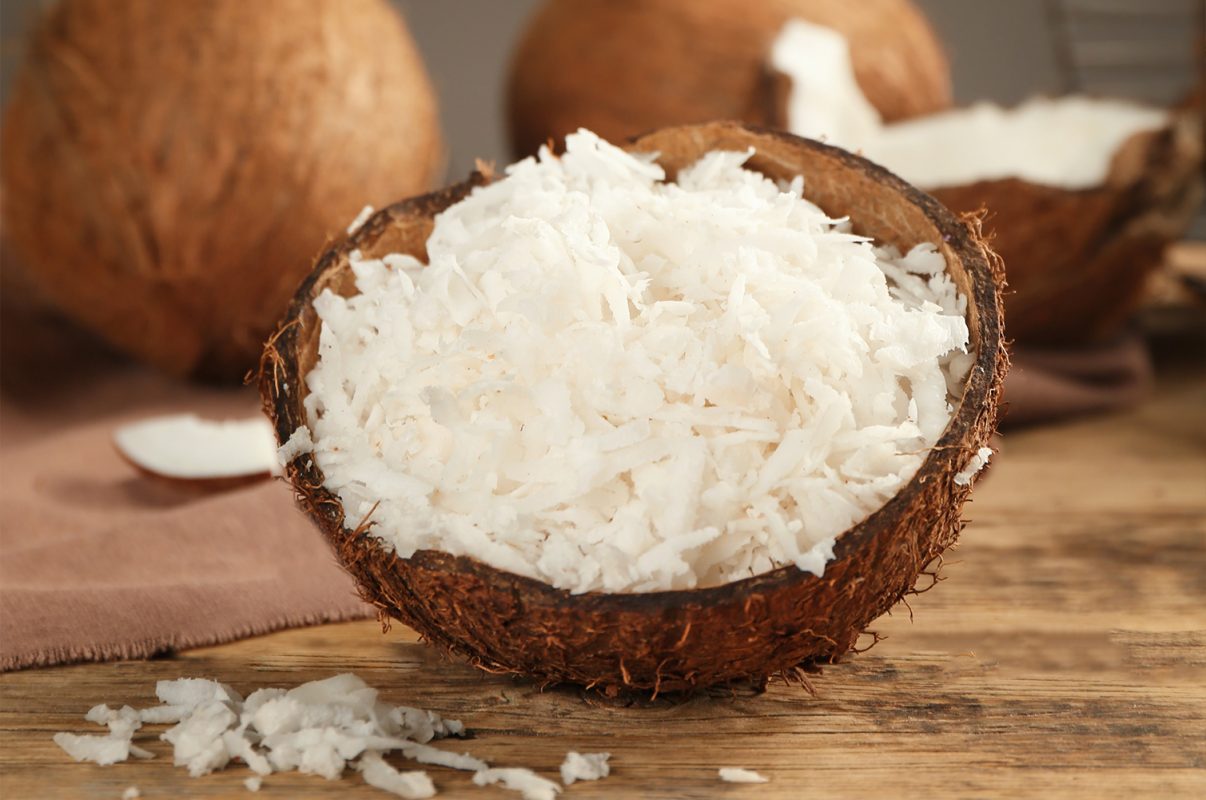
In the highly competitive global food manufacturing industry, securing high-quality ingredients like Low Fat Desiccated Coconut Unique SKUs is paramount to maintaining product consistency and meeting modern health trends. As consumers worldwide transition toward health-conscious diets, food brands, confectionery manufacturers, and bakery chains are actively seeking functional, plant-based ingredients that reduce calorie density without compromising on texture, mouthfeel, or fiber content. Low-fat desiccated coconut has emerged as a premium solution, offering the delightful, exotic aroma of fresh coconut while containing up to fifty percent less fat than traditional high-fat alternatives.
For B2B buyers, importing this ingredient is not simply a matter of transactional purchasing; it requires identifying a manufacturing partner capable of offering tailor-made product configurations. Whether your production lines demand extra-fine powder for industrial baking or specific low-fat parameters for protein bars, finding a reliable supplier who can provide customized stock-keeping units (SKUs) is the key to supply chain efficiency. This comprehensive B2B sourcing guide explores the global market dynamics, agricultural sourcing, processing excellence, and global standards that define premium low-fat desiccated coconut exports.
Table of Contents
- Understanding the Market Dynamics of Low Fat Desiccated Coconut Unique SKUs
- Cultivation and Sourcing: Vietnam’s Premium Coconut Regions
- Processing Excellence: How VIHABA Delivers Low Fat Desiccated Coconut Unique SKUs
- Specifications and Grading Standards for Low Fat Desiccated Coconut Unique SKUs
- Quality Certifications and Global Compliance
- Export Logistics and Sustainable Packaging Solutions
- Frequently Asked Questions (FAQs)
- Conclusion: Sourcing Your Low Fat Desiccated Coconut Unique SKUs with VIHABA
Understanding the Market Dynamics of Low Fat Desiccated Coconut Unique SKUs
The global demand for coconut products has experienced a profound shift over the past decade. Traditional high-fat desiccated coconut, while still widely used in classical confectionery, is increasingly being supplemented or replaced by low-fat varieties. Food developers face the ongoing challenge of formulating reduced-fat and high-fiber products that satisfy strict regulatory guidelines for nutritional labeling. In this context, Low Fat Desiccated Coconut Unique SKUs offer a highly functional solution, serving as an excellent bulking agent, texture enhancer, and natural dietary fiber source.
Low-fat desiccated coconut is primarily a byproduct of the virgin coconut oil (VCO) or coconut milk extraction process. When the rich coconut meat is pressed to extract these high-value liquids, the remaining defatted coconut cake is carefully dried, granulated, and sifted. This process yields a product with a fat content typically ranging from 25% to 45%, compared to the 60% to 68% fat content found in standard desiccated coconut. This reduction in lipids significantly extends the shelf life of the ingredient by lowering the risk of rancidity and lipid oxidation, a major concern for international food brands shipping over long distances.
Furthermore, because different industrial applications require precise physical and chemical properties, a one-size-fits-all approach does not work. Confectionery brands formulating keto-friendly, low-glycemic treats require precise granular sizing to prevent moisture absorption issues, while breakfast cereal manufacturers need a medium flake that retains structural integrity when mixed with liquids. This demand for customization is why sourcing dedicated, flexible SKUs from an agile exporter has become a strategic advantage for global buyers.
Cultivation and Sourcing: Vietnam’s Premium Coconut Regions
Vietnam is widely recognized as one of the world’s leading agricultural powerhouses, with its fertile soils and tropical monsoon climate providing the perfect ecosystem for high-yield, premium-quality coconut cultivation. The heart of Vietnam’s coconut industry lies in the Mekong Delta, with Ben Tre Province serving as the undisputed capital of coconut production. This region boasts hundreds of thousands of hectares of dedicated coconut groves, nourished continuously by the nutrient-rich alluvial deposits of the Mekong River system.
The unique geography of Ben Tre, characterized by brackish water and rich soils, produces coconuts with a distinct, mild sweetness and robust fiber structure. Unlike other origins where intensive chemical fertilizers are common, Vietnamese farmers in Ben Tre have embraced traditional, sustainable cultivation methods passed down through generations. Increasingly, these smallholder farms and cooperatives are obtaining GlobalGAP and organic certifications, ensuring that the raw coconuts are free from heavy metal contamination and synthetic pesticide residues.
VIHABA works directly with these local farming cooperatives, establishing direct-sourcing partnerships that guarantee fair prices for farmers and full traceability for our global buyers. By monitoring the agricultural process from cultivation and harvest to final processing, we ensure that only mature, premium-grade coconuts are selected for production. This rigorous control at the source is what allows us to manufacture consistent raw materials for our specialized, high-performance product catalog.
Processing Excellence: How VIHABA Delivers Low Fat Desiccated Coconut Unique SKUs
Transforming raw, mature coconuts into high-performing Low Fat Desiccated Coconut Unique SKUs requires a delicate balance of advanced industrial machinery and strict hygienic control. At our state-of-the-art processing facilities, the manufacturing journey begins immediately after harvest to preserve the natural freshness and organoleptic properties of the fruit.
The initial stage involves de-husking and de-shelling, where the hard outer layers are removed to expose the white coconut meat. This meat then undergoes a meticulous paring process to remove the brown testa (the thin skin surrounding the meat). Any remaining testa could result in dark specks in the final product, which is unacceptable under modern quality control standards. Once pared, the white meat is washed thoroughly in purified water and pasteurized using high-temperature steam blanching. This critical step ensures that all microbiological pathogens are eliminated while preserving the natural flavor volatiles.
After pasteurization, the coconut meat is shredded or disintegrated into the desired particle size. To achieve the reduced-fat specification, the shredded meat is subjected to a mechanical, solvent-free expeller pressing process. This mechanical extraction gently removes a predetermined portion of the coconut oil. The resulting low-fat cake is then transferred to modern fluid-bed dryers, where the moisture content is reduced to below 3%. Finally, the dried product is passed through advanced vibrating sifting screens and multi-stage rare-earth magnets to sort the material into precise grades and eliminate any potential foreign physical contaminants. The result is a highly stable, uniform, and clean-label ingredient ready for global export.
Specifications and Grading Standards for Low Fat Desiccated Coconut Unique SKUs
Sourcing raw materials for international food processing requires absolute transparency in chemical, physical, and microbiological specifications. Every batch of coconut exported must meet strict international food safety limits. To meet these diverse application requirements, food buyers can explore our custom catalog of Low Fat Desiccated Coconut Unique SKUs, which are fully tailorable to your chemical and physical specifications.
For a comprehensive analysis of bulk pricing matrices, minimum order quantities (MOQs), and container logistics, refer to our low fat desiccated coconut wholesale B2B guide. Below is the technical specification table representing our standard grades of low-fat desiccated coconut exported globally:
| Parameter | Fine Grade Specifications | Medium Grade Specifications | Testing Method / Standard |
|---|---|---|---|
| Moisture Content | Max 3.0% | Max 3.0% | Halogen Moisture Analyzer / ISO 934 |
| Fat Content | 35% – 45% (Customizable down to 25%) | 35% – 45% (Customizable down to 25%) | Soxhlet Extraction / ISO 1443 |
| Free Fatty Acids (FFA) | Max 0.1% (as Lauric Acid) | Max 0.1% (as Lauric Acid) | Titration / ISO 660 |
| SO2 (Sulfur Dioxide) | Free from SO2 or Max 50 ppm (Custom) | Free from SO2 or Max 50 ppm (Custom) | Monier-Williams Method |
| Salmonella | Absent in 25g | Absent in 25g | ISO 6579 |
| E. Coli | Absent in 1g | Absent in 1g | ISO 7251 |
| Physical Appearance | Fine, free-flowing granular powder | Medium, uniform shredded flakes | Visual inspection |
By offering distinct SKU variations based on fat levels (ranging from ultra-low 25% fat to semi-low 45% fat) and particle sizing (from extra-fine to coarse medium), VIHABA empowers food scientists and purchasing managers to choose the exact material formulation that optimizes their production yield and matches their product development goals.
Quality Certifications and Global Compliance
In the contemporary B2B import-export landscape, quality certifications are non-negotiable. They serve as a testament to a manufacturer’s commitment to food safety, operational excellence, and standardized practices. When sourcing premium ingredients for highly regulated markets such as North America, Europe, and the Middle East, importers must ensure that their manufacturing partners adhere to international standards.
VIHABA’s production facilities operate under strict compliance with internationally recognized food safety management systems, including ISO 22000 and HACCP (Hazard Analysis and Critical Control Points). These frameworks guarantee that hazards—whether biological, chemical, or physical—are systematically identified, monitored, and controlled throughout the entire manufacturing process. For brands targeting specialized consumer groups, we also offer fully compliant Halal and Kosher certified SKUs, ensuring that our products meet strict dietary laws.
Moreover, our adherence to GlobalGAP standards underscores our commitment to sustainable agricultural practices and social responsibility. From ensuring ethical working conditions for our factory employees and farming partners to implementing waste-reduction initiatives in our processing plants, we believe that supply chain sustainability is just as critical as product quality. This comprehensive compliance model minimizes import friction, ensures seamless customs clearance, and protects our clients’ brand reputation.
Export Logistics and Sustainable Packaging Solutions
The journey of an agricultural commodity from a processing facility in Vietnam to an international buyer’s warehouse is long and complex. During ocean transit, products are exposed to fluctuating ambient temperatures and varying humidity levels, which can threaten the quality of moisture-sensitive ingredients. Therefore, choosing robust, high-barrier packaging is essential to safeguarding the integrity of your imported goods.
To preserve the freshness and prevent moisture absorption, our low-fat desiccated coconut is packed in multi-ply Kraft paper bags featuring a food-grade inner polyethylene (PE) liner. We offer standardized packing sizes of 25 kg and 50 kg bags, as well as customizable bulk jumbo bags (up to 500 kg or 1,000 kg) equipped with lifting loops for automated industrial handling. Every pallet is carefully stacked, wrapped in heavy-duty stretch film, and secured with desiccants placed inside the shipping containers to prevent container rain during ocean freight transit.
Our logistical expertise extends to efficient container utilization. A standard 20-foot Full Container Load (FCL) can accommodate approximately 12 to 13 metric tons of palletized desiccated coconut, while a 40-foot High Cube (HC) container can hold up to 25 to 26 metric tons. By working closely with premier global shipping lines, VIHABA ensures timely shipments, transparent tracking, and cost-effective freight rates, allowing our clients to maintain lean inventory levels with complete peace of mind.
Conclusion: Sourcing Your Low Fat Desiccated Coconut Unique SKUs with VIHABA
Navigating the global agricultural supply chain requires a reliable partner who understands that consistency, quality control, and tailor-made solutions are the cornerstones of manufacturing success. By selecting Vietnam as your primary sourcing origin and partnering with VIHABA, you gain access to premium agricultural raw materials processed in state-of-the-art facilities and backed by stringent quality certifications. Our ability to supply custom Low Fat Desiccated Coconut Unique SKUs ensures that your production lines run efficiently, your product quality remains uniform, and your health-conscious consumers get exactly what they expect.
At VIHABA, we are committed to driving value for our global B2B clients through transparent communication, rigorous quality testing, and robust end-to-end logistics. Whether you are a large-scale food manufacturer, a specialized confectionery brand, or an international ingredient distributor, our dedicated team is ready to assist you in developing the perfect ingredient formulation for your market. Contact us today to request samples, receive a customized quotation, and discover how we can elevate your agricultural product sourcing strategy.
Low Fat Desiccated Coconut FAQ
Disclaimer: Unless otherwise stated, the images used in this article are the property of their respective owners. We do not claim ownership of any third-party images featured, and they are used here strictly for informational and educational purposes. If you are the copyright holder and wish to have an image removed, please contact us.