
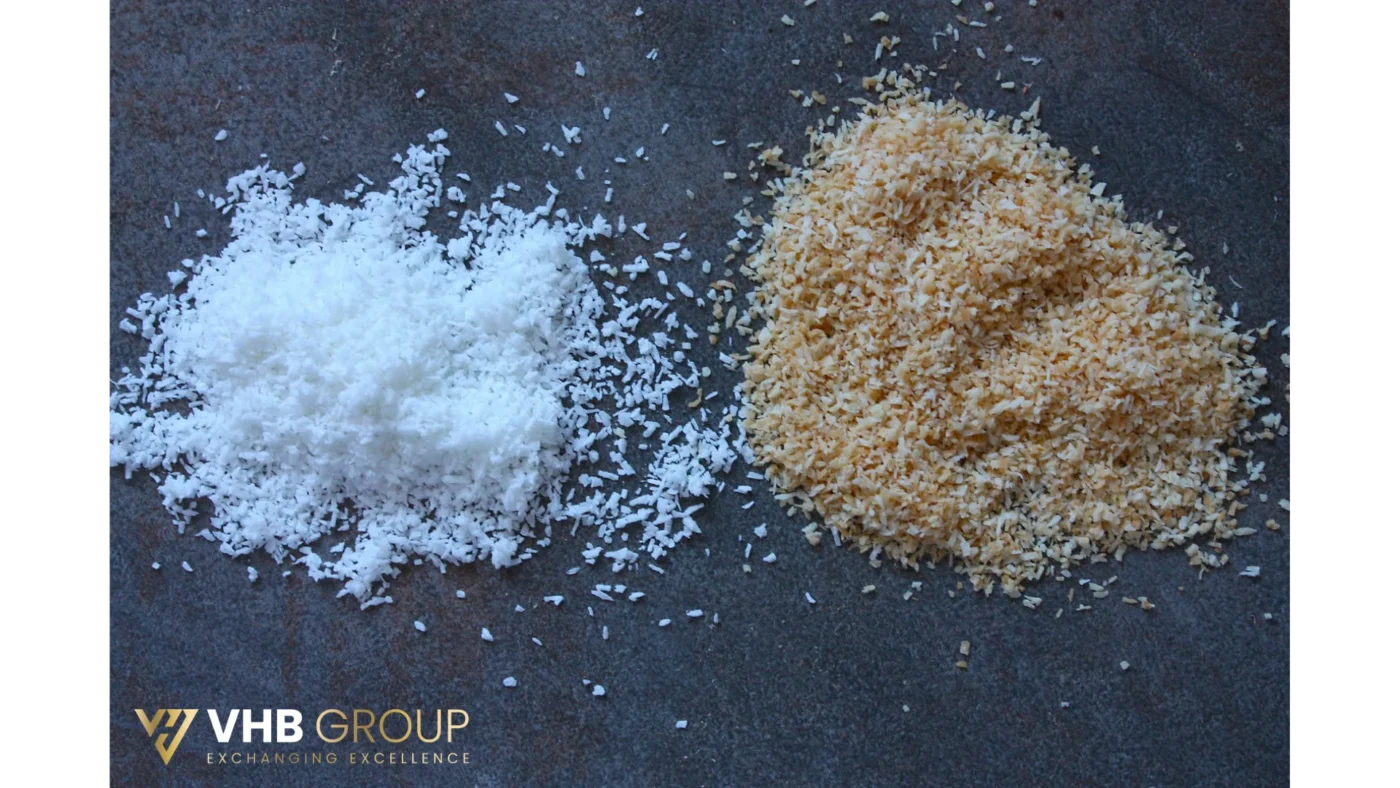
Navigating the global Wholesale Desiccated Coconut Distribute Channel requires a deep understanding of agricultural supply chains, strict quality parameters, and reliable logistics networks.
As international consumer demand shifts toward clean-label ingredients, plant-based alternatives, and healthy fats, food manufacturers, confectioners, and bakery conglomerates are actively optimizing their raw material procurement. Desiccated coconut—the shredded, dried, and unsweetened meat of fresh coconuts—has become an indispensable commodity across these industries. However, establishing a resilient and cost-effective supply chain is no simple feat. Buyers must balance fluctuating crop yields, rigorous safety standards, and long-distance freight complexities to maintain a competitive edge.
This comprehensive B2B sourcing guide explores the structural elements of a high-performing supply chain, detailing the journey from Vietnam’s fertile coastal plantations to international manufacturing lines. Whether you are looking to streamline your direct-import strategy or evaluate the capabilities of new agricultural partners, understanding this network is critical to securing your supply pipeline.
Table of Contents
- 1. Global Market Dynamics of the Wholesale Desiccated Coconut Distribute Channel
- 2. Vietnamese Coconut Cultivation: The Heart of High-Yield Production
- 3. Advanced Processing Methods and Grading Classifications
- 4. Quality Certifications & Food Safety Compliance
- 5. Logistics, Packaging, and Supply Chain Optimizations
- 6. Frequently Asked Questions (FAQs)
- 7. Conclusion: Partnering for Long-Term Supply Chain Success
Global Market Dynamics of the Wholesale Desiccated Coconut Distribute Channel
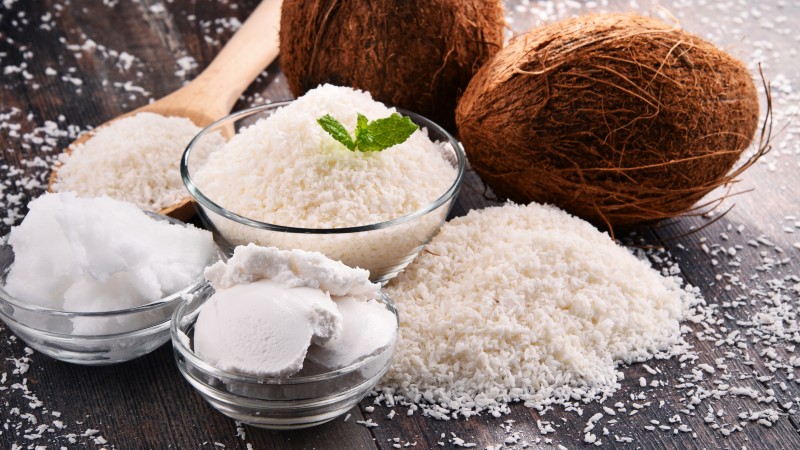
The global trade of desiccated coconut is driven by diverse applications in the food processing sector. From the delicate coatings on chocolate truffles to the dense, moisture-retaining bases of gluten-free baked goods, desiccated coconut is highly prized for its functional and nutritional properties. To secure a stable supply, B2B procurement managers must understand how the Wholesale Desiccated Coconut Distribute Channel operates on a macro level.
Major Consuming Regions and Demand Drivers
Europe and North America represent the largest import markets for desiccated coconut, driven by a growing appetite for vegan, organic, and keto-friendly products. In these mature markets, food brands use coconut ingredients to replace synthetic additives and animal fats. Meanwhile, the Asia-Pacific and Middle Eastern markets are experiencing rapid growth, fueled by rising disposable incomes and expanding domestic baking and confectionery industries. This widespread demand places significant pressure on global distribution networks to maintain consistent supply volumes year-round.
Key Supply Chain Challenges
Operating a seamless distribution channel involves overcoming several persistent industry bottlenecks:
- Raw Material Price Volatility: Coconut harvests are highly sensitive to weather anomalies, such as typhoons and prolonged droughts, which can abruptly limit supply and drive up market prices.
- Transit-Related Quality Risks: Long ocean voyages expose organic cargo to moisture fluctuations, increasing the risk of mold formation or yellowing.
- Regulatory Hurdles: Divergent food safety regulations regarding sulfur dioxide (SO2) content and pesticide residues require suppliers to maintain strict agricultural controls from farm to ship.
Vietnamese Coconut Cultivation: The Heart of High-Yield Production
Vietnam has emerged as a premier sourcing hub within the global coconut market, characterized by modern agricultural practices, high yields, and favorable geographical conditions. For international buyers seeking a dependable partner, Vietnam provides a highly resilient base for the Wholesale Desiccated Coconut Distribute Channel.

Ben Tre Province: The Coconut Capital of Vietnam
At the center of Vietnam’s coconut industry is Ben Tre Province, situated in the fertile Mekong Delta region. The province’s rich, alluvial soil, abundant freshwater networks, and tropical climate create the ideal environment for growing coconuts with thick, nutrient-rich kernels. This natural advantage results in a higher oil content and a richer flavor profile compared to coconuts grown in less favorable climates. By sourcing directly from Ben Tre, international buyers can secure premium ingredients that enhance the flavor and texture of their finished products.
Commitment to Sustainable and Organic Agriculture
Vietnamese agricultural authorities and cooperative farmers are increasingly adopting sustainable farming practices. A growing number of plantations are transitioning to organic cultivation methods, eliminating chemical fertilizers and synthetic pesticides. These efforts align with the global demand for clean-label, environmentally conscious products. This agricultural transition ensures that exporters can offer fully traceable, organic-certified desiccated coconut that meets the stringent entry requirements of European and American markets.
Advanced Processing Methods and Grading Classifications
Transforming raw coconuts into premium desiccated ingredients requires a combination of traditional care and modern industrial processing technology. To maintain the coconut’s natural freshness, processing facilities must run highly efficient operations under strict hygienic conditions.
The Step-by-Step Production Process
The journey from harvested nut to packaged ingredient follows a meticulously controlled sequence:
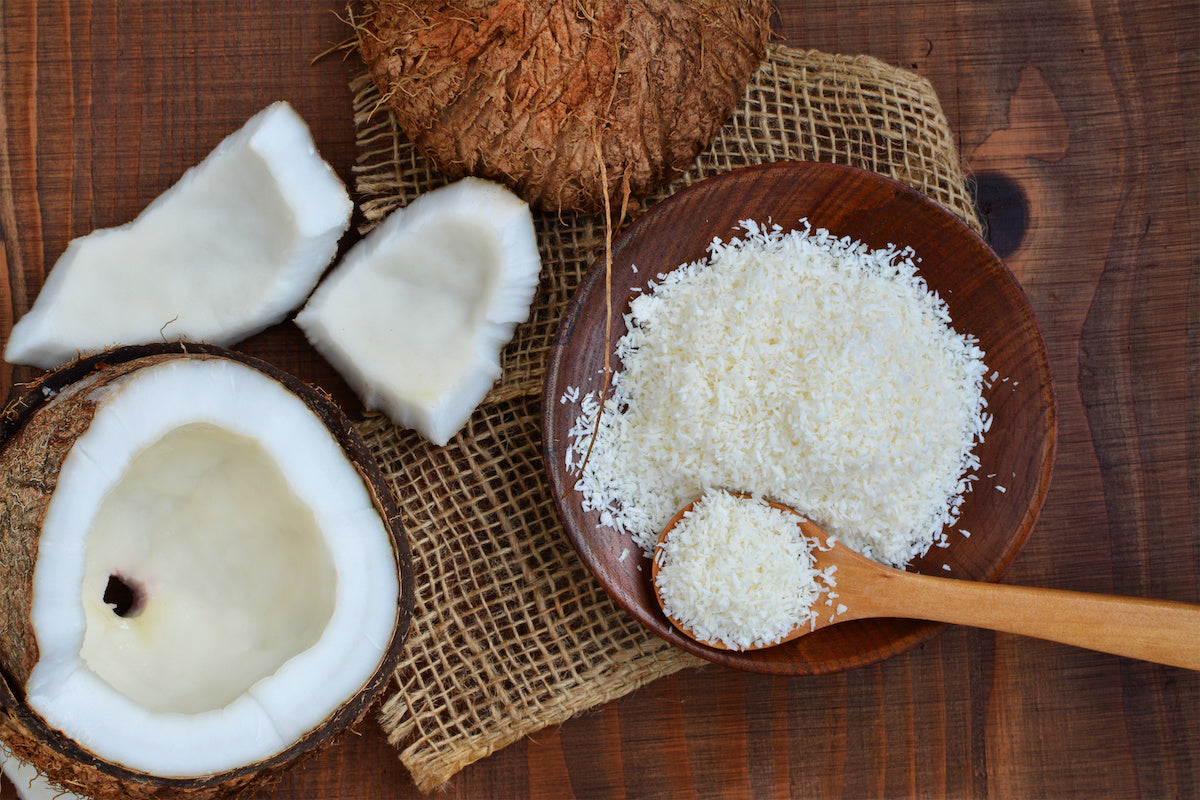
- De-husking and De-shelling: The tough outer husk and hard inner shell are carefully removed to expose the white coconut kernel covered by a thin brown skin (testa).
- Paring: The brown testa is pared away, leaving only the pure, snow-white meat. Any remaining dark spots are manually sorted out to ensure uniform color.
- Washing and Blanching: The pared kernels are washed thoroughly in purified water and then blanched in high-temperature steam to destroy any potential pathogens and enzymes.
- Disintegrating and Threading: The sterile kernels are fed into specialized shredding and grating machinery, which cuts the meat into precise sizes, such as Fine, Medium, Flake, or Thread.
- Fluidized Bed Drying: The shredded coconut is dried in a fluidized bed dryer using clean, hot air. This process reduces the moisture content to less than 3%, securing a long shelf life.
- Sifting and Grading: The dried coconut passes through vibrating sieves to separate particles based on size, ensuring a consistent grade profile.
- Metal Detection and Packaging: The graded product passes through sensitive metal detectors before being packed into airtight, multi-layer bags to preserve freshness during transport.
Product Specification and Grading Standards
Desiccated coconut is primarily graded by its fat content and particle size. Sourcing managers must specify these parameters to ensure compatibility with their manufacturing lines. The table below outlines the industry-standard specifications for high-fat and low-fat grades:
| Specification Parameter | High Fat (Fine/Medium Grade) | Low Fat (Fine/Medium Grade) |
|---|---|---|
| Moisture Content | Max 3.0% | Max 3.5% |
| Total Fat Content | Min 63% – 65% | Max 35% – 45% or 45% – 50% |
| Free Fatty Acid (FFA as Lauric) | Max 0.15% | Max 0.15% |
| Color | Natural white, free from yellow specks | Natural white, free from yellow specks |
| Flavor and Odor | Mild, sweet, and characteristic of coconut | Mild, sweet, and characteristic of coconut |
| E. coli | Negative in 25g | Negative in 25g |
| Salmonella | Negative in 25g | Negative in 25g |
Quality Certifications & Food Safety Compliance in the Wholesale Desiccated Coconut Distribute Channel
In international trade, high-quality products must be backed by transparent, globally recognized documentation. Importers operating within the Wholesale Desiccated Coconut Distribute Channel require suppliers to hold internationally accredited food safety and management certifications.

Key Food Safety Certifications
To access high-value consumer markets, processing plants must obtain and maintain several rigorous quality certifications:
- ISO 22000 & HACCP: These form the foundation of global food safety management, guaranteeing systematic control over microbiological, chemical, and physical hazards.
- BRCGS (British Retail Consortium Global Standards): Widely recognized by major retailers in Europe and North America, this standard demonstrates a facility’s commitment to food safety and operational excellence.
- Halal and Kosher Certifications: These religious dietary certifications are essential for food manufacturers targeting diverse, global consumer groups.
- USDA Organic & EU Organic: These verifications confirm that the coconut was grown without synthetic inputs and processed without chemical additives or ionizing radiation.
The Role of Strict Quality Control
Leading Vietnamese exporters, such as VIHABA, implement rigorous Quality Control (QC) programs at every stage of the production process. From testing raw incoming coconuts to performing microbiological assays on finished batches, every step is carefully documented. This proactive approach ensures that every shipment complies with the specific importing standards of the destination country, significantly reducing the risk of customs rejections or product recalls.
Logistics, Packaging, and Supply Chain Optimizations in the Wholesale Desiccated Coconut Distribute Channel
The final, and often most complex, stage of the Wholesale Desiccated Coconut Distribute Channel is logistics and ocean transport. Desiccated coconut is a delicate, high-fat agricultural product that requires careful handling to prevent degradation during shipping.
Heavy-Duty B2B Packaging Standards
To shield the product from external moisture, insect infestation, and physical damage, bulk packaging must be highly durable. The standard packaging format consists of multi-wall kraft paper bags with an inner food-grade polyethylene (PE) liner. The outer layer is typically printed with essential batch, tracking, and certification information. The most common sizes for commercial use are:
- 25 kg or 50 kg multi-ply bags: Ideal for easy handling, stacking, and manual tipping into commercial production hoppers.
- Jumbo bulk bags (up to 1,000 kg): Designed for highly automated manufacturing facilities that utilize industrial discharging systems.
Container Loading and Climate Control
During ocean transit, temperature variations inside shipping containers can lead to condensation, commonly known as “container rain.” If this moisture penetrates the packaging, it can trigger mold growth and spoil the cargo. To prevent this, exporters use dry, well-ventilated shipping containers, lining them with kraft paper or cardboard sheets. They also place heavy-duty silica gel bags inside to absorb excess moisture, ensuring the desiccated coconut arrives at its destination in perfect condition.
Conclusion: Partnering for Long-Term Supply Chain Success
In conclusion, establishing a robust, transparent, and efficient Wholesale Desiccated Coconut Distribute Channel is vital for global food manufacturers seeking consistent, high-grade ingredients. By understanding the complexities of agricultural cultivation in Vietnam, modern processing methods, and international shipping protocols, procurement teams can make informed decisions that secure their supply chain and protect their brand’s reputation.
As a leading Vietnamese agricultural exporter, VIHABA is committed to bridging the gap between local growers and international buyers. We combine the natural agricultural wealth of Vietnam’s Mekong Delta with global quality standards, transparent logistics, and dedicated B2B customer service. Whether you are seeking a reliable high-fat fine grade for bakery applications or need a reliable supply partner to scale your distribution network, VIHABA is your trusted partner. Contact us today to explore custom packaging solutions, request product samples, and discover how we can optimize your global supply chain.
Distribution Channel FAQ
Disclaimer: Unless otherwise stated, the images used in this article are the property of their respective owners. We do not claim ownership of any third-party images featured, and they are used here strictly for informational and educational purposes. If you are the copyright holder and wish to have an image removed, please contact us.